


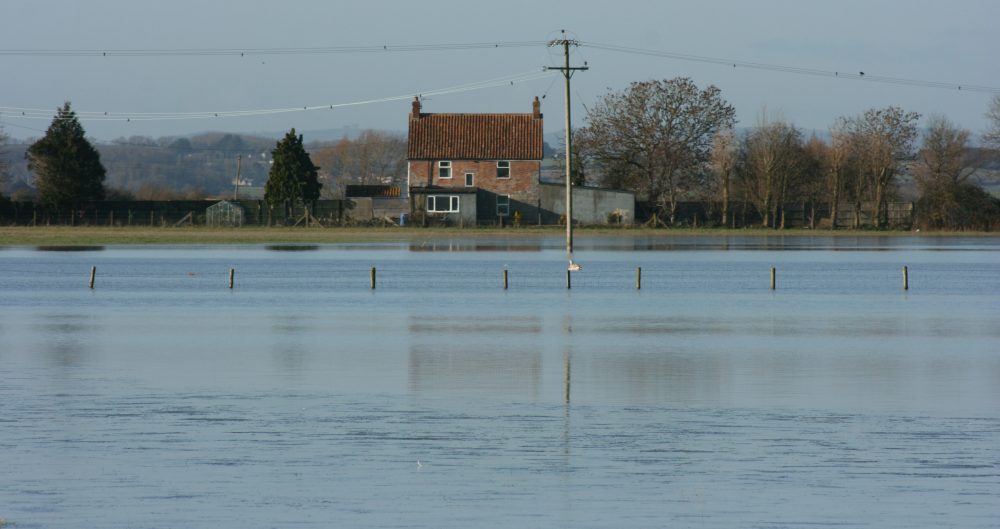
Taunton MP Rebecca Pow has given a new written answer on the state of the Somerset Levels. This is a tough question to deal with when Britain is hosting a global climate change conference. But the most surprising thing about her answer was whose question she was answering.
Many local MPs might legitimately show concern about the state of the Somerset Levels. Some have already asked questions. But this question came from a less likely source. Ben Everitt is the Conservative MP for Milton Keynes North, not an area known for its proximity to Somerset.
But in essence he wanted to know what the Minister was doing to fix the problem. Regular readers will recall that the problem is phosphorus. Natural England has declared that water in the Somerset Levels contains three times the permitted level of phosphorous. And for that reason a halt was called to major planning developments.
Meanwhile the district councils this effects have been scratching their heads. Somerset West and Taunton coming up with the best idea so far. That was to allocate £2m to buy “fallow” land to offer as reed beds that remove phosphorous from water systems. This can be used as compensation for development sites that add phosphorous. It is a good idea, but only the thin end of the wedge,
However according to the Minister, the problem is now more or less fixed. This is the full text of Rebecca Pow’s response to Ben Everitt. Readers can judge for themselves if this really fixes the problem or not.
“The departments principally responsible for government policy on water pollution and development are Defra and DLUHC respectively, which are both aware of the challenges facing housebuilding and environmental protection in the Somerset Levels and Moors. To address water quality issues arising from nutrient pollution, a cross-departmental Nutrient Taskforce has been created, which brings together Defra, Natural England, Environment Agency and DLUHC colleagues. Its remit is to discuss the causes of phosphate and wider nutrient pollution and ways we can support businesses to develop and protect the environment nationally.
Locally, the taskforce has assisted Natural England in developing several tools which enable local authorities to understand possible mitigations that can be put in place. In the Somerset Levels and Moors, this has materialised in the development of a phosphorus budget calculator which has helped to move forward planning applications. Furthermore, Somerset West & Taunton Council have approved a further £2M programme for interim mitigation projects as advised by Natural England. The council will now seek NE sign-off in the next few weeks, after which it can begin to employ mitigation schemes to unlock delayed development in the area. Alongside this Natural England continues to support the piloting of a first-of-its-kind nutrient trading scheme in Somerset and expects to formally accredit the scheme in November. They report back regularly to the taskforce on progress.
More broadly, the taskforce has helped to inform and guide Defra’s wider approach to address nutrient pollution in our waterways. For example, how we utilise the newly expanded Catchment Sensitive Farming advice programme, which we have doubled funding for, alongside funding for 50 new Environment Agency inspectors to work with the farming sector to tackle nutrient pollution. Defra is committed to improving the water environment and will continue to work with Natural England and the Environment Agency on the wider issue of underlying sources of pollution, considering upgrades to wastewater treatment works and ways of reducing pollution from agriculture.”



Pingback: Somerset MP: "Scale of problem underestimated" - LevellerLive