


WHENEVER there is a problem in our communities, it is only a matter of time before someone says they ‘blame the council’.
Be it on social media or in a social gathering at the pub, someone will inevitably blame ‘the council’ for any number of issues; from potholes to council tax, planning problems to schools.
The problem is, whatever the issue might be, ‘the council’ might not be responsible for it – and if it is, which ‘council’ do we mean?
Here, we will try to break it down so the next time you, or someone you know, blames ‘the council’, you will know if that is really where the blame lies…
So is there more than one council?
In most cases, yes. Most areas have two councils – a parish or town and a unitary, district or county council.
Here in Somerset, most places have a parish/town council and Somerset Council, which oversees the whole area.
(This system was introduced in 2023. Before that, most of us will remember when there were three councils, for example, your parish or town council, a district council, and a county council. The district and county councils have now been abolished, leaving just parish/town councils and Somerset Council.)
So do councils do the same things?
No. The best way to think about it, I’ve found, is to see your parish or town council as being responsible for more ‘local’ things, and the unitary authority (Somerset Council) as looking after larger services that can be more broadly applied to the whole area.
Okay, so who does what?
This is a little easier to explain, although things have changed in recent years.
Broadly speaking, a parish or town council is responsible for everyday, local things. These include:
* Recreational facilities: Parks and play areas are generally looked after by parish/town councils – including the power to install and maintain things like dog poo and litter bins, park benches, etc
* Footpaths: Note this does *not* include roads or road crossings. But in the vast majority of cases, if you walk on a path, it is looked after by your parish/town council
* Cemeteries: Parish/town councils are responsible for graveyards in the area they cover, from ensuring they are looked after, to making sure they have enough space (yes, really, this can be an issue)
* Allotments: Parish and town councils have the power to obtain land for use as allotments, and look after them
* Other amenities: More commonly, parish and town councils are assuming responsibility for things like public toilets and venues that were previously looked after by a district or county council. This is particularly common in areas like Somerset, where funding is a huge issue, as the larger authority is keen to pass on the costs to the parish itself
The unitary authority (Somerset Council) is, broadly, responsible for services that affect the area as a whole, including:
* Transport: The unitary authority, with a view of the whole area, will manage things like buses and other public transport services
* Social care: A huge range of services are provided by unitary authorities through social care, for adults and children, young and old
* Education: The overarching council – formerly known as the local education authority – is responsible for state schools, including SEND provision
* Planning/housing: Yet another massive responsibility, the county/unitary authority looks after planning, including approving or rejecting planning applications. It also has responsibility to meet central government targets on house building etc – which we will hear a lot more about in the coming months
* Waste collection: The unitary authority looks after recycling and bin collections, as well as managing recycling centres, as these cover the whole area
* Highways: Excluding some major routes, the unitary authority is responsible for roads (*not* footpaths – if you walk on it, it tends to be parish/town council, if you drive on it, it will probably be the larger council), and yes, this includes repairing potholes and overseeing roadworks. Note: Motorways and some larger routes (like the A303), are the responsibility of National Highways.
* Libraries: As these cover the whole area, it makes sense for the overarching authority to manage them – though many have been, to some degree, handed to the community in a bid to cut costs
But why do we have two councils?
In short, it’s because places can have such different needs and challenges.
As you can see in the above list of responsibilities, there are some things that clearly affect the whole council area, such as roads or bin collections, while others – park benches for example – are a much more ‘local’ thing that can be looked after by the authority closest to the community.
As mentioned above, some of these responsibilities are changing. For example, more town and parish councils are taking over the running of things like public toilets, larger parks, and entertainment venues that might once have been run by the larger authority.
This is because councils, across the board, are struggling financially. If parish or town councils are prepared to take on certain things – and can afford to – then they are being encouraged to, as it helps the larger authority make ends meet.
What should I *not* blame ‘the council’ for?
Perhaps most importantly, particularly for those poor councillors who get blamed for everything, there are a number of things ‘the council’ gets criticised for that, frankly, are nothing to do with them.
Health services is one of them – things like GPs or hospitals. These are not run by a council, they are overseen by NHS trusts.
Crime, again, is nothing to do with councils – though they may run things like CCTV or youth services.
As well as these examples, there are many, many rules the council may have to enforce that they have no choice in.
For example, with planning, a local planning authority (in our case Somerset Council) does approve or refuse applications.
However, that decision has to abide by wider, national, planning rules. So while it may seem like a decision has gone against public opinion, the council may have felt it had to in order to abide by wider rules.
There are also things like costs to be considered (if a council refuses a planning application and the applicant appeals the decision, the council could end up paying all the legal fees, a risk it has to consider).
How can I find out more?
The above is by no means an exhaustive guide to local government, but instead aims to give a relatively quick guide to when you should blame ‘the council’ and if so, which one.
Here are some other sources:
- The government website has a quick and easy-to-read guide to who does what, breaking down the different types of council, HERE.
- The Local Government Association (LGA) also has a quick guide on how local government is structured HERE.
- There is also a useful guide in the House of Commons Library on unitary authorities (which talks about Somerset specifically), which you can find HERE
- Meanwhile, the Institute for Government has a decent explainer on ‘unitarisation’ (turning three levels of local government into two, as Somerset has) HERE.
- Surrey County Council has an old page on its website which tries to define the roles and responsibilities of the different levels of council HERE which is quite good, though a bit dated.
So there you have it, a quick break down that, hopefully, gives a useful guide to who is responsible for what, making it clear when you should moan about ‘the council’, though that might now be revised to, ‘I blame the *parish* council’, or ‘I’m going to write to the *town* council’.
Do let us know if you found this helpful – and if there is anything else you think we should be explaining in more details. You can email your Somerset Leveller at newsdesk@somersetleveller.co.uk.


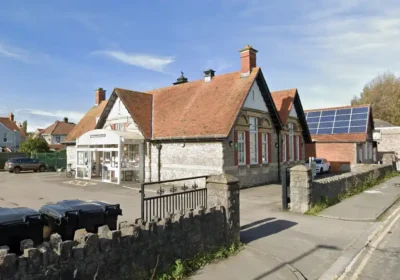
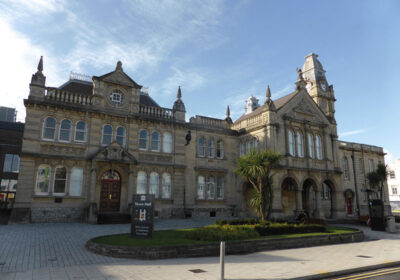
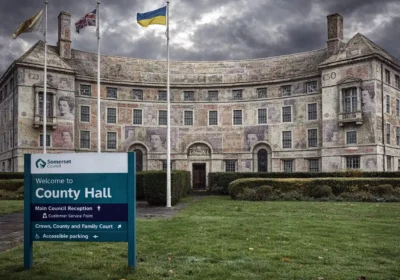



Pavements and most public rights of way come under Somerset Council, Yeovil Country Park paths come undrr Yeovil Town Council.