


“WE take the risk of electoral fraud very seriously,” says the Electoral Commission (EC), the body in charge of overseeing votes in the UK.
And rightly so, as voter fraud – on a large enough scale – could put our very democracy at risk.
“Throughout the year, all police forces across the UK send us data about allegations of electoral fraud that they receive and investigate,” the EC goes on to say.
“Every year we report on the number, type, and outcome of these allegations, so that you can understand what’s happened and how cases are resolved.”
All good to know, as this is clearly an issue to take notice of.
Or is it, really? Is voter fraud a big problem in the UK?
The answer is no, not really.
Those numbers the EC talks about include the total number of alleged electoral frauds.
Between 2018 and 2022, the EC said 1,386 cases of alleged electoral fraud were reported to police.
However, of those, 11 resulted in convictions, while the police issued six cautions.
So that’s a grand total of 17 actual ‘incidents’, if you like, in four years – less than five a year.
When you consider in that period the UK held a general election and any number of local elections, it’s really not very many.
But let’s not be complacent. One case of voter fraud is too many, right?
In 2022, a total of 13 cases of alleged personation fraud – pretending to be someone else – were recorded by police forces. Seven cases involved allegations at polling stations.
Another reason to clamp down? Well, no, as no further action was taken in any of those cases because there was no evidence, or insufficient evidence, of any crime.
In summary, the EC said: “In the past five years, there is no evidence of large-scale electoral fraud.”
But in 2023, the Government still vowed to do something about it…
Rule changes
In order to combat this, well, tiny number of incidents, the administration decided to impose a massive burden on the electorate – voter ID.
To keep a lid on this largely-non-existent problem at the polls, to put your tick in a box on election day you would be required to show identification, proving you are who you say you are.
But not any old ID. Oh no, there are very specific rules governing what poll workers will – and won’t – accept.
The documents, if accepted, can’t be photocopies, or digital ID (found in an app or some-such). The documents must be originals and must include the same name under which you registered to vote.
Accepted forms of ID are: A passport, some travel cards, driving licence (including provisional), a blue badge, an identity card with a PASS mark (Proof of Age Standards Scheme), a biometric immigration document, a defence identity card, a national identity card.
If you don’t have any of those, you can apply for a free voter ID, known as a Voter Authority Certificate.
But before applying, you need to be registered to vote. Ironically, you can apply for this online (at voter-authority-certificate.service.gov.uk).
You will also need a passport-style picture of yourself.
Now, call me a cynic, but this seems like a major overhaul to combat a crime that has seen 11 convictions in four years.
Click below to take part in the Somerset Leveller’s General Election Poll 2024:
Impact on elections
The new rules were first introduced during local elections in 2023.
The EC filed a report on how it all went, and it wasn’t great, with around 14,000 people who went to a polling station unable to vote due to not possessing required ID.
Bear in mind that is people who actually went to a polling station. The number who stayed at home knowing they didn’t have the required ID could be much, much higher.
The EC analysis also found there was a lower level of awareness the rules even existed among those without the required ID – so they didn’t know they needed to get it. Only 57% of those without ID knew about the free option.
Of those turned away, 30% had brought ID, but it was not accepted. So they knew, but weren’t well enough aware of what they needed.
“We have recommended changes to the UK Government to improve accessibility and support people who do not have accepted ID,” the report said.
With local, PCC, mayoral and general elections on the horizon, there is at least hope it will be made easier… But more on that later.
Priority
So, with a whopping 11 convictions in four years, and cases against people being accused of identity fraud to vote dropped, why did tackling voter fraud suddenly become a priority for the Government?
Well, at the risk of sounding cynical (again), there could be certain advantages for certain parties through the introduction of voter ID.
There’s no doubt these rules make it more of an effort to vote. Don’t take my word for it, the EC said “some groups struggled to meet the ID requirement”.
When might you struggle? If you’re young, perhaps? If you are unemployed? Or perhaps if you suffer with mental illness?
The EC confirmed this in their report on the 2023 elections, and a House of Commons briefing document said, “disabled people, younger voters, people from ethnic minority communities, and the unemployed” were among those who struggled to meet the new criteria.
In short, lots of voter groups likely to be progressive or, put more starkly, who are more likely NOT to vote for the Conservatives, who introduced the rules.
What a coincidence.
To pursue the somewhat cynical reasoning behind such a move it is also, as with so much of the Conservative campaign machine in recent years, worth casting an eye across the Atlantic.
We are all aware Donald Trump lost the infamous 2020 presidential election in the United States.
Well, most of us are. In the US, many still believe – as many as a third of voters, ridiculously – that Mr Trump was somehow cheated out of the presidency by nefarious means.
Chief among the reasons he was ‘robbed’? Voter fraud.
None of the myriad mooted allegations, claims and (conspiracy) theories has ever been proven. He just lost.
But that has not stopped administrations in various states – all of them Republican-led states (coincidence again) – introducing a raft of rules to prevent so-called voter fraud.
They include shortening early voting periods, eliminating automatic and same-day voter registration, cutting back mail-in voting, stopping the use of drop boxes for ballots, the increased purging of voter rolls and, here it comes – strengthening voter ID laws.
Most of those don’t apply here, obviously – but voter ID now does.
In the US, legal challenges have been brought against the moves, arguing the changes amount to voter suppression, as they affect minority voters who largely vote – you guessed it – Democratic. AGAINST the people wanting to bring in the new rules.
In May 2021, the New York Times reported how, across 32 states, a total of 144 Bills concerning changes to voting had been introduced by Republicans.
Opponents say it is simply gerrymandering; manipulating circumstances to make an electoral victory more likely.
Surely, that is not what the Conservatives had in mind in the UK, is it?
Gerrymandering…
“Parties that try and gerrymander end up finding that their clever scheme comes back to bite them, as dare I say we found by insisting on voter ID for elections.
“We found the people who didn’t have ID were elderly and they by and large voted Conservative, so we made it hard for our own voters and we upset a system that worked perfectly well.”
Those were the words of Conservative MP for North East Somerset, Jacob Rees-Mogg, when he addressed the National Conservatism Conference in London in May 2023, not long after voter ID was first imposed at the polls.
That’s a sitting Conservative MP saying how “insisting on voter ID for elections” – the Tories’ very own “clever scheme” – had “come back to bite them”.
That “clever scheme” was introducing voter ID in a bid to gerrymander the voting system, according to Mr Rees-Mogg.
He said the rules had “upset a system that worked perfectly well”.
He said it out loud: The electoral system was working, there was no need for voter ID. It was a means to gerrymander elections.
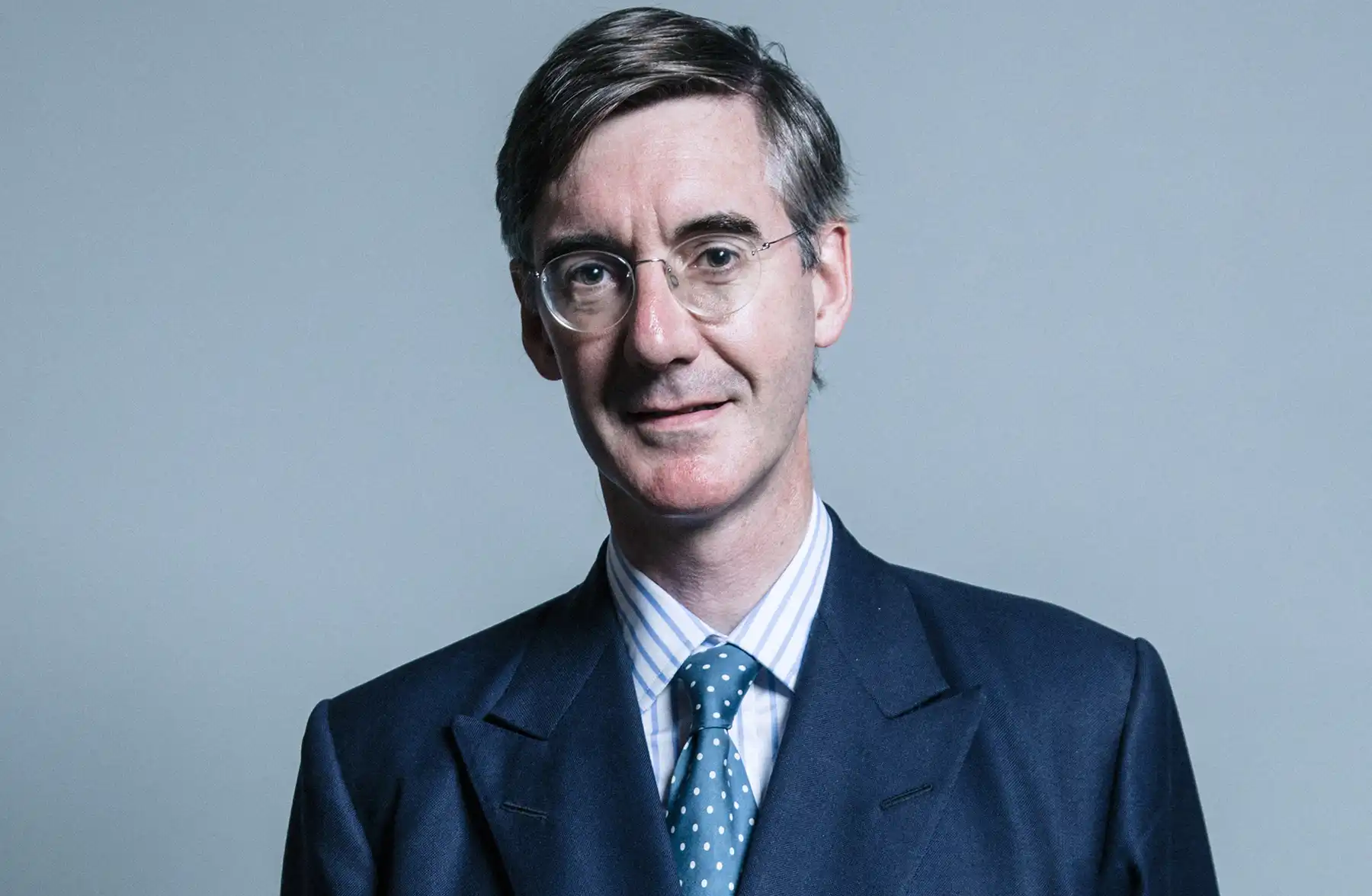
Jacob Rees-Mogg said attempts to gerrymander elections through voter ID ‘backfired’
Asked about Mr Rees-Mogg’s claims, Rishi Sunak said: “These laws, the Labour government put them in place for Northern Ireland when they were in office, point one.
“Point two, they’re used in tons of other countries across Europe and indeed Canada.
“Point three, 98% of people already possessed one of the forms of ID that were eligible and, for those that didn’t have one, they could apply for a free voter ID.”
Anyway, everyone agreed the voter ID system could be improved, as the EC was issuing a report on how it could be…
As well as highlighting those most affected by the ID changes, the EC’s post-elections report also called for an expansion of the ID acceptable at polling stations ahead of the next polls – including the general election, during which they said voter ID would have “a larger impact”.
It added: “The UK Government should review the current list of accepted forms of ID to identify any additional documents that could be included to improve accessibility for voters.
“This should focus on forms of ID that would support people who are least likely to have documents on the current list, including disabled people and those who are unemployed.”
Seems sensible. But the Government refused.
Why wouldn’t Rishi Sunak – currently languishing 20 points behind Labour in the opinion polls – want people likely to vote against his party to vote at the next general election? For election integrity?
The fact is, our voting system already had integrity and worked “perfectly well”, as Mr Rees-Mogg told us, evidenced by just 11 electoral fraud convictions in four years. But that, it seems, is justification enough for the Government to deprive around 14,000 people of their vote – probably more at a general election, according to the EC.
The real world
Here in Somerset, we have a real-world example to examine.
On June 17, 2023, former Conservative MP David Warburton resigned his seat.
The move prompted a by-election, held on July 20, 2023, the first time a parliamentary election in the county would be subject to the new voter ID rules.
According to Somerset Council, turnout for the poll – which saw Liberal Democrat Sarah Dyke elected with a majority of 11,008 – was 31.8%.
The council said a total of 27,923 people were issued with ballot papers at polling stations.
People initially turned down a ballot paper as they didn’t have the requisite ID was 187. A total of 128 returned later, with the correct identification and were issued a ballot paper.
That means 59 people were denied a vote they wanted to cast because they didn’t have, or didn’t return to show, the correct ID.
Not many, I hear you cry, but that’s 0.2% of the total votes cast in the by-election.
At the 2019 general election, losing 0.2% of votes for one particular candidate could have seen one seat (Fermanagh and South Tyrone in Northern Ireland) won by a different party.
A total of 26 seats in 2019 were won by a less-than-2% margin, the largest (1.74%), in the Blyth Valley, representing 712 votes.
And remember, 2019 was not a particularly close election. There would be more marginal seats in a hotly-contested poll, like 2010, when we were left with hung parliament.
That year, a loss of 0.2% of votes for a particular candidate would have changed the result in eight seats. Eight.
In a close election, the difference between winning and losing eight swing seats (which those with such small majorities are, by definition) could be the difference between being in government and well, not.
The upcoming election could be close. Ridiculous as it sounds, eight seats could be worth a whole lot of power.
And 11 convictions could be remembered through time as defining the future of a country…







Everyone should apply for voter id, not because they need it but to tell the government that this is a bad idea.