


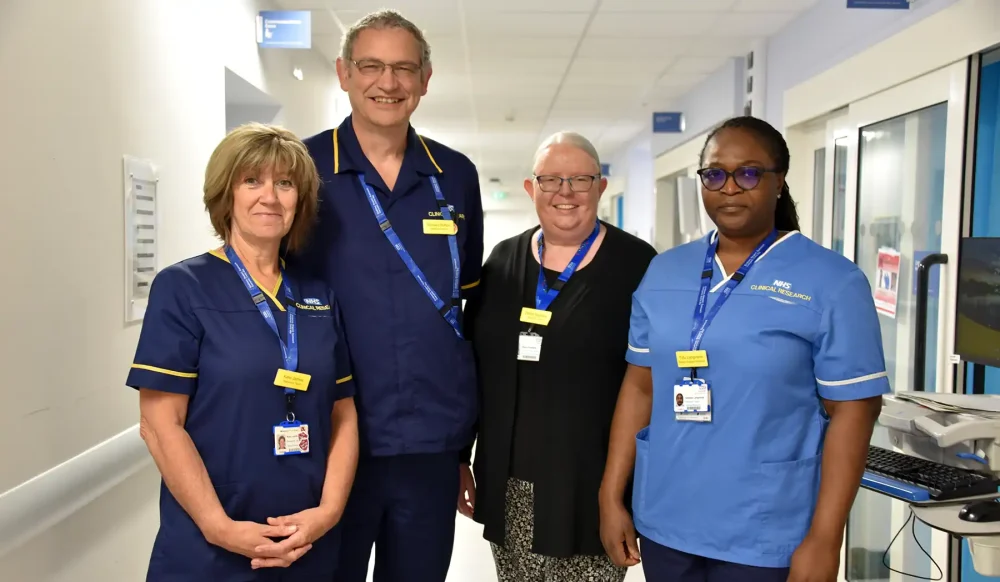
SEPSIS patients in Somerset are helping pave the way for future care.
Those who need treatment in critical care units at Musgrove Park and Yeovil Hospitals are contributing to a national sepsis study, called SHORTER, being run by the National Institute for Health and Care Research (NIHR).
The initiative is investigating the use of antibiotic treatments in patients being cared for in critical care with sepsis and aims to find out whether giving antibiotics for less time than normal might benefit, and safely treat, patients with possible or confirmed sepsis.
Sepsis, sometimes called septicaemia or blood poisoning, is a condition that is caused by the body’s response to an infection and occurs when the body’s immune system overreacts to an infection and damages the body’s own organs and tissues.
Antibiotics are essential for treating sepsis, but carry significant risks, such as side effects in some patients, and their overuse makes them less effective.
Striking the right balance of using antibiotics appropriately, while avoiding their potential harm, is a significant challenge in the treatment of sepsis.
The SHORTER study will compare the standard duration of treatment to a shorter, five-day course of treatment.
READ MORE: Health news from your Somerset Leveller
Musgrove-based Ashly Thomas, a clinical research nurse for Somerset NHS Foundation Trust, said: “We often tend to see patients diagnosed with sepsis in our critical care units, but we don’t necessarily know where the sepsis is coming from.
“Treatments for sepsis can vary, and our microbiology colleagues meet daily with our critical care team to decide the course of antibiotics for each individual patient.
“Sometimes a patient may be prescribed a longer course of antibiotics, and this can cause a resistance, as well as side effects.
“The SHORTER study splits patients into two groups – one that gets the standard level of care, and one that gets the additional interventions, where their course of antibiotics will be shortened to just five days, with the aim of minimising the antibiotic resistance.
“The main outcome measure for the study is whether the patient needed any more antibiotics after leaving hospital, and all the data will be collected to find out whether a five day course of antibiotics is indeed more effective.”
Becky Purnell, a senior research nurse based at Yeovil Hospital, said she was pleased Somerset is one of the trusts hosting the study.
“This study is mainly about reducing side effects, as we tend to give patients a lot of antibiotics in critical care, but we don’t actually have the clinical evidence for how long the course needs to be,” she said.
“Quite a large group of patients who we care for in our critical care units have sepsis, so we only use the lower-risk patients for this study.
“If the evidence is strong, then it might create guidelines that cover more patients.”
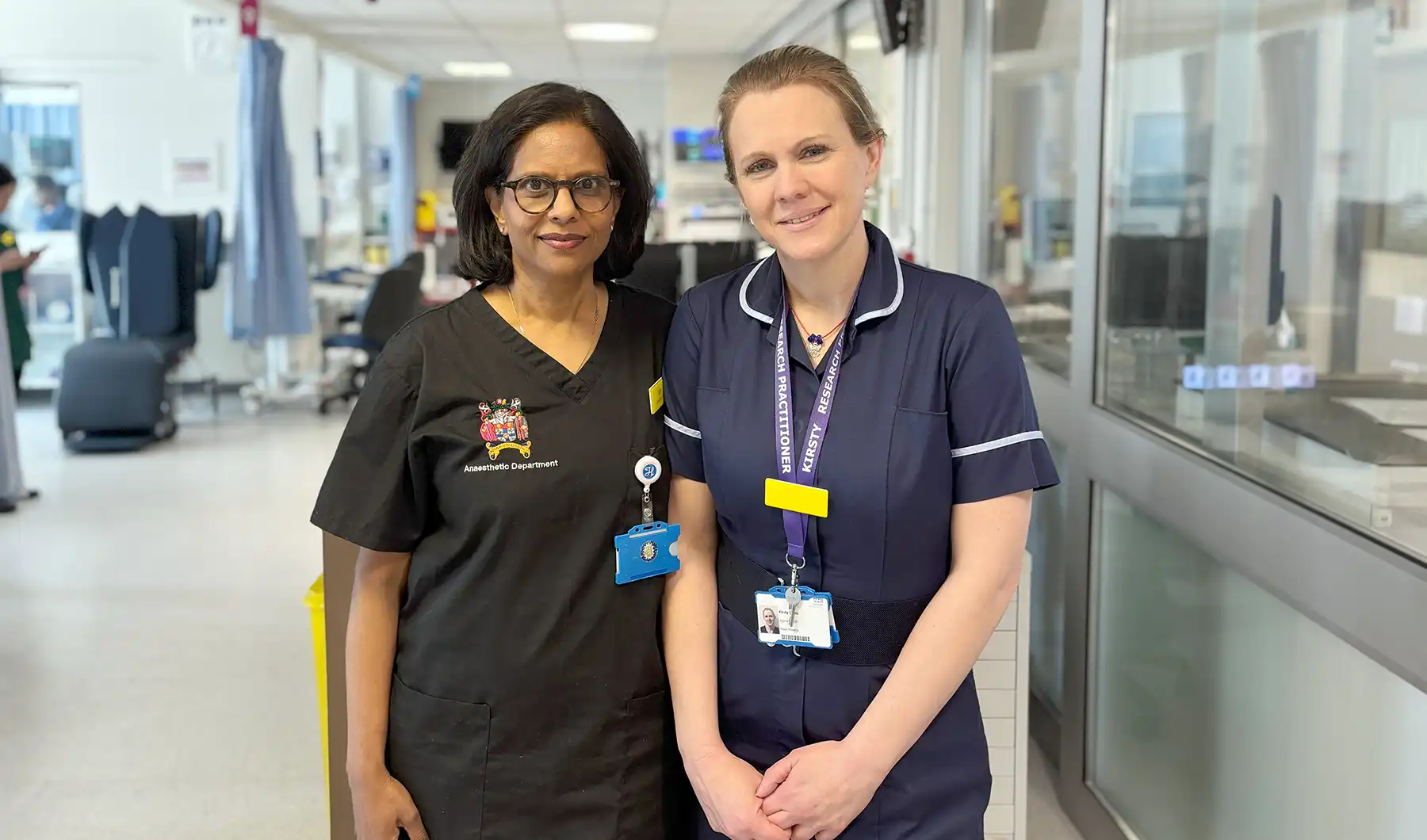
Members of the Yeovil Hospital research and critical care teams
Ashly added: “We always check in with the doctor looking after each individual patient, as they’ll have the final say on whether or not a patient is able to take part in the study, based on their clinical care.
“If it’s agreed, we will attend the daily meeting with our microbiology teams, and we also take care to fully consent patients too, explaining to them, or their next of kin, what the study is all about – most of them are happy to take part.
“We then follow the patient through their time in hospital, and when we know they’re ready to return home, we do a follow-up questionnaire with them to see what their quality of life is like at that point – all important evidence for the study.
“We’ll then contact them again in 90 days’ time, during which we’ll also note whether they’ve been re-admitted to hospital for anything, or whether they’ve been put on anymore courses of antibiotics.”
Becky said: “It’s a completely safe study, as the patients are seen every day by a doctor while they are in hospital anyway, so if at any point it’s felt that they need any additional antibiotics, then this would absolutely happen.
“We’ve made a really strong start to the study, having recruited 12 patients so far at Yeovil Hospital and five at Musgrove Park Hospital, and we have a really engaged group of consultants, who’ve shown a great interest in the study.”
For more about the SHORTER study at Yeovil Hospital, email Clinical.Researchydh@somersetft.nhs.uk, and for Musgrove Park Hospital, email icuresearchteam@somersetft.nhs.uk, or call 01823 343783.






Leave a Reply