


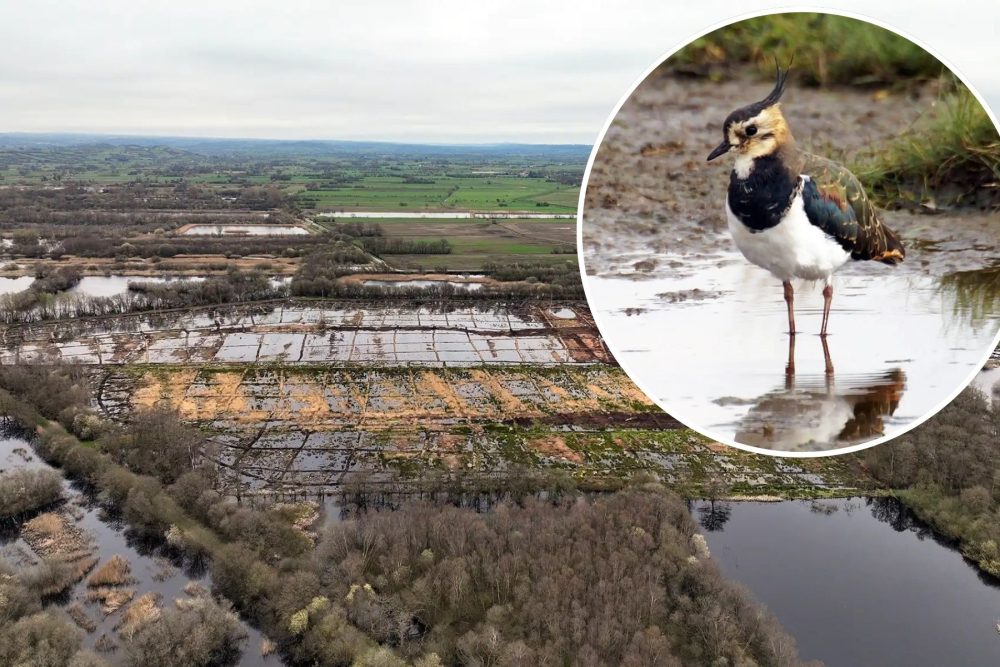
PEATLAND covers just 3% of the Earth’s surface – but contains more than 30% of the world’s soil carbon.
As a result, any loss of peatland is bad news for the amount of carbon released into the atmosphere – causing global warming and climate change.
Across the Levels and Moors, Somerset boasts a large amount of peatlands – silently doing important work for the environment.
However, our peatlands have been damaged over decades, as peat is extracted for fuel and more recently, for compost.
The peat that remained was in bad condition, not as effective at storing that carbon.
Now, in a bid to address the problem, an 18-month project to restore the peatlands of a flagship county nature reserve has been completed.
The Somerset Wildlife Trust (SWT) is celebrating what it called “a key step forward in its fight against climate change and biodiversity loss”, with the finishing of a restoration scheme at the Westhay Moor Nature Reserve.
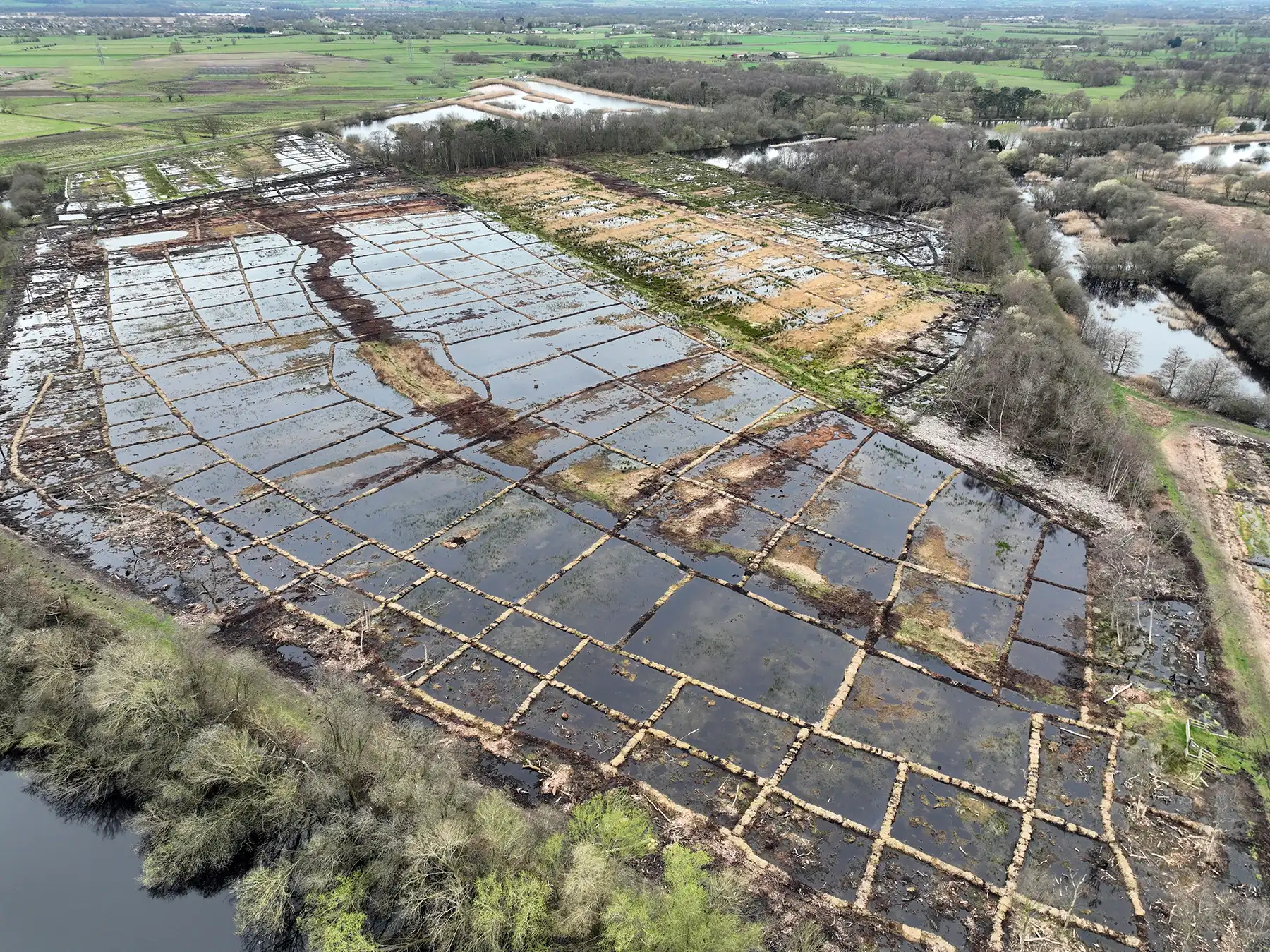
Somerset boasts a lot of peatland on the Levels and Moors. Picture: SWT/Andrew Kirby & Alan Ashman
SWT worked with specialists Open Space (Cumbria) Ltd to deliver a peatland restoration project using a technique called ‘deep trench cell bunding’.
Developed and refined over two decades in the north west of England, the method has been used to help revive degraded peat on Westhay Moor, as well as Natural England’s Shapwick Heath Nature Reserve.
The schemes were the first examples of the technique being used on lowland peat in Somerset.
It involves slowing the flow of water by sealing underground cracks and fissures beneath the surface, while small surface ‘bunds’ are constructed to capture rainwater the peat needs to stay healthy.
The approach has been carried out across 24 hectares of Westhay Moor National Nature Reserve, a major milestone for the Somerset Peatland Partnership project.
READ MORE: Environment news from your Somerset Leveller
There have already been promising signs of progress, SWT said, with several pairs of lapwing seen nesting in newly-restored areas of Westhay Moor, and sphagnum moss — essential to a healthy peat bog — spreading more widely than before, including in areas of the reserve where it hasn’t previously been recorded.
SWT said it believes other specialist species, including the carnivorous sundew, micro-plume moth, and large marsh grasshopper, will also benefit.
Sian Russell, Peatland Partnership Project coordinator at SWT, said: “The work we’ve been carrying out at Westhay Moor is critically important. We are currently in a climate emergency, and we need to take bold action to protect our peatlands and ensure the vital carbon they store stays locked up and in the ground.
“These works are a massive step forward in the rehabilitation of one of the largest remnants of lowland raised bog in the south west, making it more resilient to changing weather patterns as well as supporting some rare and specialist species right here in the heart of Somerset.”
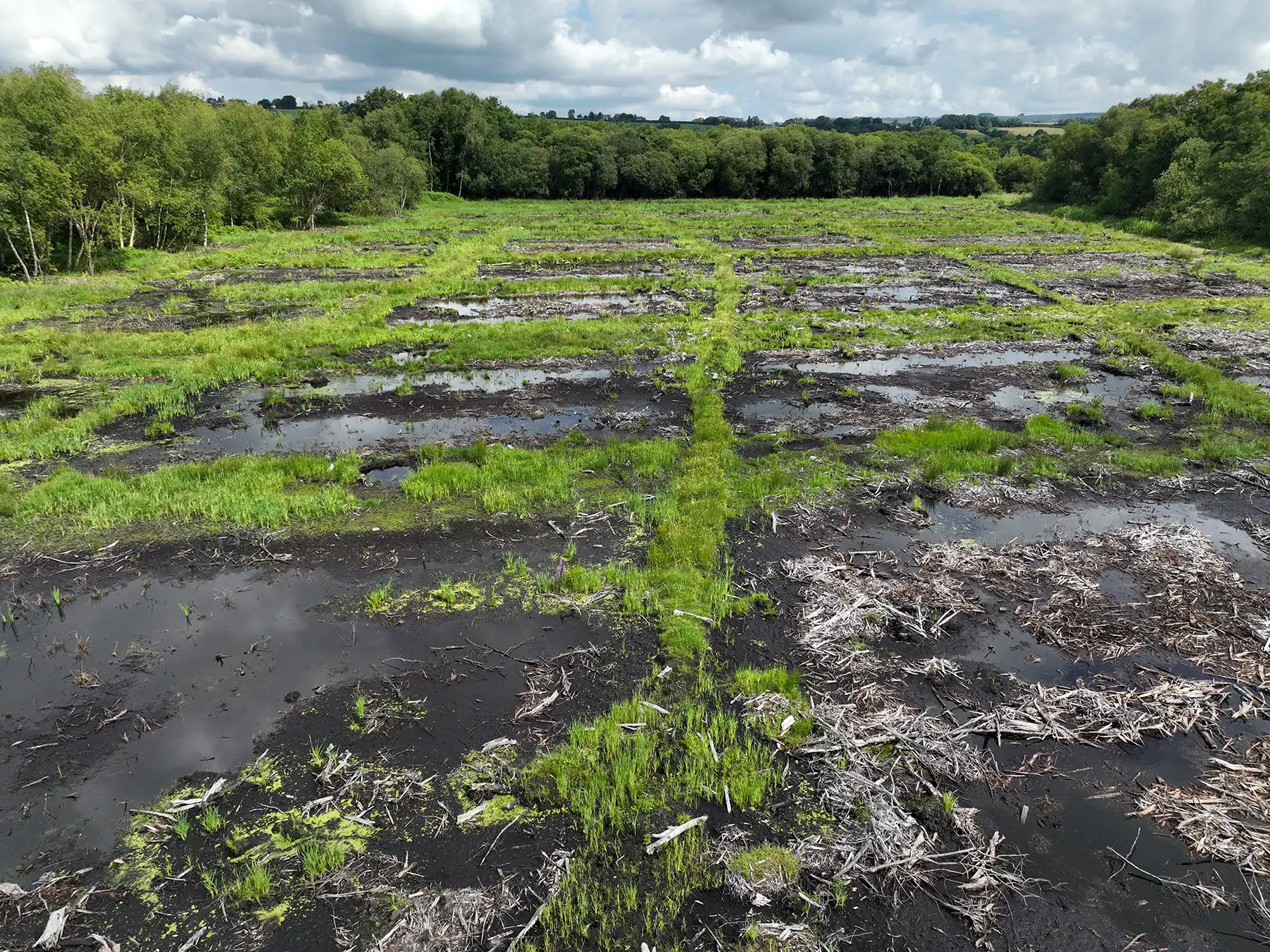
Bunds have been installed on Westhay to help replenish the peatland. Picture: SWT
The project was funded by the Nature for Climate Peatland Grant Scheme and the Landfill Communities Fund via the Valencia Communities Fund.
It is part of a wider project through which the Somerset Peatland Partnership, hosted by SWT, has funded feasibility studies on 11 peatland sites across Somerset and North Somerset, along with a variety of restoration works on areas of Shapwick Heath and North Moor, with parts of King’s Sedgemoor, Moorlinch, and Westhay Heath planned to capital funding this year.
As part of the project, three Somerset-based subcontractors have been trained in the restoration technique to help ensure knowledge stays in the county to support Somerset peatlands.
SWT said it will continue to monitor the work on Westhay Moor through a network of water level-monitoring wells across the site and a dedicated team of volunteers and staff who will be undertaking regular vegetation and species surveys.
Over the next five years, it hopes the rehabilitation of the peatland habitats on the reserve will increase as the peat rehydrates and water tables stabilise.
READ MORE: £535,000 fundraiser launched to ‘secure future’ of Somerset nature reserve
READ MORE: Why aren’t more Somerset people recycling their food waste?
READ MORE: Dry weather brings ‘hidden threat’ to animals at Somerset sanctuary







Leave a Reply