


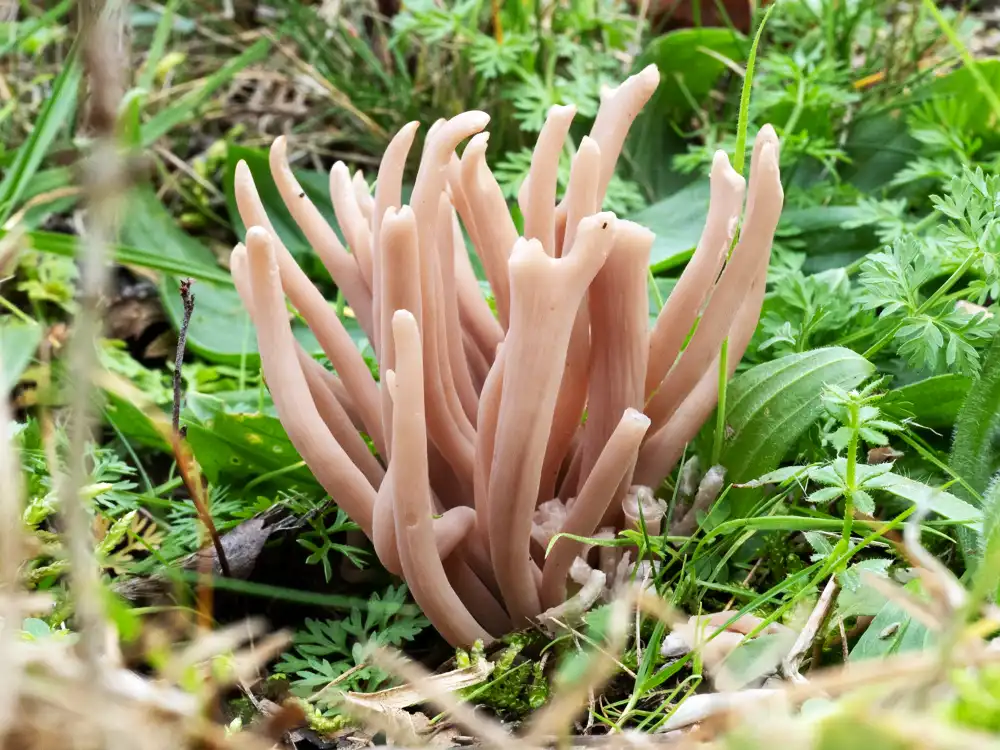
WITH its almost-translucent tentacles, it looks like something that might be found at the bottom of an exotic ocean. But this specimen is in fact a rare species of pale pink, fairy club fungus – and it has been found in Somerset.
And the discovery, at Haydon Batch, near Radstock, has been confirmed as the first ever in Great Britain – made by a group of Naturewatch volunteers from Somer Valley Rediscovered volunteers during a course led by county enthusiast, Dan Nicholas.
The tennis ball-sized fungus, known as Clavaria calabrica, was found during a Waxcap Watch survey in last autumn, and has now been confirmed through DNA testing as the first recorded sighting of the species anywhere in Great Britain.
Clavaria calabrica is a small fairy club fungus, first identified by scientists in Italy in 2017.
Usually found in grasslands that have been managed gently over time and are rich in wildlife, it has previously been recorded in Northern Ireland, but never in mainland Britain, until now.
Waxcaps and similar fungi are a sign of rare, species-rich grassland – like that of Haydon Batch – and their presence helps experts identify surviving areas of ancient meadows that can be protected for the future.
The grasslands are important for wildflowers and fungi, as well as for keeping soil healthy, supporting pollinators like bees and butterflies, storing more carbon than intensively-managed land, and playing a key role in tackling climate change.
Dan said: “Before making our discovery, we’d already had a successful morning recording 15 species of brightly coloured waxcap fungi.
“To top this off by finding a species new to Great Britain, made for an exceptional day.
“Confirming the identification of the species was a nationwide effort, with DNA extraction being carried out by David Mitchel in Scotland, before being sent to the University of Aberystwyth in Wales for sequencing.
“This discovery further demonstrates that the south west is home to some of the most spectacular and diverse examples of these unique grassland fungi communities anywhere on the planet.
“We are truly blessed to have such a colourful spectacle of nature’s calendar right on our doorstep – something we need to cherish and protect at all costs.”
News of the fantastic fungi find came as nature lovers in Somerset are being encouraged to take part in a citizen science programme to contribute to the UK’s first regional Wildlife Index.
Somer Valley Rediscovered is project created by a partnership including Bath & North East Somerset Council, Radstock and Midsomer Norton town councils, parish councils, and others – and funded by the West of England Mayoral Combined Authority.
It aims to improve biodiversity while better connecting communities to their greenspaces and landscapes.
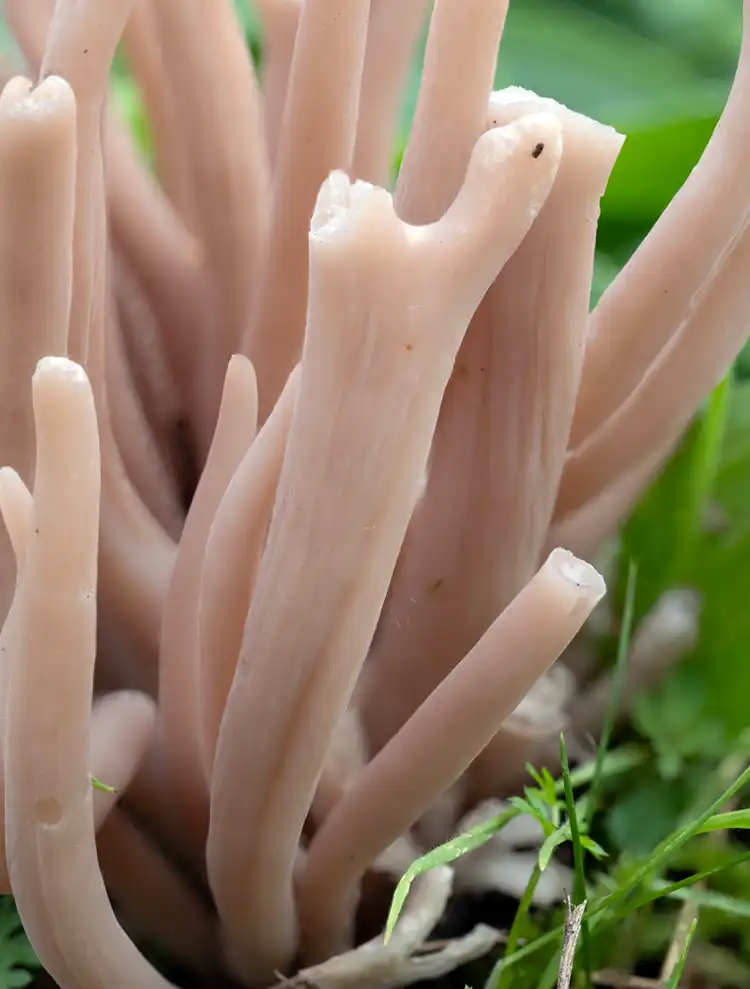
Clavaria calabrica was found on grassland near Radstock
The discovery comes ahead of the combined authority’s regional State of Nature report, due in late Spring, which aims to highlight evidence on the health of nature across the area and help shape future action on nature recovery.
Helen Godwin, Mayor of the West of England, said: “Finding a species never before recorded in Great Britain here in the West is something we can all be proud of. This shows again just how rich and unique landscapes across our region can be.
“The work of the West of England Nature Partnership helps make sure these habitats are understood and protected. I encourage everyone to get involved in the West of England Wildlife Index, helping us record and safeguard the nature that makes our region so special.”
Town councillor Chris Dando, Mayor of Radstock, added: “Radstock Town Council has been working with many local groups, experts and volunteers since the purchase of Haydon Batch in 2018. They have all been invaluable in understanding the many plants and species who call Haydon Batch their home.
“We are incredibly lucky to have so much support and an incredible space to share and explore. Our special thanks go to Somer Valley Rediscovered without the support they have provided over the last four years, the discovery would not have been made.”
People can take part in the West of England Wildlife Index, a citizen science programme tracking wildlife at 20 sites across the West of England, by counting bees, butterflies, plants and wetland birds as part of national monitoring schemes.
No specialist experience is required and full details of what’s involved are set out online at https://www.westofengland-ca.gov.uk/what-we-do/environment/nature-recovery/wildlife-index.
READ MORE: Environment news from your Somerset Leveller








Leave a Reply