


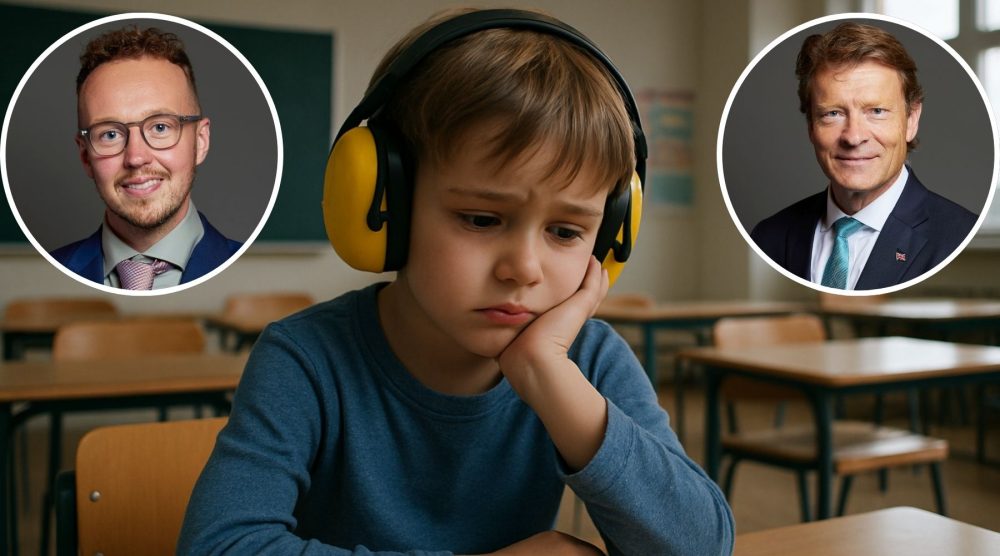
A SOMERSET MP has branded remarks made about children with special educational needs and disabilities by Reform UK deputy leader Richard Tice “dangerous”.
During a press conference this week Tice, the MP for Boston and Skegness, claimed conditions such as ADHD are over-diagnosed, and that the sight of young people wearing ear defenders in classrooms was “insane”.
His comments, including a claim there is a “crisis of overdiagnosis of children with neurodiverse issues”, has prompted outrage from parents and campaigners – including Somerset MP Adam Dance (Lib Dem, Yeovil).
Mr Dance said Tice’s broadside was “deeply insulting to families”, and part of a narrative that risks taking the country backwards in the treatment and understanding of neurodiverse children.
“Richard Tice’s comments about so-called ‘over-diagnosis’ of children with SEND are not only wrong, they are dangerous,” he said.
“There is no crisis of over-diagnosis in this country – there is a crisis of children being missed, misunderstood, and left without help for far too long.
“Parents are not fighting for assessments because it’s fashionable. They are fighting because their children are struggling and the system is failing them.
“To suggest that families are part of the problem is deeply insulting to thousands of parents who have had to battle every step of the way to get even the most basic support.
“As someone with dyslexia and ADHD, I know exactly how life-changing the right diagnosis and help can be. It gives children confidence, understanding, and a sense of belonging. Denying that — or belittling it — does real harm.”
READ MORE: Somerset MP hits out at “frankly, racist” GB News segment on ‘foreign-sounding’ names
READ MORE: Politics news from your Somerset Leveller
During his press conference, Mr Tice said: “You’ve got to the mad situation now where children who don’t have any form of label are starting to feel left out.
“They’re feeling that in inverted commas, they’re the normal minority, it’s insane and it’s becoming a sort of school joke.”
He did not give any evidence for his claims, but added: “I’ll just raise one more point, the sight of children in classes wearing ear defenders, I’m sorry, this is just insane. It’s got to stop. The teachers want it to stop. Heads want it to stop. It’s not the right way forward.”
Many children and adults with autism exhibit a heightened sound sensitivity, meaning they can be affected by loud or recurring sounds in a more extreme way than others. For example, many autistic people struggle when around sounds like a vacuum cleaner, or hand dryers.
To combat the impact of their sound sensitivity, many choose to wear ear defenders to lessen the noise. It is this that Mr Tice seems to have a problem with.
The National Autistic Society explained it by saying: “If you are hyper-sensitive, sounds may seem much louder and sudden noises may be more distressing to you than they are to other people.
“You may avoid loud places, cover your ears when you hear noise (this is known as ‘sensory-avoiding behaviour’) and become distressed by unexpected noises or if your environment is too loud for too long.
“You may also enjoy your sensitivity to pleasing sounds.”
The NAS said research suggests between 53% and 95% of autistic people experience sensory processing difficulties.
“People often describe sensory processing differences as ‘sensory issues’ or, for hyper-sensitivity, as ‘sensory sensitivity’,” the charity added.
Joey Nettleton Burrows, of the NAS, added: “Parents aren’t profiting from the education system, they are spending time and money fighting against a broken Send system, just to get the most basic support at school.
“Claiming there is ‘overdiagnosis’ couldn’t be further from the truth. The system needs reform to meet the needs of all children, so that Send children, including autistic young people, can access a suitable school place and thrive.
“Spreading these kinds of lies stigmatises autistic people and makes life harder for them and their families.”
Mr Tice’s comments come as Reform-run local authorities – who fund social care, which can include people with autism and other SEND – struggle to make spending cuts promised ahead of local elections which saw them elected.
But Mr Dance rejected the claims made by the Reform figurehead, adding: “Reform UK’s approach would take our country backwards. It risks a return to a time when children were punished for behaviours they could not control, written off as ‘difficult’, or pushed out of classrooms instead of being supported. That is not the future our children deserve.
“We need early screening, proper teacher training, fair funding, and compassion — not rhetoric that stokes division and undermines vulnerable children.
“I will keep fighting for a system that lifts children up, recognises their strengths, and gives every young person the chance to thrive. Reform’s vision does the opposite.”
Mr Dance warned that Reform UK’s rhetoric risks reversing progress on inclusion and SEND support in schools, as he leads work in Parliament to improve support for neurodiverse children, including calling for universal screening in primary schools, mandatory teacher training on neurodiversity, and fairer SEND funding.








Leave a Reply