


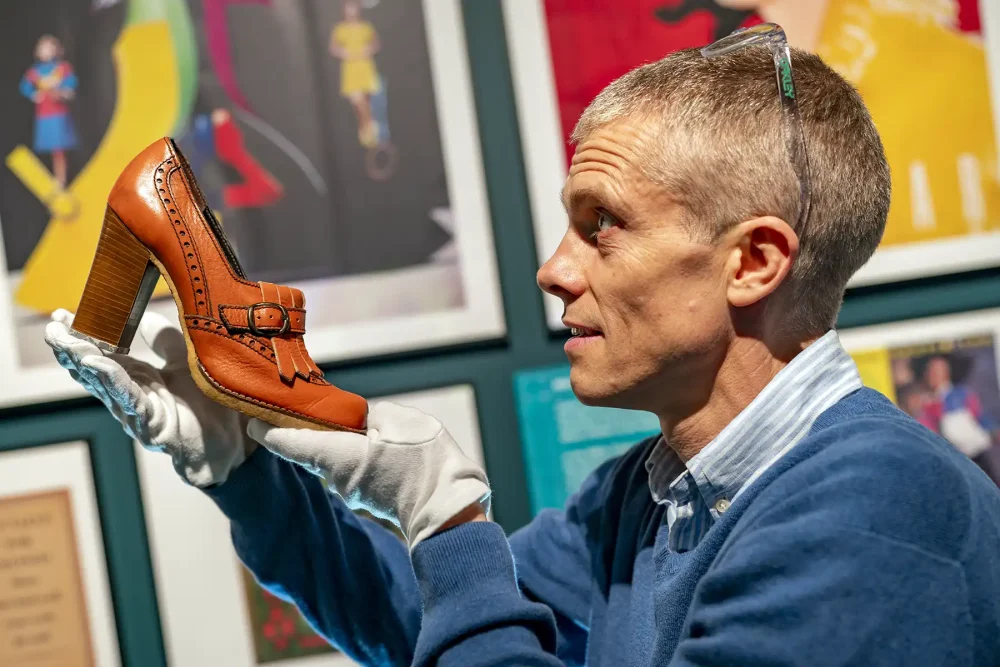
THE new Shoemakers Museum – celebrating the well-heeled history of the footwear industry in Somerset – has officially opened in Street.
The “cultural landmark”, in the heart of Clarks Village, Street, opened today (September 18), coinciding with the 200th anniversary of the globally-known brand.
Bosses say the museum celebrates “the evolution of shoemaking, style and identity – not just as a product, but as a reflection of British life, global influence and local pride”.
Set across four immersive galleries, the museum invites visitors to explore the journey of one of the UK’s most iconic brands – from its Quaker beginnings in Somerset to global runways and subcultural icons.
Sheepskin slippers, desert boots, Britpop stagewear and school shoes share space with rarely seen archival materials, promotional films and prototypes – bringing to life 200 years of innovation, nostalgia and design.

Yet the museum tells a story far greater than the sum of its exhibits, according to Rosie Martin, director, who said: “This is a museum about people – their craft, their community and the shoes that became part of life’s biggest milestones.
“Whether you remember your first pair of Clarks or you’re discovering the story for the first time, this is a space for connection, creativity and collective memory.”
Shoemakers Museum was built not only in Somerset but by Somerset, she said, with a team of local contractors, designers and engineers coming together to shape its striking new home.
The architectural vision was led by Bristol-based Purcell, who wove together a 16th-century manor house, a 17th-century barn and a new brick corbelled extension – constructed using bricks supplied by Northcot Brick in Gloucester.
Vobster Architectural, based in Radstock, supplied the bespoke stonework that gives the museum its visual identity – from grand cast stone columns to finely detailed copings and surrounds.

These pieces, crafted and engineered locally, form both the aesthetic and structural backbone of the new building, embodying the same pride in precision that defined generations of shoemakers in Street, the museum said.
Inside, the museum’s storytelling comes alive through the work of Nissen Richards Studio, whose award-winning team worked with Shoemakers Museum staff to create the exhibition’s immersive design – including recreated Clarks shopfronts from the 1950s and 1980s, spaces that echo with the voices of former factory workers and hands-on encounters with objects that shaped a national identity.
Structural engineering was delivered by Mann Williams, who designed a sustainability-first timber superstructure and discreetly reinforced the historic fabric of the site – even reusing original foundations to reduce the project’s environmental impact.
The build was delivered by Melksham-based Rigg Construction, including the fit-out of the on-site café.
Quantity surveying for the base build was provided by Currie & Brown, while Greenway Associates acted as the QS for the museum fit-out.
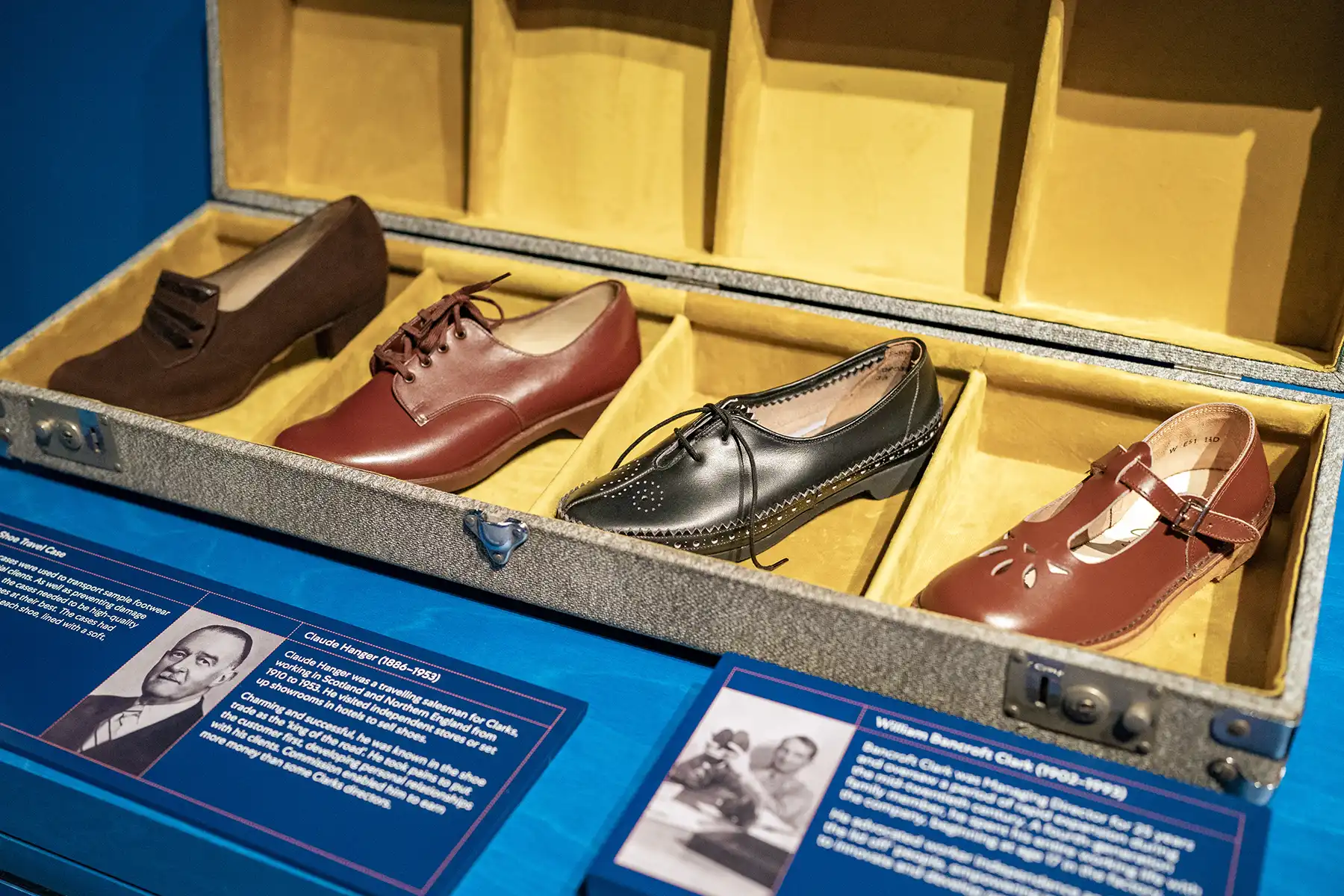
The museum shop was fitted out by Resolution Interiors, while the gallery spaces were delivered by Realm.
In a surprise twist beneath the galleries, Shoemakers Museum also houses an internationally significant collection of marine reptile fossils, discovered in the layer of rock beneath the Clarks factories.
First collected by Alfred Gillett, a Clarks family member and amateur palaeontologist, the fossils place Somerset’s story in the wider sweep of deep geological time, revealing layers of history both literal and symbolic.
“The museum stands not just as a tribute to the Clark family legacy,” said Cato Pedder, chair of the Alfred Gillett Trust. “But as a platform for future generations to explore creativity, community and cultural identity – through the simple act of putting one foot in front of the other.
“More than a museum of shoes, this is a living, breathing tribute to the community, powered by the people who built it – from Quaker founders and factory workers to today’s local contractors, historians and volunteers.”
Shoemakers Museum, at The Grange, Clarks Village, Street, is open daily from 10am to 5pm.
For more information on the Shoemakers Museum – and to book tickets – visit shoemakersmuseum.org.uk.
READ MORE: Huge panels craned in as Shoemakers Museum development continues
READ MORE: Shoemakers Museum in Street: Opening date confirmed
READ MORE: Glastonbury & Street news from your Somerset Leveller







Leave a Reply