


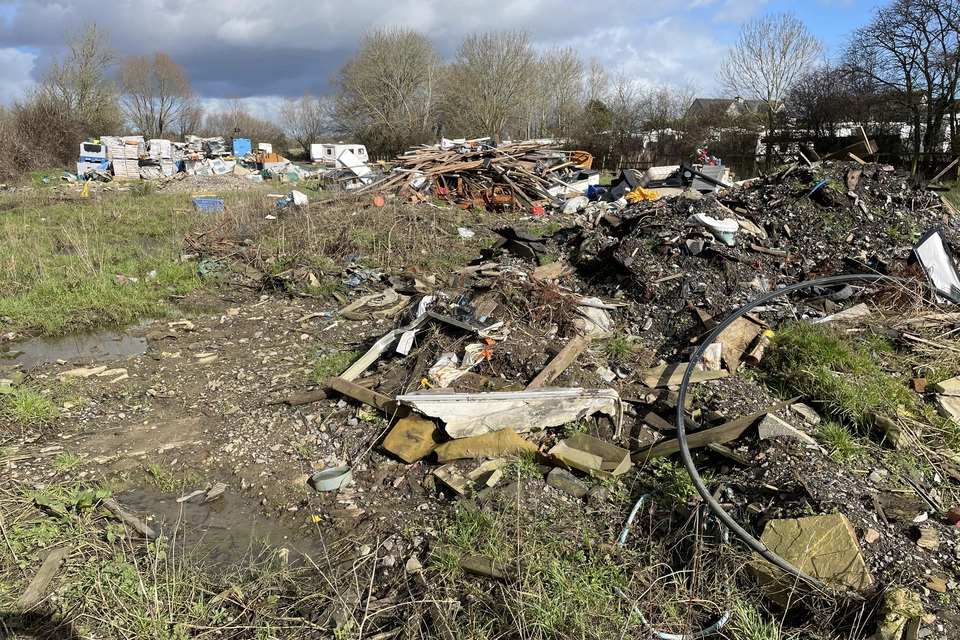
SOMERSET caravan site owner John Holland has been ordered to pay more than £116,000 after being convicted of converting a site of special scientific interest into a commercial caravan site – cramming dozens of vehicles and dumping waste on the land.
Holland pleaded guilty to disturbing the SSSI at Long Load, near Long Sutton, which serves as an internationally important breeding ground for wading birds and waterfowl.
The 59-year-old, of Tapmoor Road, Moorlinch, appeared before Taunton Crown Court on November 26 for sentencing after previously pleading guilty to two offences under the Wildlife and Countryside Act 1981.
The prosecution was brought by Natural England following a four-year investigation into Holland’s activities.
The probe found he had turned the 1.2-hectare grassland site, which sits in the Wet Moor SSSI, into a permanent commercial caravan park, with more than 90 caravans and 40 vehicles crammed into two fields.
He has also laid 300 metres of Tarmac roads, as well as dumping household and commercial waste on the site.
READ MORE: Crime news from your Somerset Leveller
Between 2011 and 2018, Holland and his family had unsuccessfully applied five times for planning consent to develop the site into a permanent caravan park – with the refusals upheld by the Planning Inspectorate.
The SSSI, which also falls within a Special Protection Area and Ramsar site, was designated in 1985 and forms part of the extensive marsh grasslands and ditch systems which make up the Somerset Levels and Moors.
It provides nationally important breeding habitat for threatened populations of wading birds such as curlew and black-tailed godwit and supports internationally important populations of red-listed bird species including the endangered Bewick’s swan, lapwing and pochard, as well as being home to over 3% of the global population of Eurasian teal.
Natural England concluded the works carried out by Holland had resulted in habitat loss, displacement and long-term disturbance to the species, and charged Holland with two offences in March 2023.
After pleading guilty, Holland – who was also convicted in September 2023 of physically threatening and abusing Natural England officers who visited the site to investigate the initial allegations in 2021 – claimed to be bankrupt.
However, Natural England commenced proceedings under the Proceeds of Crime Act 2002 and instructed financial investigators, who found Holland had accrued more than £1 million in unexplained cash and assets, which were successfully evidenced to have arisen from his unlawful operation of the caravan park.
The court held Holland’s offending demonstrated a criminal lifestyle and certified he had accrued £1 million of illicit financial gain from his actions.
He was ordered to pay Natural England £116,263 within three months.

Before and after photographs of how the site developed at Long Load, near Langport. Pictures: Natural England
The court noted that the amount it could order Holland to pay was limited in the context of the total illicit benefit accrued owing to his active bankruptcy proceedings.
The court also granted Natural England an order requiring Holland to restore the site to its former condition as semi-natural grassland by January 23, 2026, removing all caravans and associated infrastructure and creating and maintaining habitat for breeding and wintering birds.
If he fails to comply, he faces a further unlimited fine plus an additional £100 fine for each day the order is not fulfilled.
Sentencing Holland, His Honour Judge Richard Shepherd, said: “You had numerous opportunities to rectify the damage caused and carried on regardless, which amplified the effects on the site’s fauna and flora.
“This was a deliberate and persistent set of offending which showed a flagrant disregard of the law.”
After the hearing Matt Heard, Natural England national delivery director, said: “We welcome the court’s judgement, which is the result of four years of dedicated investigation and demonstrates our clear commitment to protecting Sites of Special Scientific Interest.
“Holland’s behaviour has shown blatant contempt for this intentionally important conservation site and the rare and threatened species that depend upon it.
“His actions were completed in full knowledge of the impact they would have, yet he chose to repeatedly disregard Natural England’s advice and prioritise achieving significant illicit financial gain over complying with his legal obligations to protect the site.”







Leave a Reply