


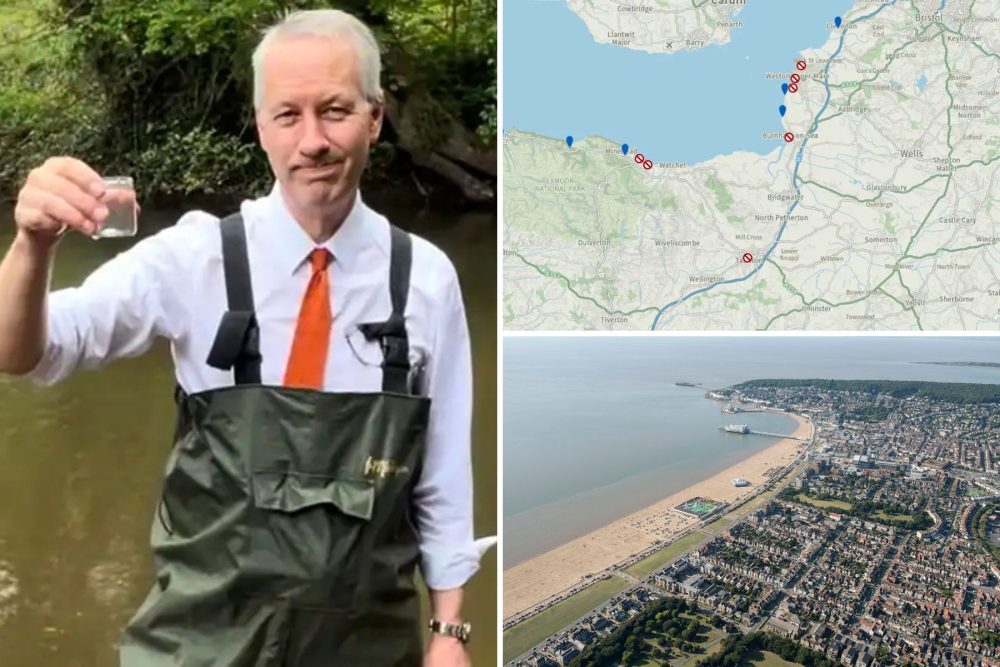
THE water at a number of designating bathing spots in Somerset has been rated as ‘poor’ by the Environment Agency (EA) – with swimmers advised not to use them.
Ratings released by the EA this week saw a number of Somerset spots used by open water and wild swimmers handed the lowest designation, of poor.
Meanwhile, the Department for Food, Environment and Rural Affairs (Defra) has already launched a consultation into reforming water quality regulations, as the government aims to tackle the issue.
Reacting to the ratings, which are based on samples taken during the May to September bathing season, Cllr James Clayton, executive member with responsibility for environmental protection at North Somerset Council, said: “It’s encouraging to see that Clevedon has continued to meet DEFRA standards.
“Naturally we would hope that Sand Bay, Weston and Uphill would also be classified higher, but we will do all we can to ensure that our beaches and lakes are safe to use.
“It’s likely to have been a similar reason to last year – heavy rain in the summer can create run off which causes pollution. Also farming has an impact as well as contamination coming from surface water drains, birds, sea front activity and other urban sources.”
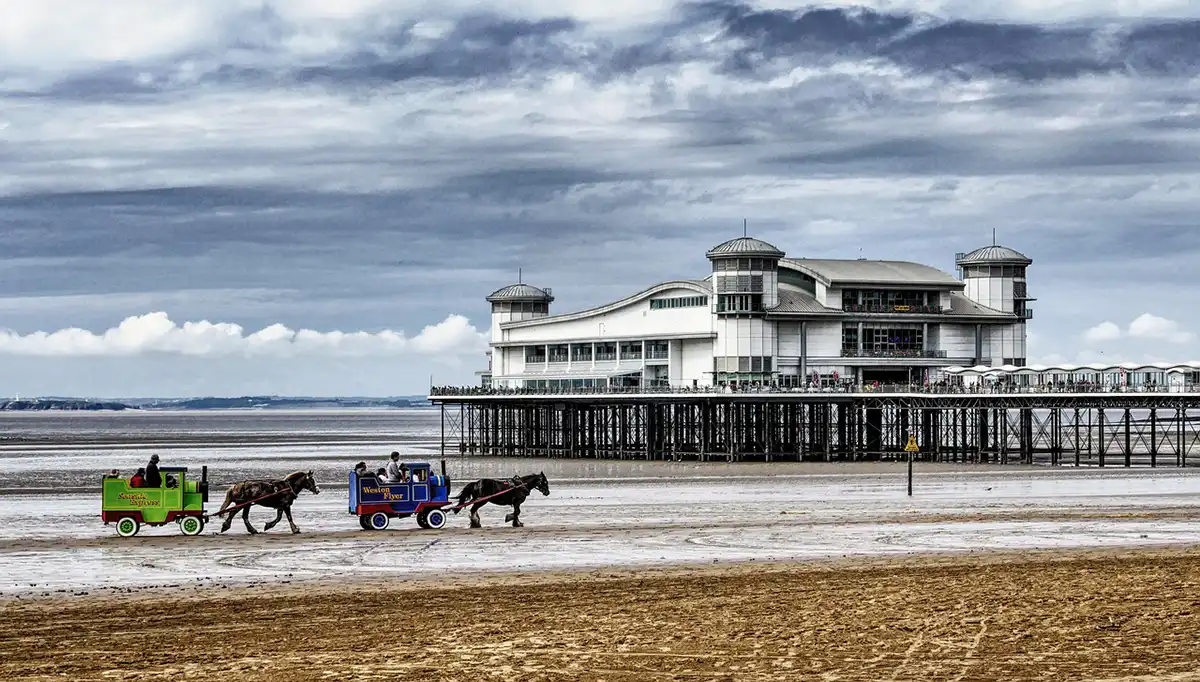
Weston’s main waters have been deemed ‘poor’
Director of public health at the council, Matt Lenny, said signs at Weston’s main beach gave swimmers real-time information on the quality of the water.
“These ratings are based on a statistical measure of all samples over a four-year period so whilst we would hope they would improve, the picture hasn’t changed from last year,” he said.
“There are no pass/fail standards for individual water samples. A sample simply tells us the quality of the water at that specific time, but water can change even over the course of one day.
“We would advise anyone swimming to look at the active signage system we have in place at Weston’s main beach which uses a prediction forecast to let swimmers know if there’s potential for lower water quality in real time. Please stay informed so you can choose how best to enjoy your time on our coastline.”
Somerset bathing waters rated poor by the Environment Agency:
- Weston – Sand Bay
- Weston – Main
- Weston – Uphill slipway
- Burnham – Jetty north
- Blue Anchor – West
- Dunster Beach
- Taunton – River Tone at French Weir Park
Ruth Barden, director of environmental solutions for Wessex Water, said: “We’re disappointed that the three Weston bathing waters have again been classified as poor, despite the ongoing and collaborative work undertaken by different organisations.
“While we have two storm overflows which could potentially impact on water quality, only one of these operated during the bathing season. This occurred following extremely wet weather, at the end of September, releasing mostly rainwater to prevent flooding.
“Wessex Water has invested heavily in improved sewage treatment in and around Weston-super-Mare, and the results of extensive bacterial testing we’ve carried out at our water recycling centres – shared with the EA – indicate no discernible impact on bathing water quality at the three beaches.”

The water quality map produced by the Environment Agency/Defra
Jim Flory, Wessex area environment manager at the EA, said: “We are committed to improving water quality at Weston-Super-Mare’s beaches. This task will require the combined efforts of all partners not just to find any sources that damages water quality but to stop them.
“This bathing water season our officers have checked water company sewage discharges, inspected farms, taken to the sky with drones, sampled from the sea with hovercrafts and our boots on the ground have clocked up over 130 miles of patrolling Weston’s beaches.
“Many people enjoy time in or on coastal waters. They bring value not just economically but are also rich in social, health and wellbeing benefits. It’s vital that bathing water quality is maintained and improved.”
In Taunton, MP Gideon Amos (Lib Dem, Taunton & Wellington) called news of a poor rating for the River Tone in French Weir Park, “shocking”.
“It is shocking that for so many years people were using our river, including wild swimmers, without being given any information on the state of the water,” he said.
“So while it’s disappointing the new research suggests what we all feared – that water quality is poor – the new status means we, at last, have found out the truth about the shocking effects of local pollution.
“The next step from the government must now be a comprehensive programme of investment to begin to improve water quality of the Tone and action from the water company and others to clean up their act.
“The recent new status also means the Environment Agency has just established the necessary working party to make these plans a reality and it held its first meeting recently.”
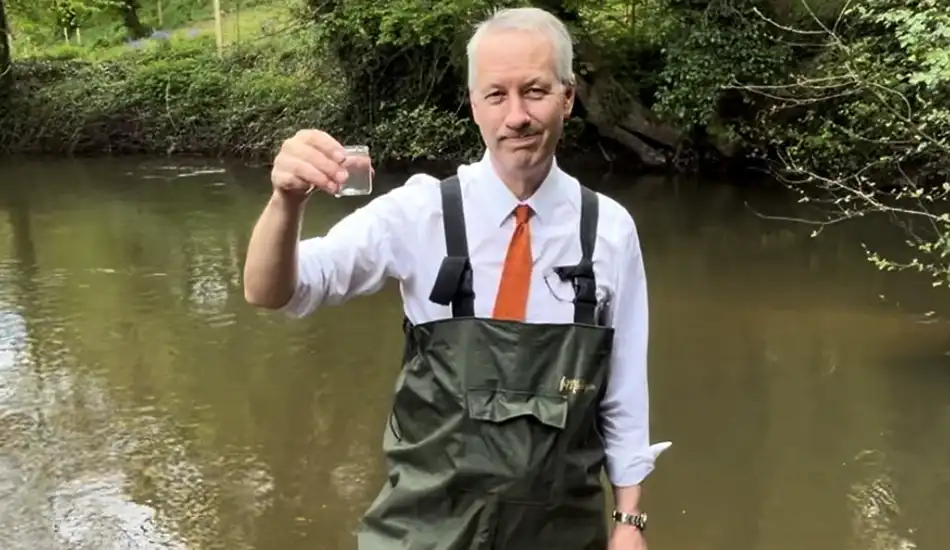
Taunton & Wellington MP Gideon Amos in the River Tone
He said he had followed up with the chair of the Environment Agency and its Wessex area manager in a bid to ensure “Taunton’s river will get the investment its status now demands”.
“This new data strengthens the case for those investment measures which I hope will soon be designed. I’ll be keeping up the pressure,” he added.
“Meanwhile, those who love wild swimming are so right in continuing to take all the necessary precautions to stay safe and advise people to only go in at their own risk.
“And it’s great to see my Lib Dem colleagues on Taunton Town Council have built new steps and are making safety advice notices for this historic bathing spot.
READ MORE: Click here for more environmental news from your Somerset Leveller
“It’s been a firm favourite for Tauntonians for hundreds of years so let’s get it back to a state people can genuinely be proud of.
“That’s why I applied for the new status in the first place, working with the Friends of French Weir Park, and that’s why I’m continuing work to stop the shocking dumping of sewage in our rivers.”
A Wessex Water spokesperson added: “Licensed storm overflows operate to protect properties from flooding and have minimal impact on bathing water quality, but we’re spending £3 million every month on schemes to improve them. This investment will more than double from 2025, if approved by Ofwat.
“More widely, we believe rain should be valued as a resource and used and returned to the environment close to where it falls. Alongside our ongoing work, this requires the political understanding and will to bring forward policies that that promote best practice in rainwater management at source.”
Somerset Council has been approached for comment.







Leave a Reply