


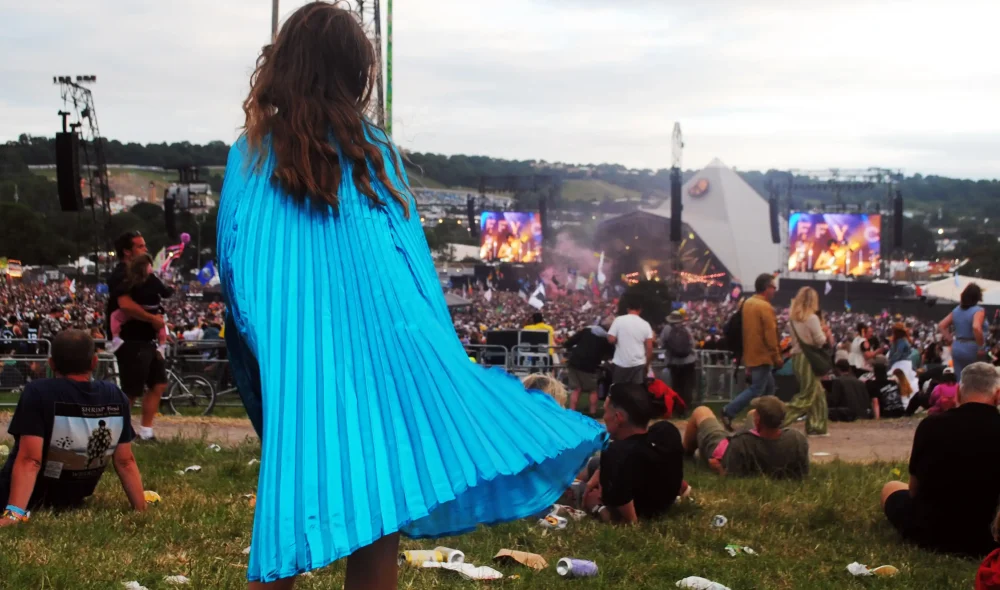
FOUR decades ago, one of the biggest mass arrests in English legal history took place. It happened on June 1, 1985, in a field around seven miles from Stonehenge.
That day, police enforced a High Court injunction prohibiting the holding of the Stonehenge Free Festival, by setting up a roadblock preventing a convoy of New Age Travellers and others reaching the ancient site, forcing the procession into a nearby field.
Then, on the morning of June 1, in what became known as the Battle of the Beanfield, the police moved in.
After a brutal operation by police, a total of 537 travellers were arrested, with dozens injured.
The incident has become a landmark of traveller and alternative folklore as a symbol of what they see as the systemic repression of nomadic lifestyles like theirs.
Both before and after the Battle of the Beanfield, many of those involved were to be found each year at an event nearby – Glastonbury.
In 2025, some 40 years on from the Battle of the Beanfield, many things have changed, while many others have not.
The traveller community – and their way of life – remains largely outlawed by the Establishment, while the Battle of the Beanfield is completely unknown to many in this country.
But it was commemorated at Glastonbury this year – primarily in the Atchin Tan area, dedicated to all things traveller and an extremely welcome addition at Worthy Farm.
The fact it is there highlights how important it is to note the background, the history, the traditions of events like Glastonbury, and indeed, the role the festival itself plays in educating people on such issues – which they may otherwise never be aware of. But they are the roots of such landmark, legendary events, as well as on-going struggles.
Just as the traveller community has changed in the intervening years, Glastonbury too is no longer the free-wheeling festival it was back then.
Things change, people change, places change. Rules change.
It all points to a real challenge the festival organisers face each time they put on the greatest show on Earth, which for me, Glastonbury remains.
Whether we like change or not, knowing and understanding the reasons behind it is important, for context if nothing else.
At Glastonbury 2025, the honouring of the Battle of the Beanfield seemed an apt metaphor for a lot more going on at Worthy Farm.
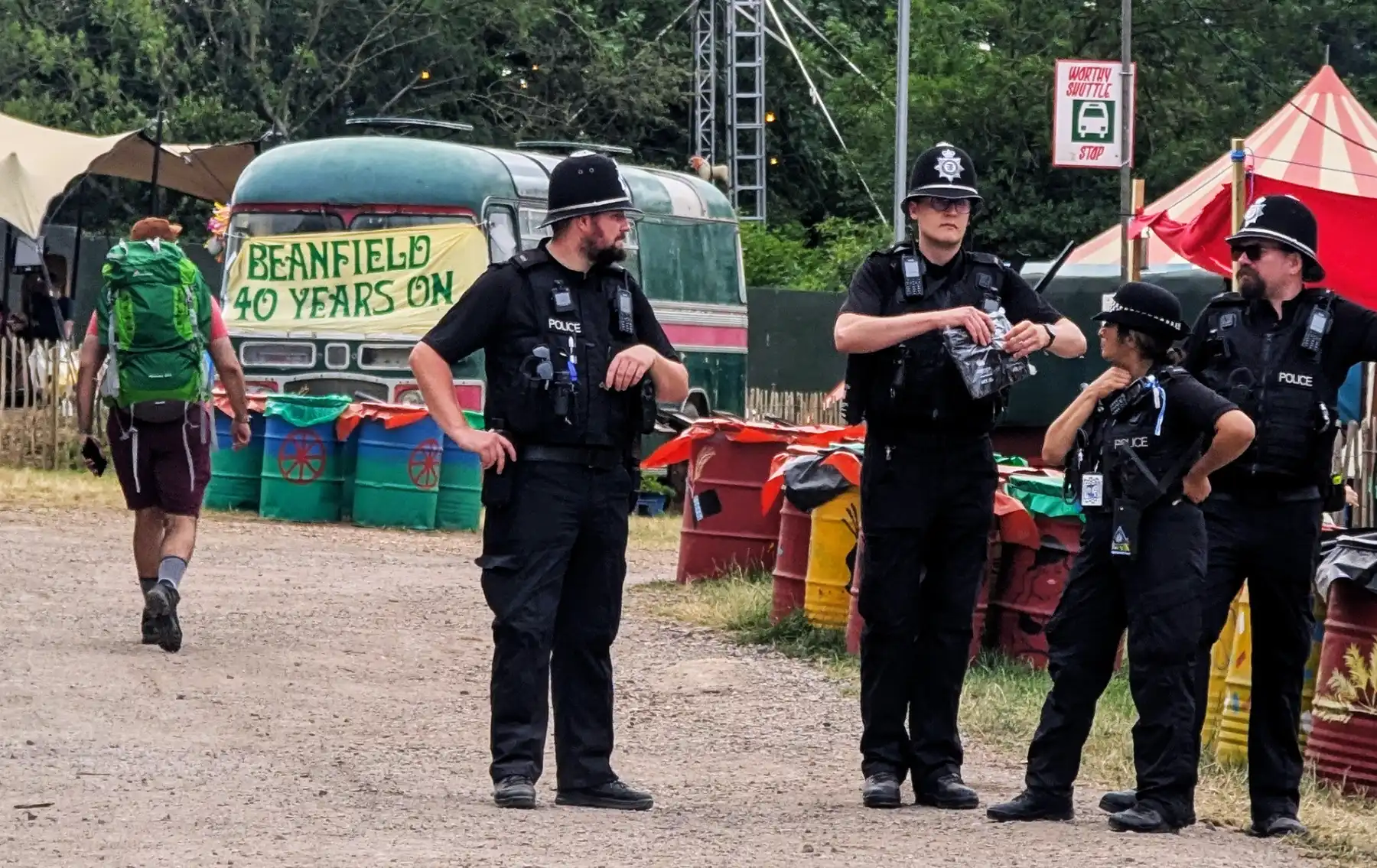
It struck me as I took the above photograph of police officers going about their regular patrols – mingling with festival goers, posing for selfies and even handing my little boy their hat for a picture, which he was thrilled about – against the backdrop of the banner highlighting that fateful day in June 1985.
Some festival regulars will be well aware of the Battle of the Beanfield, and why it should be remembered – at Glastonbury perhaps more than elsewhere.
But equally, the presence of the police is a necessary part of the event now. And they are charming, helpful, and yes, perhaps necessary.
Glastonbury has had to change to thrive, but it strives to pay tribute to how it came about – and why it has changed. To put things in context.
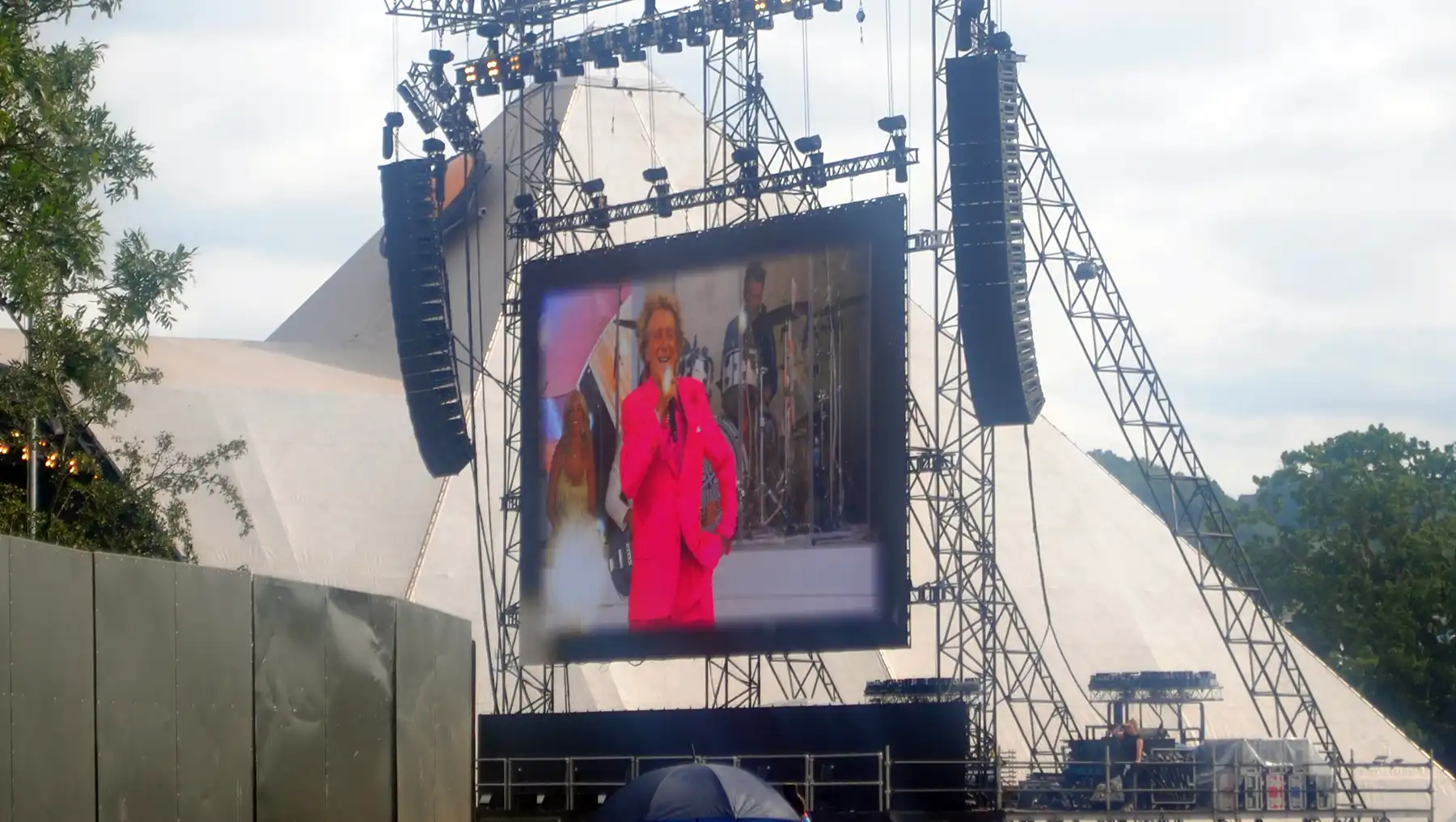
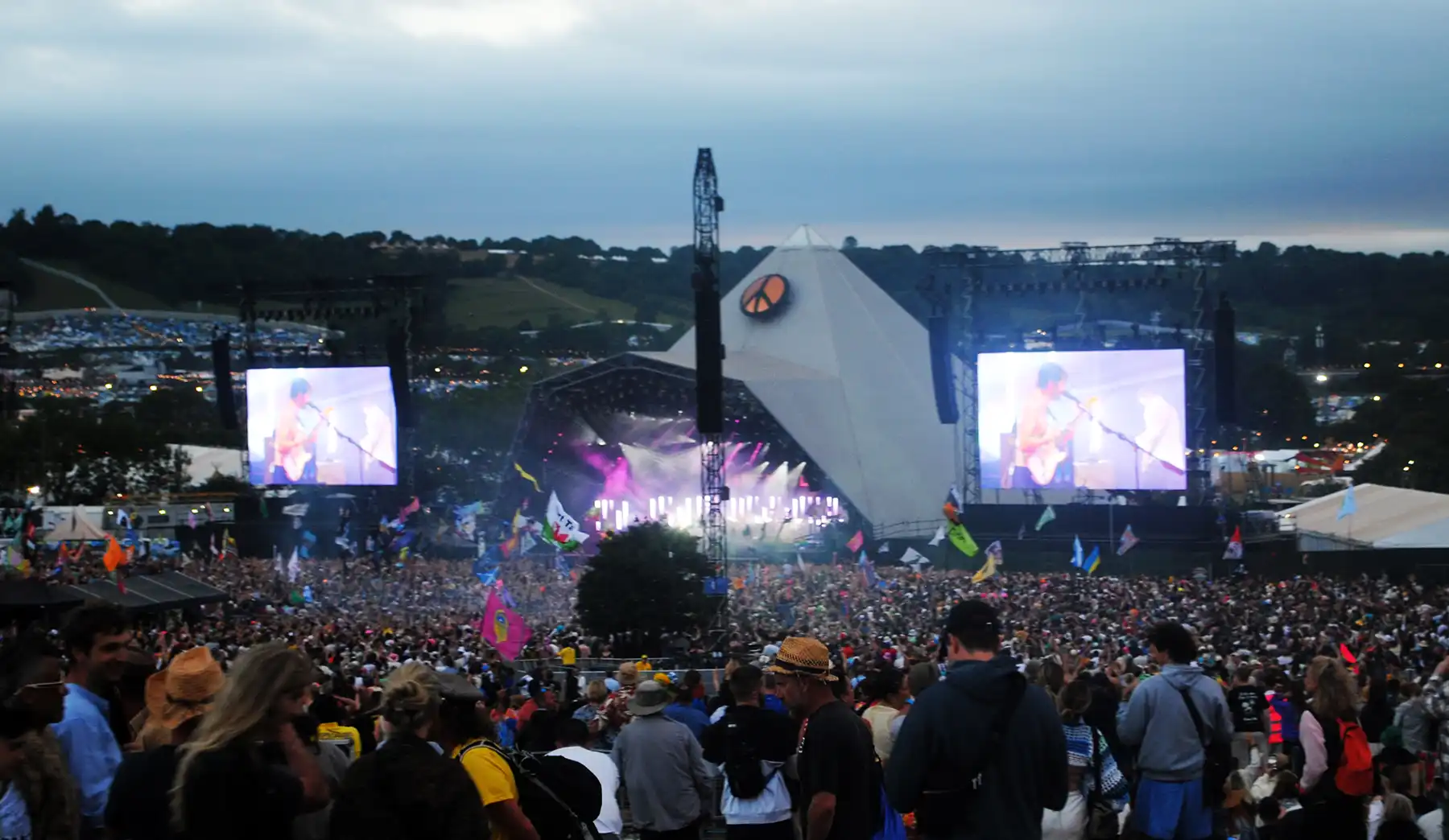
It struck me again as I watched Sir Rod Stewart prance around the Pyramid Stage on Sunday afternoon.
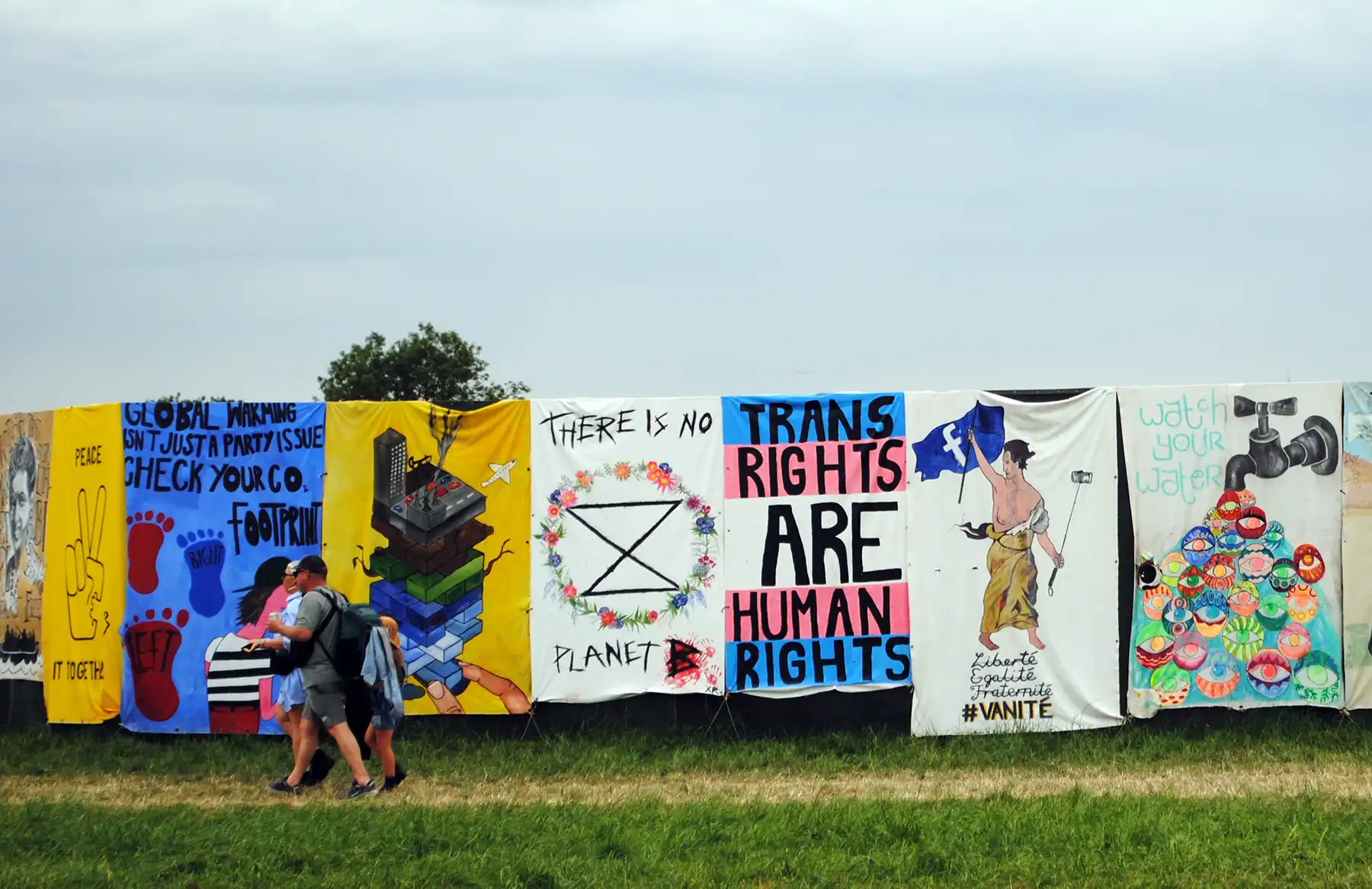
Glastonbury, for me, represents the struggle for progress. Everywhere you go on that amazing 1,500-acre site, you are immersed in messages of tolerance, of acceptance, of the progressive movement from the Suffragettes to trans (and women’s) rights.
Yet the ‘legend’ of the event still felt the need to have backing singers dressed in short dresses and high heels, as he posed between them with his chest out and stars on his backside, singing about being sexy.
At one point, having returned to the stage following a costume change during which his female bandmates led a rendition of Lady Marmalade (Voulez-Vous Coucher Avec Moi Ce Soir), Sir Rod – in a moment truly befitting Alan Partridge – said, “What about that? Well done ladies…”, as he gestured them all to gather round him.
Hmmmm.
Now, I am not denigrating Sir Rod, not really – he is from a time where that is what rock stars did. A lot of the Worthy crowd loved it. But for me, you know…
Context, I suppose. Context.
Elsewhere, there was the altogether more serious issue of the Israeli onslaught in Gaza, which was a common theme of campaigns around Worthy Farm.
That all reached a head with remarks made by punk rap duo Bob Vylan, which sparked a criminal investigation, leading news bulletins and adorning front pages ever since.
Yet whatever you think of vocalist Bobby Vylan’s comments, it is worth noting that on the very day he made them, it was reported 81 Palestinians were killed and more than 400 injured after Israeli airstrikes in Gaza.
The BBC – which has gone on to condemn its own streaming of Bob Vylan’s set – reported how footage “shows people digging through the sand with their bare hands and spades to find bodies”.
Context, I suppose. Context.
Earlier this month, the UK Government sanctioned two Israeli ministers – Itamar Ben-Gvir and Bezalel Smotrich – after Foreign Secretary David Lammy said the pair had “incited extremist violence and serious abuses of Palestinian human rights”.
Those comments included Smotrich recently saying how Israel is “conquering, cleansing, and remaining in Gaza until Hamas is destroyed”.
The fact these issues are addressed at Glastonbury is important.
Did Bob Vylan go about it in the right way? Perhaps not. But they are artists, entitled to their view – and have no direct influence on politics or military actions in the Middle East. Smotrich and Ben-Gvir are politicians; people with power. They too are entitled to their view – but you don’t see them on the front of the Daily Mail each day.
Context, I suppose. Context.
Glastonbury treads a very fine line between preserving the spirit that makes it the greatest festival in the world – and being allowed to take place in a world where the media landscape is dominated by right-wing groupthink that despises everything it stands for.
Organisers will never please everyone. It’s impossible. But they have a darn good go at doing so.
People are given a say, given permission to debate, discuss and protest. And that’s exactly what it should do.
Sometimes, the line will be crossed, but that is the danger of free speech – the kind of free speech many of the people opposing Glastonbury laud, while simultaneously seeking to silence those who oppose *their* views.
Hopefully, no one at Glastonbury asks the Daily Telegraph or the Mail for their approval – and no one ever should. They will never, ever give it anyway.
The festival should focus on giving people the opportunity to find out more about important issues impacting their lives and those of others around the world, and to debate them outside the ‘real’ world; a world where news and print headlines are governed by the same right-wing groupthink that continues to insist it is being silenced.
That is what Glastonbury provides. And it should be proud to do so, never ashamed.
It gives context, I suppose. Context.
Away from the political, in a practical sense, as I meandered my way around those fields in 2025, it was clear the organisers had learned some very valid lessons from previous Glastonbury instalments – and acted on them.
There was more space, though it is still very crowded, and the bookers deserve a huge pat on the back – despite the obvious surges for acts such as Kneecap and Charli XCX – as clashes were well planned to split the crowds.
Daily warnings of where congestion was likely to occur were hugely welcome – certainly for me once the children were on site – and they had an absolute ball, as ever.
And you know what? My children didn’t once remark on the situation in Gaza – because that is not why they are there.
They enjoyed singing along with Myles Smith at Woodsies, enjoyed headbanging with the mighty Biffy Clyro, and yes, having a dance with Sir Rod.
Glastonbury is huge, it is diverse, it is a performing arts festival and, I believe, still wishes to represent the views of all – and you can ignore them all should you choose to.
Hosting such an event is a behemoth, almost-impossible task, but the festival does an amazing job in allowing people to express themselves – and appears to learn lessons and improve each year.
Does it make mistakes? Yes. And it always will – because true progress and free expression will – and should – push boundaries. Sometimes, those boundaries will break, sometimes there will be negative results. But without that debate, that creativity, society stands still. And a society that stands still is, in reality, going backwards because the world continues to move, whether we like it or not.
Glastonbury makes people think. It enables people to see issues they may never have otherwise considered.
It gives context, I suppose. Context.
But above all else, it manages to highlight real societal issues while enabling people to have the very, very best of times.
And 2025 was a vintage Glastonbury – not despite Bob Vylan and Kneecap, but because of them.
In a way, those controversies encapsulate everything that is good about Glastonbury. Nobody got hurt. Nobody was forced to agree. But those acts were given a stage, a freedom, an audience to hear what they had to say. We are free to disagree, but without that stage, many will never know there is a different view out there.
And don’t forget, it’s easy to avoid any political sloganeering on Worthy Farm, should you wish. And it is just as easy to find out more about a raft of important issues.
If those publications decrying the festival offered the same, perhaps we might be in an altogether healthier situation.
Thankfully, and in part because of events like Glastonbury, people will still remember the Battle of the Beanfield in 40 years’ time.
And hopefully, they will also remember the issues highlighted by the likes of Kneecap and Bob Vylan, whatever happens.
But we should also remember what Glastonbury is, and what it has always been; a place where all are welcome, where all can find out more about everything from food security to politics, from famine in the Third World to the future of green energy – if they want to.
Otherwise, they can simply have the time of their lives, completely isolated from the ‘real world’.
Without Glastonbury, thousands, if not millions of people may never have considered a number of the world’s biggest humanitarian crises.
And even at Glastonbury – thousands still won’t.
So never be ashamed, Glastonbury. We live and we learn, more so than ever when things go ‘wrong’.
But context, and the ability to hear opposing views, are everything.
So in four decades’ time, whether in this life or the next, I will remember Glastonbury 2025 as a huge success.
PAUL JONES
PS: As usual, the amazing Michael Rosen – who our family hugely enjoyed at the KidzField this year – has said it all far better than I ever could in one tweet.
He wrote: “I hope that when Glasto comes back in 2027, the Prime Minister, GB News, Lisa Nandy, LBC, Daily Mail and Telegraph can form a committee of their representatives to draw up a list of suitable performers and put a mark next to those who shouldn’t be hired.”
READ MORE: Glastonbury Festival news and views



Leave a Reply