


THE tranquil Somerset countryside may seem a million miles from the glitz and glamour of world championship boxing.
But for years in the mid 20th century, the county played a big role in big fights.
Baily’s Tannery, in Glastonbury, was a hub of boxing glove production – including for the British Boxing Board of Control (BBBC), which has overseen the professional sport in the UK since 1929.
The tannery, in the Baily’s Buildings in Beckery Old Road, was a hive of activity, producing hundreds of pairs of gloves for some of the world’s most heralded bouts across the decades.
Among them was the famous clash between British heavyweight Sir Henry Cooper and world champion Muhammad Ali – then known as Cassius Clay – at Wembley Stadium in June, 1963.
The fight achieved infamy after, in the final seconds of the fourth round, Cooper’s legendary left hook – ‘Enry’s ‘Ammer’, floored the revered champion, provoking hopes of an upset among the Londoner’s home-town fans.
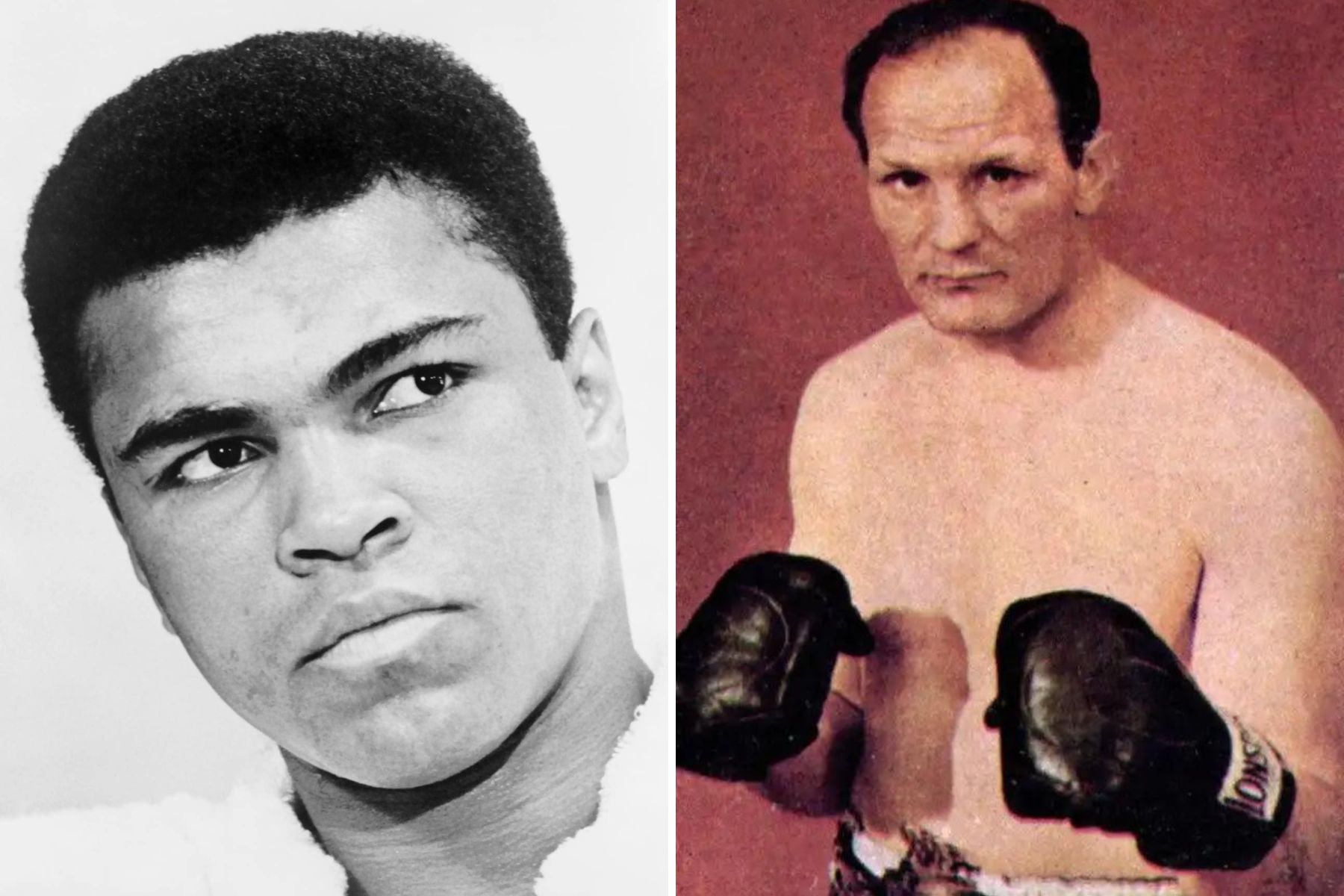
Muhammad Ali (then known as Cassius Clay) fought Henry Cooper at Wembley in 1963
However, the start of the fifth round was delayed as Clay’s corner called over referee Tommy Little to inspect his left-hand glove, which had been damaged.
The delay allowed Clay more recovery time, and he emerged in the fifth round and worsened a cut around Cooper’s eye which resulted in the fight being stopped – and awarded in his favour.
Years later, Clay’s cornerman – Angelo Dundee – revealed he had made the damage worse by sticking his finger in a split to ensure a replacement had to be found, lengthening his fighter’s time to recover from the brutal knockdown.
What happened to the glove has proved something of a mystery in the intervening decades.
In 2001, a pair of gloves purporting to be those used in the fight sold at Christie’s for £37,600.
However, the provenance was never roundly secured…
So, if they weren’t the real thing, what happened to those gloves?
The former Baily’s Tannery buildings, which lay derelict for years, are now being redeveloped.
And the story of the legendary glove is rising from the canvas too, much as Cassius Clay did in 1963.
Stuart Bull, of Chard Auctions, believes he has the ‘real deal’ – the damaged left-hand glove form that fateful night – including documentation and the story behind it.
And it is now going under ‘Enry’s ‘Ammer too – at auction.
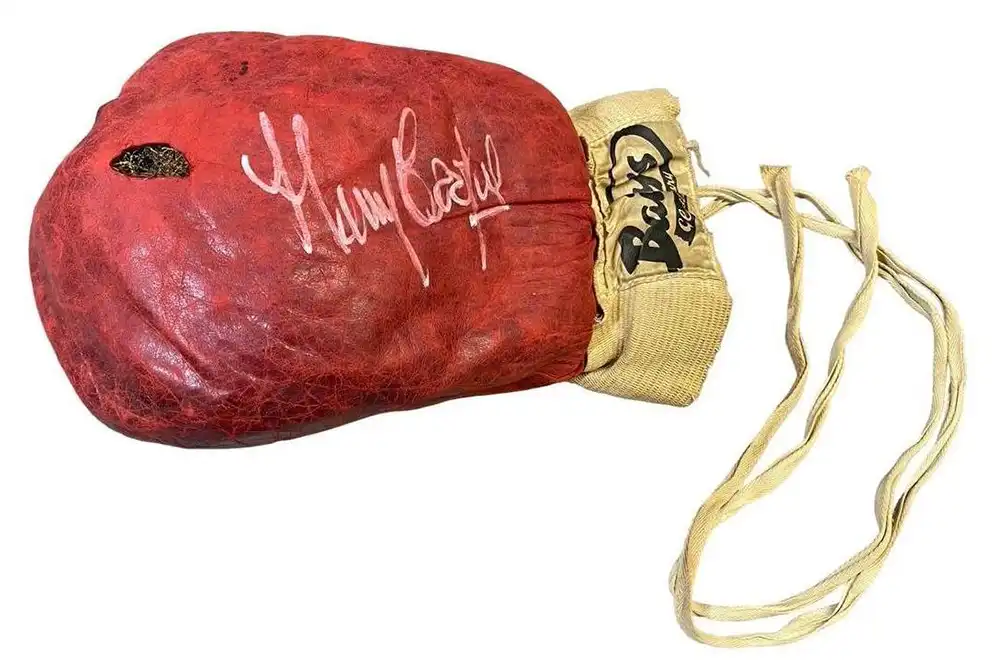
The glove, signed by Sir Henry Cooper, believed to have been worn by Muhammad Ali (then Cassius Clay) in the match against the British heavyweight in 1963
According to Mr Bull, after the fight the glove returned to Somerset, to be inspected by the makers at Baily’s.
It also underwent testing at the laboratories of glove maker Pittards in Yeovil, who produced the leather used, before being returned to Glastonbury, where it was originally made by cutter Percy Green, trimmer June Griffin and machinist Lilian Whitcombe.
Paul Gillett, a trainee sales rep at Pittards at the time who has inspected the glove, explained how he was sure the glove was authentic.
“No one else in the country or the world had access to the dye stuff at that time,” he said. “We were the largest manufacturer of leather in the world an had the highest level of technology. Only we at that time had access to that dye stuff, because ICI offered us access to it.
“You can lift the cuff to see underneath and it is as bright as the day we dyed it. The laces are still intact.
“We know full well that was the leather used for that fight. It’s not that we’re convinced, we know. Nobody else could have made that leather at that time.”
He added: “It (the leather used on the glove) would have just been a standard production. That was what our business was.”
After it was returned to Baily’s, the glove was stored by then-managing director Richard Mayers, who has since passed away.
In 1992, he gifted it, along with a note of authenticity and a host of other items, to his partner.
“I declare this glove to be genuine. I’ve always been aware of it’s significance, safety and provenance,” the note said.

The gloves were delivered in a Bailys of Glastonbury box
Simon Hawkins, of Seaton, Devon – the son of Mayers’ partner – has now decided to sell the iconic item, which was signed by Sir Henry when he met Mayers in the late-1980s and still has its Baily’s Glastonbury box.
Previously, when listed earlier this year, it failed to sell.
But the research Mr Bull has done and the story behind the glove have given it renewed interest, even provoking a conversation on Jeremy Vine’s BBC radio show in August.
Antiques expert, Curtis Downing, said the story behind the Glastonbury glove provided evidence of “real provenance”.
“The danger is, the first gloves are now being contested,” he said. “The new one has all the evidence to say it is (the real thing).”
He added: “This one has had hours of research done on it. Even the people that made it have come forward and said its their glove. Even the factory and all the people at the factory, people that have handled it, say it’s this glove.”
When the first auction was launched, Mr Bull said: “I’m so excited about this sale. When I saw the pictures of the glove and all the evidence of its provenance it blew me away.
“I’m absolutely thrilled to bits that I’ve been chosen to promote this and to sell it on. I’m very confident it’s the real glove.”
It is listed online, with bids open until the end of October. The glove will be accompanied by a dossier of provenance research totalling around 70 pages, as well as the items gifted by Mayers, including the handwritten note, his CV, Deeds to the Baily’s Factory and an original Mirror photograph of the famous knockdown.
Could the sleepy setting of Somerset yet prove to land the knock-out blow in a 60-year-old boxing mystery?







Leave a Reply