


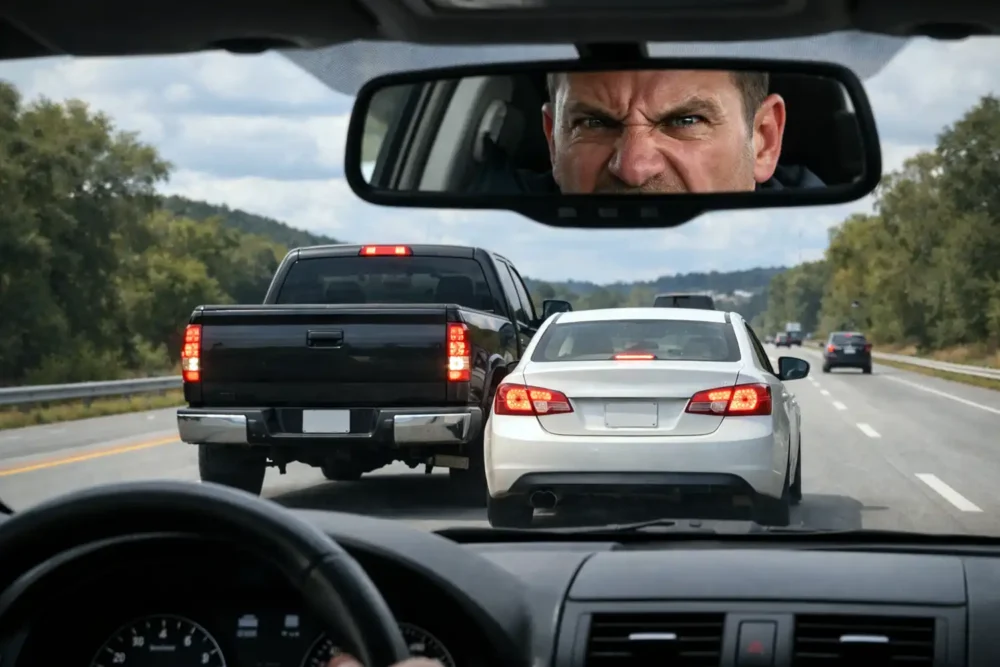
BRITONS are famed for their love of order, of queueing, and politeness. However, that changes for many of us when we get behind the wheel, according to new research.
A new survey by National Highways reveals millions of drivers feel their day-to-day manners get worse when they hit the road, with lateness and tiredness among the main cited reasons for our bad behaviour.
However in good news for the south west, including Somerset, the region came out on top of rankings for road etiquette.
In the south west, 46% rate their driving etiquette as good, with 31% admitting to tailgating.
The driving etiquette research by National Highways showed an estimated:
- 4.9 million drivers say their manners slip behind the wheel when they’re under pressure, especially running late.
- 10 million drivers say they sometimes unintentionally follow too closely, and 2.4 million admit closing up to encourage slower drivers to speed up.
- Running late is the biggest trigger for poor driving etiquette (27%), followed by tiredness (20%) and peak‑time commuting (16%).
While drivers in the south west scored highest for road etiquette, followed by those in the north west, London and the south east are rated as having the poorest road manners.
The survey came amid National Highways’ campaign to improve driving etiquette, with a regional ‘manners map’ highlighting where behaviour is better – and where it falls short.
Colin Stevenson, road safety information lead at National Highways, said: “Tailgating may seem harmless, but it can put everyone on the road at risk. Following too closely means there is less time to react and stop safely if the vehicle in front slows down or stops.
“Leaving a safe gap makes driving safer, keeps traffic moving more smoothly, and is a simple courtesy that helps everyone feel more relaxed behind the wheel. A good rule of thumb is the two second rule, which should be doubled in wet conditions or when visibility is reduced.”
Nationally, one in 10 drivers rated their road etiquette as poor, with behavioural psychologist Dr Neale Kinnear saying being behind the wheel was a particular situation leading to changes in our actions.
“Most of us see ourselves as considerate people, but driving is a unique context,” he said. “It’s goal-focused and often time-pressured. When we’re running late or behind other traffic, frustration can build. In that moment, closing the gap can feel like taking control or making progress.
“The reality is different. Drivers tend to overestimate how much time, if any, they save by pushing on. As frustration rises, perspective on the importance of keeping a safe margin, and the impact it has on others can be lost.”
“Leaving space isn’t just polite, it’s practical. A simple two-second gap keeps traffic flowing more smoothly, reduces stress, and makes the road a better place for everyone,” he added.
The Highway Code advises drivers to leave at least a two-second gap from the vehicle in front on faster moving roads, allowing time to think and stop safely.
Tailgating is also against the law and can lead to fines and other enforcement action, including a £100 fixed penalty notice and three penalty points on your driving licence.
READ MORE: Motoring news from your Somerset Leveller





Leave a Reply