


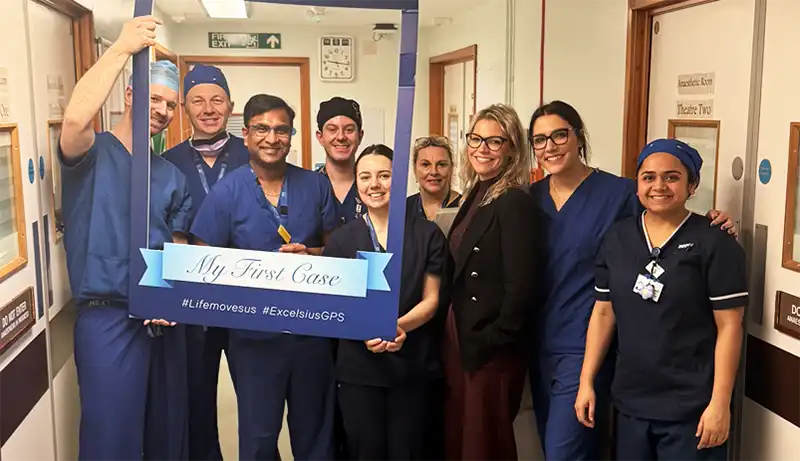
A GRANT of more than £800,000 will see improved care for Somerset patients undergoing back surgery.
The award comes from The League of Friends of Musgrove Park Hospital, in Taunton, to boost provision for people facing complicated spinal surgery.
Patients who need a spinal fusion will benefit from safer and shorter operations, the hospital said, thanks to the introduction of a robotic navigation system that assists surgeons.
It’s the first time a system of this type has been available to spinal surgeons at the hospital, and has been made possible by an £835,000 donation from the League of Friends and its supporters – the entire cost of the system, which Musgrove Park said would ‘revolutionise’ operations.
It means Musgrove Park Hospital has now become only the second hospital of its size, outside of the large teaching hospitals, to have access to the technology.
League of Friends president, Clinton Rogers, said: “A couple of years ago we donated £1.5 million to buy a state-of-the-art surgical robot which is now being used in a number of different surgical disciplines across the hospital.
“To be able now to fund a second robotic system to support cutting edge spinal surgery is a huge honour for us.
“When the surgical teams came to explain the enormous benefits to us – not just for patients but surgeons as well – it was frankly a no-brainer.
“Our mission has always been to help provide the very best surgical care at Musgrove. This is a massive step forward.”
READ MORE: Funding boost for Learning Disabilities team at Musgrove and Yeovil hospitals
READ MORE: New multi-storey car park plan for Musgrove Park Hospital in Taunton
READ MORE: Taunton news from your Somerset Leveller
Mr Ashok Subramanian, a consultant spinal surgeon at Musgrove Park Hospital, which is run by Somerset NHS Foundation Trust, added: “We want to say a huge thank you to the League of Friends and its supporters for this very generous donation, which will benefit the many patients now and in the future.
“We’ve introduced a navigation unit with a robotic arm that helps our surgeons guide and insert pedicle screws, which are surgical implants used in a spinal fusion to stabilise a patient’s vertebrae.
“As surgeons, our standard practice is to use an X-ray to view areas of the spine where we need to make an incision, as it guides us through the tiny path.
“But on some occasions the quality of the X-ray means we can’t see clearly, especially in patients with a larger body mass, and the knock-on effect of this means we need to take much longer to ensure each screw goes into the right place at the back of the spine. We will also need to use lots of X-ray exposure time.
“We have only a 1-2 millimetre safety zone, as it’s very close to the spinal cord, nerve, or blood vessels – all of which need to be avoided.
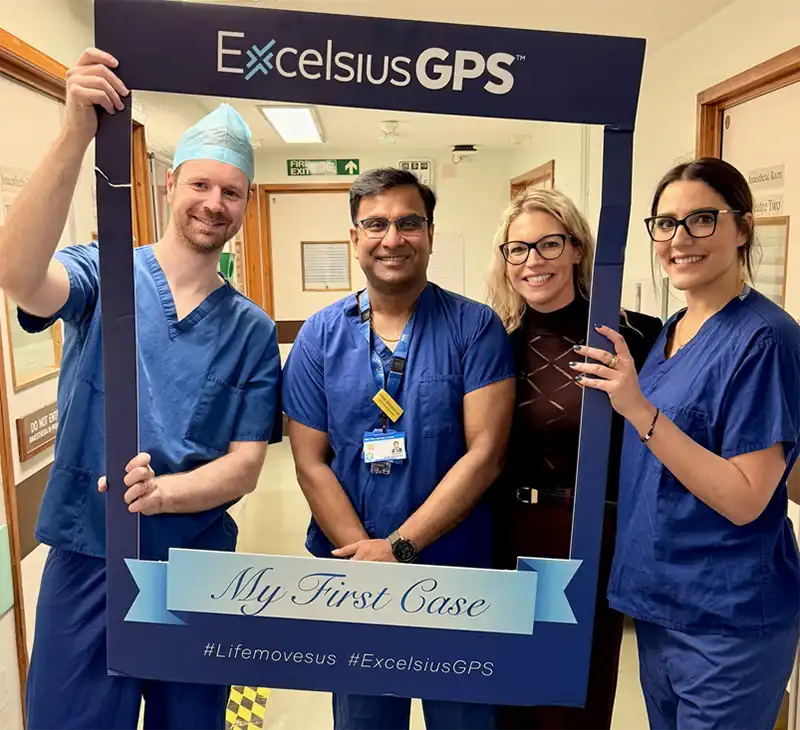
Teams at Musgrove park Hospital in Taunton have welcomed the new technology
“It’s therefore quite a high pressure stage of the operation, so by using the robotic navigation system we can plan everything in advance through the computer system, so we know exactly where to make the incisions during the operation – and it’s much safer too.
“This surgical plan guides the system’s rigid robotic arm to a specific region of the patient’s spine, similar to a planned route or pathway on a GPS.
“Throughout the procedure, the surgical instruments and implants are continuously displayed on the screen for the surgeon and wider theatres team to monitor, allowing the surgeon to view live feedback during the procedure.
“We don’t need to use X-ray during the operation either, so there’s less radiation, not only for the patient, but also our colleagues in the operating theatre, reducing the risk of radiation induced cancer. In addition, they don’t need to use the heavy lead aprons, so they’re at less risk of back pain and other occupational injuries.
“We see this as a very useful tool to improve accuracy, and at the same time it reduces radiation exposure to colleagues. That’s the first step as we can also apply it in lots of different operations, like inserting a cage, performing osteotomies and in spinal endoscopies once we’ve learned the technology and started trusting it.
“There’s evidence that while it normally takes around 10 minutes to place a screw, this reduces to about one minute using this technology, which is particularly great when we need to place 10 screws into a patient.”
READ MORE: Health & Wellbeing news from your Somerset Leveller







Leave a Reply