


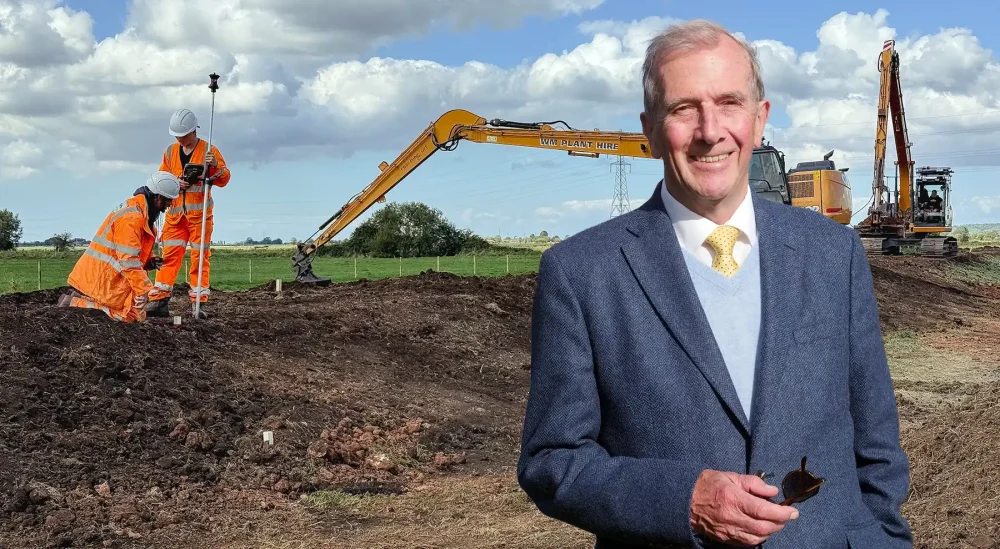
WORK on a £10 million scheme aimed at reducing flood risk on the Somerset Moors and Levels is nearing completion.
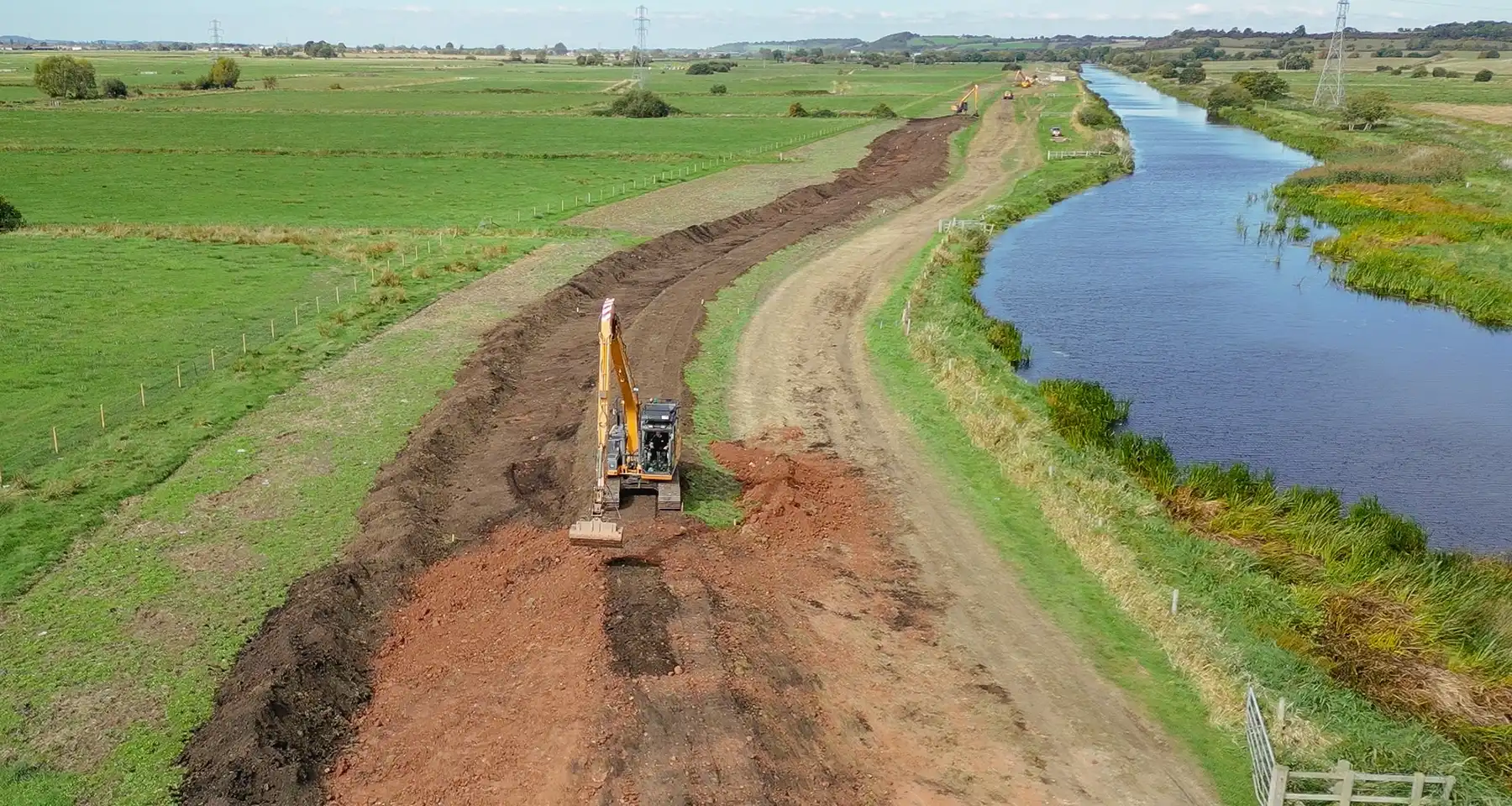
The Somerset Rivers Authority (SRA) scheme has seen more than 1.2 miles of bank on King’s Sedgemoor Drain (KSD) raised – allowing nearly 25% more flood water to flow through channels connected to the River Sowy.
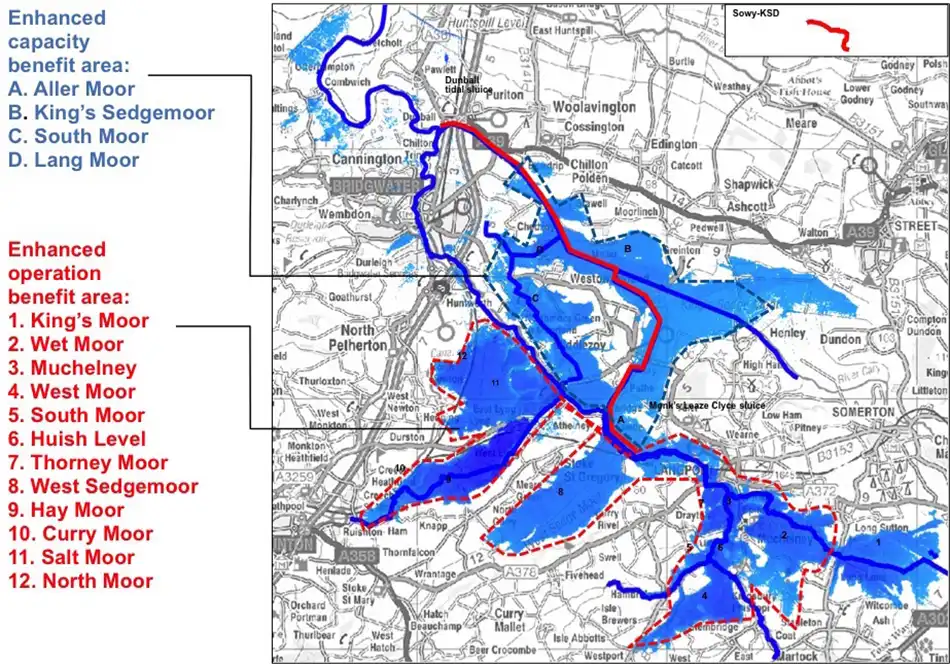
The overall works have been overseen by the Parrett Internal Drainage Board (IDB), working as a partner in the SRA, and runs for 13.5 miles from from the Monk’s Leaze Clyse sluice at Combe, near Langport, down to Dunball Sluice, north of Bridgwater.
The SRA says extra Sowy-KSD capacity will help to protect homes, businesses, land and roads across 150 square miles, especially around Langport and upstream of Langport, from flooding, because the Sowy is a River Parrett flood relief channel, created between 1969 and 1972.
The more water that can safely flow from the Parrett into the Sowy, the less water there is in the Parrett, allowing more water to be pumped off the Somerset Levels and Moors into the Parrett.
The Sowy can also now take more water before storms even start, helping reduce flood risks and damages.
Councillor Mike Stanton, chair of Somerset Rivers Authority, said: “During the floods of 2013-14, which are estimated to have cost Somerset nearly £150 million, the single emergency action identified to make the biggest difference in reducing those floods’ depth and duration, was making more use of the River Sowy.
“That’s why, bit by bit over several years, partners in the SRA have since been working together to improve the Sowy-KSD system.
“The various things we’ve done between us are not a cure-all but they will make an important difference – especially because they tie in with more than £30m-worth of other major flood risk reduction schemes that SRA partners have been involved with.
“Through our Sowy-KSD works, we’ve also helped to enhance the special environments of the Somerset Levels and Moors, which we know are precious for wildlife and valued by many people.
“So I’m very pleased to see this final stretch of KSD bank-raising being done and I’m grateful to all those who have helped.”
READ MORE: Somerset flooding: Are we doing enough to protect the county?
READ MORE: MP visits families forced from homes by storm flooding
READ MORE: Support on offer to landowners and more to tackle flooding in Somerset
Tony Bradford, chair of the Parrett IDB and SRA vice-chair, said: “I’ve been involved with the SRA since it started more than 10 years ago. Throughout that whole time, because I’ve seen how bad flooding can be for people, people that I know and many more, I’ve been pressing for us to get our rivers sorted out.
“A lot of good work for this Sowy-KSD scheme was previously done by the Environment Agency. In the Parrett IDB, we’ve put some serious time and effort into following on from them and we’re now getting this scheme done.
“We’re in the SRA to reduce flooding – that’s what we’re doing here, and it makes me very happy to see it.”
The Parrett IDB has been working on the final section of KSD bank-raising with civil engineering consultants Calm Engineering and contractors WM Longreach.
A host of works alongside the bank-raising scheme mean the in-channel capacity of the Sowy-KSD is being increased by 24.2%, from just below 17 cubic metres per second – cumecs – to 21, the SRA says, equating to an extra 14,760 cumecs per hour, or around 354,000 per day, the equivalent of more than 1,400 two-storey, two-bed homes.
Cllr Stanton added: “The works outlined here are only part of what’s been done since 2014 to reduce the risks and impacts of flooding in Somerset.
“Many different people and organisations have doggedly pursued the aim of making Somerset a safer and better place.
“I am proud of the significant role that Somerset Rivers Authority as a partnership has played in this. We are looking forward to doing more across Somerset.
“But let’s be clear: this is a man-made landscape which used to be marshes. Nobody can guarantee there will not be further flooding in this time of increased rainfall from climate change.”
READ MORE: More environment news from your Somerset Leveller





Leave a Reply