


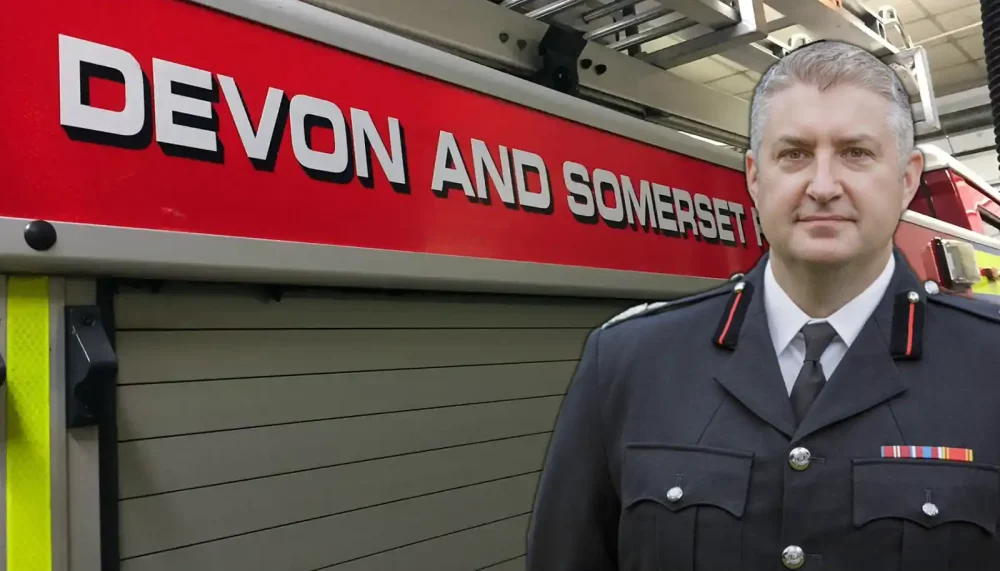
THE Devon & Somerset Fire and Rescue Services need “to do more to prevent fires and other risks”, according to a new report.
Last year, DSFRS was inspected by His Majesty’s Inspectorate of Constabulary and Fire and Rescue Services (HMICFRS), which has now issued a report – and ratings – covering 11 areas.
DSFRS was ranked as the following by inspector, Roy Wilsher:
- Understanding the risk of fire and other emergencies: Good
- Responding to fires and other emergencies: Good
- Responding to major and multi-agency incidents: Good
- Protecting the public through fire regulation: Adequate
- Making best use of resources: Adequate
- Making the FRS affordable now and in the future: Adequate
- Preventing fires and other risks: Requires improvement
- Promoting the right values and culture: Requires improvement
- Getting the right people with the right skills: Requires improvement
- Ensuring fairness and promoting diversity: Requires improvement
- Managing performance and developing leaders: Requires improvement
DSFRS highlighted the report highlighting areas it is doing well in, such as responding to emergencies, understanding risks within communities, and responding to major incidents.
It also noted a previous cause of concern for culture was removed, noting the hard work over the last three years to improve the situation and introduce reporting lines for people to raise concerns, but said it “still has more to do to further establish a consistent experience across the organisation”.
The backlog in house visits and prevention activities, DSFRS said, followed “a period where the service developed a backlog in home fire safety visits, caused by a number of factors”.
“The service had already identified these issues before the inspection, and improvement work was already underway,” it added.
But Mr Wilsher said in his report summary: “We found that the service hasn’t made enough progress since our 2021 inspection to make prevention a sufficiently high priority.
“We have therefore highlighted a cause of concern. The executive board knows it needs to do more and there are plans in place to improve this.”
Among concerns raised by inspectors was the ‘culture’ of DSFRS, which the report said “hasn’t made the progress we expected” since a 2021 inspection.
“We recognise the considerable work that the service has done to make the necessary improvements,” Mr Wilsher said.
“Although we are pleased to close this cause of concern, there is still more work to do. The service still needs to make sure that all staff are trained and supported to identify and challenge inappropriate behaviour.
“We recognise that the service has experienced some changes in senior leadership roles. And I don’t underestimate the challenges in changing the culture, performance and efficiency of a fire and rescue service.
“But we were disappointed to find that the service hasn’t made the progress we expected since our 2021 inspection. For example, five areas for improvement that we highlighted in our 2019 and 2021 inspections haven’t been addressed. These remain open.”
He said the service was “good at responding to emergencies, including major incidents”, and was making “good progress to improve the culture but needs to do more”.
However, he added DSFRS needed to improve home visits to those most at risk, and “hasn’t made enough progress in equality, diversity and inclusion (EDI)”, while staff “don’t have confidence in the grievance or promotions processes”.
“Overall, there is a clear commitment from staff and senior leaders to improve,” Mr Wilsher concluded.
“The service is aware of the many issues we found, and had plans in place to make improvements.
“I will keep in close contact with the service to monitor its progress in addressing the remaining cause of concern and associated recommendations.”

After the report was published, the Fire Brigades Union (FBU) highlighted a staff survey which showed:
- 52% of respondents to a survey by the inspectorate felt senior leaders consistently modelled and maintained the service values, compared to 91% of colleagues
- 16% of respondents felt bullied or harassed at work in the last 12 months, and the report notes that “the primary reason for not reporting the bullying or harassment was concerns it would make the situation worse”
Alex Smith, FBU brigade chair for Devon and Somerset, said: “When the bells go down, our firefighters are called to action and we respond. Meanwhile, the senior management of Devon and Somerset fire service are putting their fingers in their ears and ignoring the call to action.
“As the inspectorate’s report highlights, senior leaders continue to model poor behaviour while failing to support firefighters who have experienced harassment, discrimination or bullying at work.
“Instead of taking action to improve the service, management have focused their attention on attacking the terms and conditions of the workforce. This has come to their detriment.
“Rather than resource fire safety visits to improve public safety, as the report calls for, they are choosing to threaten to reduce retained firefighters’ pay and change the shift patterns of wholetime staff.
“Devon and Somerset Fire and Rescue Service senior management must stop attacking the terms and conditions of their workforce and start actioning cultural change at the top.”
Gavin Ellis, Chief Fire Officer for DSFRS, said: “We welcome the Inspectorate’s report, which is an important check-in against our improvement plans. It’s great to see our emergency response praised. It’s important for us that when people call 999, they get a good Service.
“Operational colleagues across the service work hard every day to maintain cover and competency so that they’re ready should anyone in our communities need them.
“We’re pleased that our work to improve culture across the organisation has been recognised and the cause of concern removed.
“We know we still have more to do to ensure our culture is consistent across the organisation and to better support our people to develop and thrive.
“Regrettably, the Inspectorate has issued a cause of concern about our prevention activities. Preventing emergencies is a huge focus for the organisation and our people are dedicated to keeping people safe.
“The recommendations made are process issues and we have already acted to ensure we are better at targeting our prevention work and evaluating its effectiveness.
“Our latest analysis shows that 85% of the referrals we receive from partners are from people who are either high or very high risk.
“Overall, we have a great foundation to keep on improving. The Inspectorate recognised the service’s self-awareness and commitment of our staff and senior leaders to improve.”






Leave a Reply