


BAILOUTISTAN. It’s a lovely word, coined by former Greek Finance Minister Yanis Varoufakis who, for the uninitiated in European economics, led attempts by the Greek government to renegotiate the bankrupt country’s finances with the European Union (EU) and others in the early twenteens.
He coined it, in short, to describe the EU’s actions to ‘rescue’ the collapsed Greek economy.
Those actions, he said, placed the country in a “debtors’ prison”, essentially fudging the figures to convince people an ‘insolvent’ country would be able to return to prosperity if it imposed EU-dictated austerity on its people.
However, all these ‘rescue’ deals did, Mr Varoufakis argued, was give the debtor (Greece) some money to see it through to the next time it inevitably ran out, when another ‘rescue’ would be needed.
Whether you agree with Mr Varoufakis’ political viewpoint or not, his theory of what would happen proved to be correct, with Greece later receiving numerous bailouts to keep it in the Eurozone and keep the country running.
What he proposed was to reform the system to keep Greece solvent – and not forced to rely on recurring bailouts.
At around the same time something similar was happening in the UK. But while the 2008 global financial crash was having a huge impact on our economy, we were not in the same position as Greece.
However, we were constantly warned we could be…
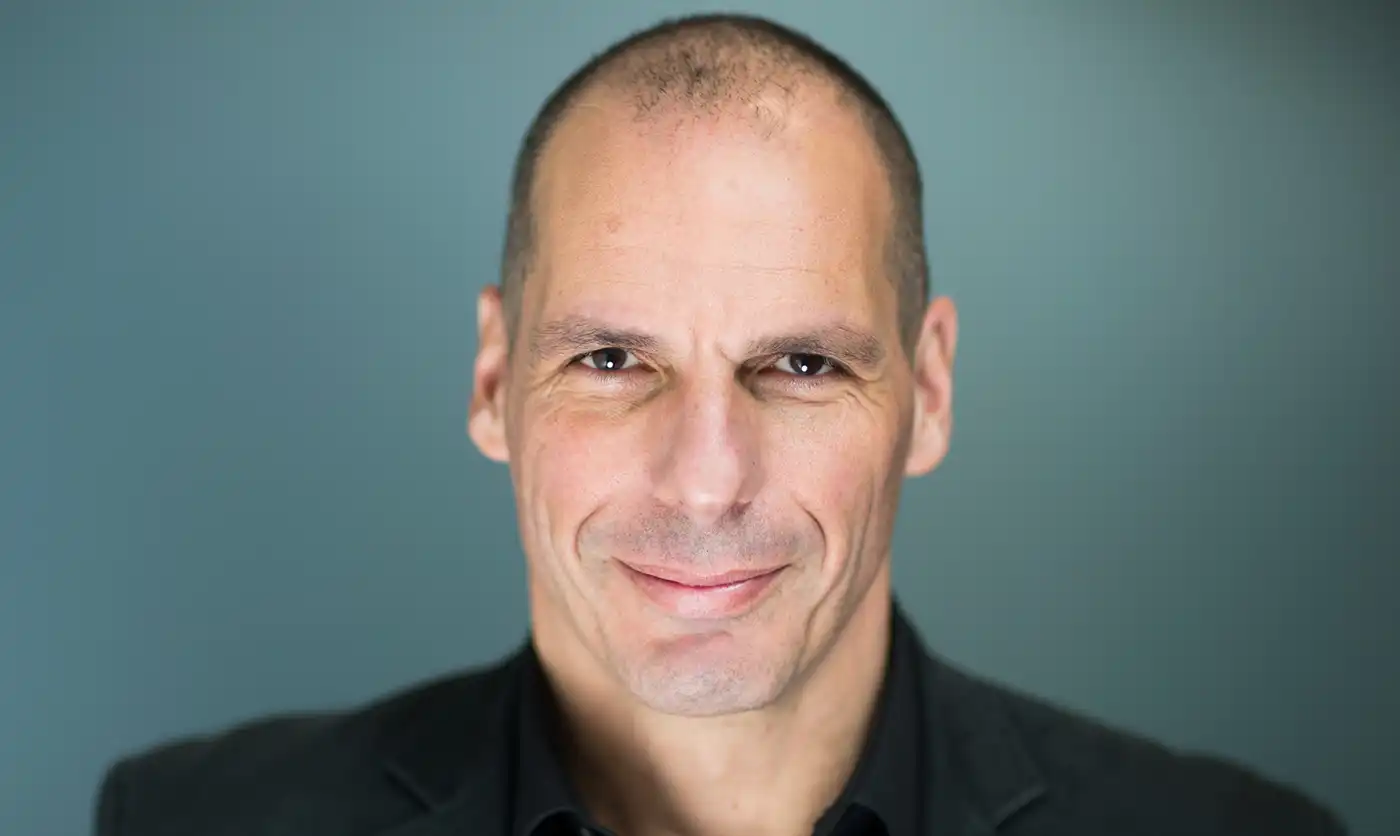
Yanis Varoufakis, the former finance minister of Greece
IN JUNE 2010, newly-elected Conservative Prime Minister, David Cameron, gave a speech on how his Government was looking to fix the UK economy.
He mentioned Greece, speaking of how the country “stands as a warning of what happens to countries that lose their credibility, or whose governments pretend that difficult decisions can somehow be avoided”.
In the UK, those difficult decisions were largely made by Mr Cameron’s Chancellor, political soulmate, Eton classmate, right-hand man and noted recent Somerset resident George Osborne, who also frequently used the struggling European nation as a warning to those opposed to his austerity.
One of the ‘difficult decisions’ Mr Osborne took was over local government finance.
Public services – and those who provide them – were a constant target of Osborne/Cameron austerity, be it civil servants (limited to a pay rise of 1% for years), or the money local authorities were given by central government. Money sent from Whitehall to the far-flung corners of the UK, including the likes of Somerset, was cut severely.
By 2015, the IFS said the department for local government had seen 79% of its day-to-day spending, cut.
That’s an awful lot of money.
In return for these and further cuts, Mr Osborne said local authorities would be allowed to raise council tax, and to keep increases in business rates.
The problem was, the resultant financial boost of these measures came nowhere near to plugging the gap of the money taken away.
“Mr Osborne’s clear calculation was that cuts to local government services would largely be blamed by voters on their councillors, not Downing Street,” a Guardian editorial in 2015 said.
In the years since, the impact of these cuts and reforms have been felt in areas of all colours across the country – including in Somerset.
Before the implementation of – and indeed during – austerity, some councils (worried about losing their own power) were reluctant to raise council tax to plug the gap, hoping the financial situation would improve, and all would be fine.
Others (including Somerset) were blinded by optimistic projections of millions that would be saved through the creation of unitary authorities. But none of these things saved anywhere near enough.
Basically, without a major upturn in the economic situation, authorities like Somerset were always heading to insolvency, despite what deniers say.
Our county’s one-way ticket to Bailoutistan had, consciously or not, been booked.
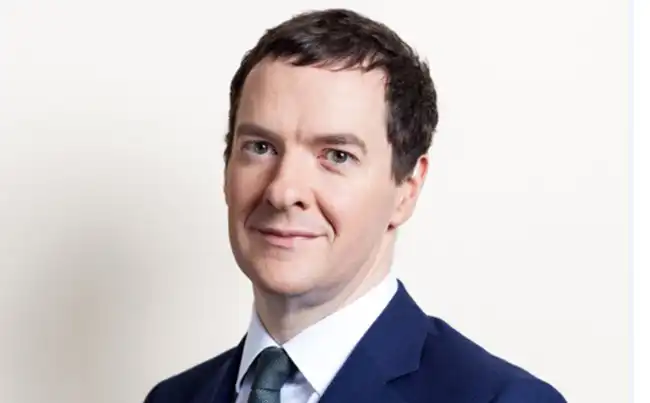
Former Chancellor, George Osborne. Picture: UK Government
THE hoped-for financial upturn never came. In fact, the opposite happened.
In the early 2020s, due to Covid and the Russian invasion of Ukraine, a cost-of-living crisis engulfed the UK and all developed economies rapidly realised the economic reality clear before austerity was imposed; that councils needed to bring in more money.
Rising inflation, soaring energy prices, Liz Truss’ disastrous mini-budget and more ended up hitting households, businesses and governments where it hurts – on the bottom line.
As a result, wages, benefits and more had to increase to cover the soaring costs of food, of energy – of life – and inflation soared.
This has affected everyone and everything. While the cost of your weekly shop has gone up, as well as your gas bill and your rent or mortgage, costs for local authorities have also increased. Dramatically.
One area in particular has seen a huge, huge increase in costs – that of adult and children’s services, including care, education and the like.
Here in Somerset, we have an ageing population.
In 2020, our county area boasted a larger proportion of residents aged 65+ (25.1%) than England as a whole (18.5%) and the broader south west (22.45%). And that population is only projected to get larger, reaching 29.57% by 2030, and 32.77% by 2040.
This, with the best will in the world, is a ticking financial time bomb.
We have to pay to care for and support a great number of these folks. Living in wonderful Somerset, with its clean air and green spaces, is helping us live longer – but it is costing us a fortune.
As you might expect, with rising numbers of elderly people, and younger people needing support, the cost of these services has also risen.
When combined with the cost-of-living crisis, it has absolutely skyrocketed.
For the 2023/24 financial year, Somerset Council had an overall budget of around £493 million.
How much do you think went on adult and children’s services? Have a guess…
It was around £310 million. About 63% of all of the county’s money.
Remember, a whole heap of other things have to also come from that pot, from your bin collections to fixing potholes, keeping drains clear and making sure play areas are safe for our children.
In short, we don’t have enough money to do all these things.
In 2024/25, this got even worse, with adult services budgets having to increase by 32%, and children’s, family and education services rising by 13%. It all adds up to a huge amount of extra money the council needs to find – money Somerset simply does not have, and realistically, money it cannot get.
But the council is – as I’m sure most of us would agree with – legally obliged to provide a certain level of these services. So it has to find the cash, one way or another.
Ways it can do this include raising council tax, cutting bin collections, closing recycling centres, selling off assets, handing libraries over to volunteers, making staff redundant, or handing over some areas to other councils (like parks, or CCTV operations, for example).
In short, it has to do everything we then moan about them doing.
But the cold hard fact is, they don’t have much choice.
Another cold hard fact is that, no matter how much they do to raise or save money, in the current financial climate it is still not enough.
We want the services, but we don’t want to pay any more in.
So effectively, Somerset is insolvent.
The last chance saloon for an authority in this position is, of course, to actually declare bankruptcy. This, as happened in Greece, would effectively see outside administrators appointed to oversee the ‘rescue and recovery’ of the county’s finances. It’s safe to say this is never a good option, as the result of such an intervention is, broadly, to cut, cut, cut, then cut some more, while raising taxes massively.
However, there is another option; we can take the train to Bailoutistan.
For a council like Somerset, that means asking the government for more money; or the ability to raise more money.
In recent years, this has been done by increasing council tax over the legal limit without requiring a referendum (a rule was imposed in 2012/13 to stop councils imposing ‘excessive’ increases on residents). The limit is currently set at 3%. When you include a 2% allowance just for adult social care, that increase is limited to 5%. So Somerset asked the government to allow it to increase council tax by more, and received permission for a 7.5% increase for 2025/26.
But it’s still not enough. Nowhere near.
A 7.5% increase in council tax raises an extra £9.1m. Before that, the council’s budget gap was £52.2m. So it is left, still, with a shortfall of some £43m.
So, another option is activated – to ask the government if it can use money brought in through the sale of assets, or borrowing, to pay for day-to-day operations – providing the services we all demand.
This is usually not allowed, because clearly, you only have so many assets and can only borrow so much money before you run out. It’s unsustainable. And no one wants a local authority to be unsustainable.
So, when the government allows an authority to do this, it is called a Capitalisation Direction, and is defined as a ‘one-off’ to effectively allow councils to get their financial house in order.
Somerset was granted a Capitalisation Direction in 2024/25. And it has had to request another for 2025/26 – because the books simply do not balance. And they can’t.
This one-off step is now a two-off – because Somerset’s finances are unsustainable. And so are many others, with around 40 councils requesting the same ‘one-off’ this year alone.
As a result, Somerset is in its own form of debtors’ prison; unable to raise the necessary money to pay its bills and produce a balanced budget, forced to head to Bailoutistan and ask permission to raise council tax and for a Capitalisation Direction to pay its bills. Then do it again. Rinse and repeat.
Our beautiful and proud county is, as Mr Varoufakis described for Greece, in a ‘loop of doom’. It cannot raise enough money. Despite going through a brutal, decade-plus of austerity, yet is still, effectively, insolvent.
These yearly, undignified calls for help, for permission to bail itself out – merely serves to mask that fact.
We are living in the loop of doom inside Bailoutistan.
But don’t take my word for it.
The Parliamentary Housing, Communities and Local Government Committee recently took evidence for a report set to be entitled The Funding and Sustainability of Local Government Finance.
Among those to answer a number of questions posed by the committee were David Phillips and Kate Ogden, from the IFS, who spoke of the system’s failings.
They explained how, despite real-terms increases in funding since 2019/20, English local government funding per resident “remains on average 19% below 2010 levels in real-terms and councils are under evident financial pressure”.
Even with a real-terms increase in funding of 5% planned for 2025/26, funding per resident in the coming financial year will still be, on average, 16% below 2010 levels, they said.
In his submission to the consultation, Colin Copus, Emeritus Professor at De Montfort University, said: “Local government in England will continue to experience periods of severe financial distress unless there is a radical rethink and overhaul of the financial tools available to it.”
Prof Copus also hit out at the perception of larger authorities (unitaries) as being a route to lower costs.
He said: “The size of local government makes absolutely no difference to its ability to navigate periods of financial distress. English local government already has some of the largest units of local government across the globe and increases in size do nothing to mitigate financial distress as the experiences of newly-created unitaries [like Somerset] shows.”
Neither response makes any claims against the running of most councils – such as Somerset. They are, primarily, systemic issues. To a degree, it doesn’t matter who is in power – these problems would still exist.
But if you ask the man in the street why our council has no money, you wouldn’t think this was the case…
“Everyone can see where money is wasted, and yet those that have control over the purse strings still continue to throw OUR money away and have the audacity to ask for more!”
“More bonuses for fat-cat buffoons, to gravy train their existence.”
And so it goes. Everyone has an opinion on council finances – and everyone immediately jumps on (largely unfounded) claims of waste and corruption.
Hopefully, the information in this piece goes some way to dispelling the myth surrounding council finances.
There are issues, of course, and money could be saved – but nowhere near the amounts necessary to balance the books.
An uncomfortable fact remains; With the current system, it is impossible for Somerset to pay its way. We are broke, insolvent.
To put it in the style of George Osborne and others, if your outgoings are greater than your incomings, you’re going bankrupt.
Somerset – for a host of reasons, almost none of them to do with waste – is going bankrupt. And, like Greece, it appears inevitable unless something changes, which our leaders have consistently called for. There is no easy way to balance the books, no matter what folks think.
We’re an ageing county, our income has been dramatically reduced and our ability to raise money has been curtailed or underutilised for years (e.g. no council tax increases).
It is rare for me to land in a position of sympathy with local authorities. But here, I don’t think we have a choice.
They are running a household whose income can never match its outgoings – and they can’t downsize, or get a new job, cancel Netflix, order less coffee, or cancel gym memberships (which will apparently solve all financial problems).
No, our elected representatives – and as a result we – are forced to live in Bailoutistan in a constant loop of doom.
No amount of moaning about largely non-existent corruption or waste will change that.
Last week, the leader of Somerset Council – Cllr Bill Revans – was set to give evidence to the Parliamentary Housing, Communities and Local Government Committee.
I would urge you to watch it back (sadly, this piece will be sent to press before the session) to see him try to explain it.
But I would wager his argument features many of the same things as Mr Varoufakis said a decade ago – of an unsustainable economy which has seen a body stuck in a debtors’ prison, with none of the measures currently in place able to fix it.
Only a changed system can.
Just don’t read about what next happened to Greece…







I totally agree with this article and have also written about the fact that Unitary Councils are not the solution
https://westenglandbylines.co.uk/politics/disunitary-councils/
David Orr statement to Full Council 5th March 2025
The Government has issued this council with a £63m “capitalisation direction”. There is no
new money. Instead, this Council, as a distressed seller in a poor commercial market, is
flogging off investment assets (often at a loss); foregoing the income generated, whilst
retaining debt repayments for decades to come (but with no asset behind the loan).
By the end of 2024, Somerset Council had sold properties for £76m that cost £104m to
buy – a £27m loss. All of that £76m has been spent on day-to-day services in 2024/25,
while the £104m debt remains with taxpayers. Before continuing with this short-term
and damaging investment asset disposal policy, will there be a recorded vote at Full
Council?
Back in 2008, reckless investment bankers created junk bonds, wrecking economies
around the world. Governments (that is taxpayers) had to step in to save the private
Banks, heralding years of austerity, which continue to damage key public services today.
From 2010 to 2015, a coalition Government of Tories and Lib Dems imposed austerity
cuts, falling principally on Councils. £31 billion of council funding was cut to just £13 billion.
The seeds of your “financial emergency” were sown back in your own coalition
government. Somerset Tories compounded things by freezing Council Tax for 6 years
(over two elections). That long Council Tax freeze stopped this Council’s base budget from
rising with inflation and spending power has been undermined.
However, the greatest responsibility for the mess Councils are in, lies with our entire
political class in Westminster. They have all failed to address predictable adult social care
pressures for 14 years after Dilnot issued his report. Since 2011, every administration has
“kicked the can [of adult social care reform] down the road”. Labour has broken their pre-
election commitment to a care cap by delaying adult social care reform until 2029.
Increasing numbers of local authorities require emergency funds and are effectively
bankrupt. The National Audit Office says increasing costs of social care, special
educational needs provision and temporary housing require a long-term solution from
across government.
By April 2026, this Labour government needs to take responsibility for their delay to
reforming adult social care, by providing bridging funding until 2029.
We elect national and local administrations to be in charge and to solve problems.
Running a unitary Council is complex and, without much discretionary funding, can large
Councils only ever be Officer-led? If that is so, why vote locally, as “nothing changes”?
We are in a crisis of confidence and trust in our democratic politics. Do we stop voting
because “what’s the point” or do we, like America, vote for a disrupter?
Finally, if only this not-so-new Council were as good at making efficiency savings, as you
are in putting up parking charges!