


AS with so many stories of the British Empire, it started with enslaved people.
But in the late-1700s, it was the French who brought a group of several dozen people to a remote group of islands in the middle of the Indian Ocean.
So remote was the archipelago – which became the Chagos Islands – that ‘ownership’ bounced around between French, Dutch and British colonisers for decades, depending on who had a military presence in the area at any given time.
It was 1,000 miles from the nearest major landmass – India – and some of the islands themselves took hours to sail between, so it tended to be that the coloniser with war ships in the area took over the Chagos Islands.
But despite the changes of ownership, those initial inhabitants – believed to have been enslaved people from Africa and India – remained.
And those 20 or so enslaved people were the first Chagossians, as the islands had, prior to that point, never been inhabited.
Coconut plantations, and related produce, proved successful in Chagos. Conditions were good, the climate of an island paradise – complete with clear seas and ice white sandy beaches – meant it was a profitable endeavour.
By 1814, the British had captured Mauritius and the island of Reunion from France, who ceded the area following the Napoleonic Wars – including the Chagos Islands – as part of the Treaty of Paris.
For the enslaved people, the islands’ isolation brought some benefits (which is all relative, of course, as they were enslaved people).
The British management could not impose some of the more brutal techniques they had done elsewhere to ‘control’ the enslaved people, as the managers could easily be overpowered should they be pushed too far, as it were.
That said, life was certainly not easy for Chagossians. They worked hard – from sunrise to sunset – and lived under the threat of violence to produce goods sold to the world for profit by plantation owners.
Meanwhile, the population grew. Families developed, and a native Chagossian population, language and culture developed, focussed on the largest island – Diego Garcia.
As the geographical location might suggest, Chagossians lived an isolated life, but under what would have been regarded as ‘light’ ownership, they were able to do things many others weren’t. They built homes and basic hospitals, developing a poor but settled existence.

Chagossians built basic structures, including hospitals and churches, on the islands. Picture: BIOT Administration
After emancipation in the mid 1830s, some of the enslaved Chagossian people – including many of whom had been born on the islands – became employees of the plantation owners.
However, as money was largely useless in the islands – quarterly visits from steam ships brought supplies and a company shop on Diego Garcia sold spices – the workers were paid for their arduous labour in what courts later called ‘barter’, including things like rice, tobacco and alcohol, as well as materials with which they built their own homes, grow their own food and raise their own animals, such as chickens and ducks.
The fertile conditions meant the Chagossians became self-sufficient, in almost every way.
“While far from luxurious and still a plantation society, the islands provided a secure life, generally free of want, and featuring universal employment and numerous social benefits, including regular if small salaries in cash and food, land, free housing, education, pensions, burial services, and basic healthcare on islands described by many as idyllic,” wrote David Vine in his book, Island of Shame: The Secret History of the US Military Base on Diego Garcia.
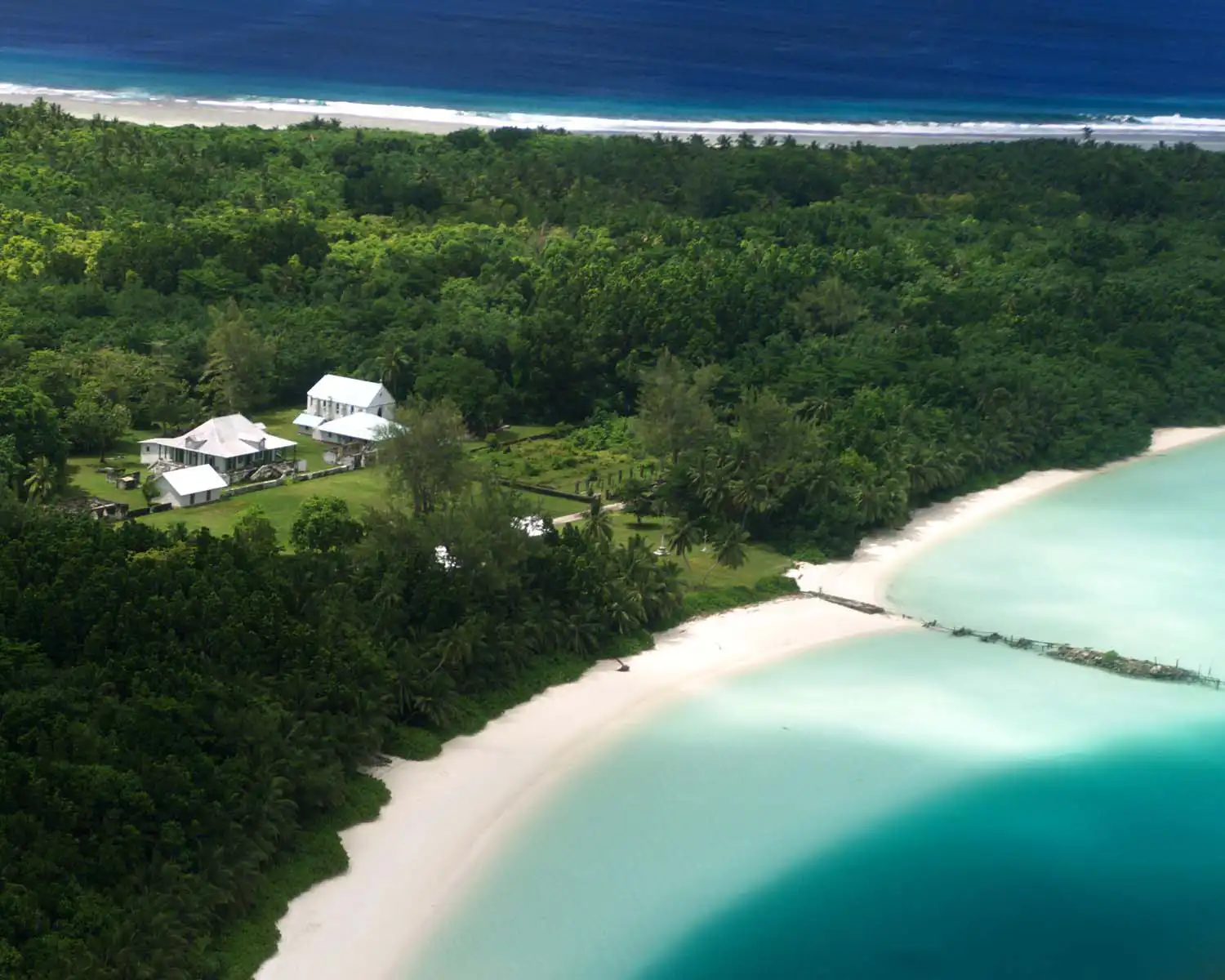
A coconut plantation on Diego Garcia
Due to its isolated position – 1,000 miles from the mainland, remember – many notable world events passed the Chagos Islands by – World War One included.
For several decades, life on the Chagos Islands continued largely unperplexed by the interests of the wider world.
But by now there had been generations of indigenous Chagossians, with homes passed from one to the next, housing families who knew nothing other than a life on the islands.
However, this would not last forever.
After the Second World War, everything changed – and not just for the Chagos Islands.
The British Empire, by this point, was on its knees. Colonies were gaining independence and the Second World War brought the US to a dominant position.
Their dominance was, of course, through the sheer presence of US forces around the globe. The United States was, understandably, all over the place – and was not keen on retreating much.
They embarked on a policy of installing military bases all over the world which would enable them to effectively ‘police the globe’, militarily speaking.
As their frantic establishment of bases progressed apace, US officials spied a little site in the Indian Ocean – out of the way of interference, but close enough to several major parts of the world to make it the perfect military station.
That site was the Chagos Islands.
So the US started talking to Britain (who had now taken them over from the plantation companies) about the islands – and the two came to agree it would be a great spot for American military assets.
There was one problem, however; the Americans did not want anyone to actually be there. Oh no. No no no. That would not do.
‘Ah well,’ you may think, ‘Time to look elsewhere.’
But instead, Britain – with the US firmly behind them – said this would be no problem.
What the British did was claim there were no “permanent inhabitants” of Diego Garcia – despite that fact there were, as we’ve been learning, lots. Around 800-odd families were living on the islands, many of them for generations, by this point. There were cemeteries containing generations of ancestors, countless adults who had been born and raised without leaving their beloved islands, language and music that had evolved in its own style.
Chagossian was now a culture, created over almost 200 years since those first enslaved people arrived.
But this didn’t matter to the British, or the Americans.
A US Government memorandum dated June 1969 gave the game away on how both countries were framing the situation in the Chagos Islands.
“Diego is attractive because of its location in the middle of the Indian Ocean, it is British territory, and the only inhabitants are non-indigenous copra (a source of coconut oil) workers imported from Mauritius and the Seychelles,” it said.
However, we know – and they knew – the Chagossians were not ‘non-indigenous’, they were Chagossian. This was the only country, society and way of life many of them had ever known.
But the US and Britain didn’t care. They wanted a base.
The memo went on: “In the event of US Government approval of the project, the British are obligated at our request to remove these workers.
“Their repatriation to Mauritius and the Seychelles could cause political problems for the British because of unemployment in those areas.”
And, perhaps, because they were not migrant workers but actual Chagossians?
Both governments knew these claims of a ‘non-indigenous’ population in Chagos were nonsense.
How did they know? Well, in just one example, a Colonial Office Minute dated November 1965 – almost four years before the US memo quoted above – hinted at the lie officials were to pursue.
“We should for the present continue to avoid any reference to permanent inhabitants, instead referring to the people in the islands at present as Mauritians, Seychellois, or by some similar term,” it said.
Other officials talked of “a whopping fib”, and of “maintaining the fiction” that there were no permanent inhabitants, evidence heard by the Commons Select Committee on Foreign Affairs said.
They knew there were. But the British and the US chose to lie in a bid to avoid any problems uprooting those people from their home – the only home they had ever known – against their will.
Why? Well, perhaps because doing that is one definition of an ethnic cleansing, as defined by a UN Commission reporting on humanitarian crimes in the former Yugoslavia, which said it included “rendering an area ethnically homogeneous by using force or intimidation to remove persons of given groups from the area”. Sounds right to me.
But how would Britain move these people? People who did not want to leave – had built their own homes, raised their families, buried their ancestors and had no real understanding of capitalism, and what was required to live in the ‘developed’ world?
In short, the British did as little as they could to help them, while undertaking cruel, callous tactics to move the Chagosssian people.
The charity Human Rights Watch (HRW) summed it up by saying, “the UK and US governments treated them as a people without rights, who they could permanently displace from their homeland without consultation or compensation to make way for a military base”.
HRW added: “From 1965 to 1973, the UK and US forced the entire Chagossian population from all the inhabited Chagos islands, not only Diego Garcia but also Peros Banhos and Salomon. They abandoned them in Mauritius or Seychelles, where they lived in abject poverty.”
But that’s not all they did. Before moving people wholesale, the British were far more sneaky, far more cruel.
One tactic they employed was to simply stop people travelling to the Chagos Islands. Anyone. Even people who had simply taken one of the infrequent steamers to go to the mainland and get a job for a few years, or, as in the case of a lady called Rita and her family, to get hospital treatment.
Rita Élysée Bancoult was a Chagossian, born on Peros Banhos in June, 1928.
Her parents were also born in the Chagos, as were her grandparents. She thought her great-grandparents may have been from Madagascar but, like so many others from enslavement backgrounds, she could not be sure.
In his book, Vine tells Rita’s story – of how the family were paid in rice and beans, in fish, with some livestock and oil.
“Life there paid little money, a very little,” she said. “But it was the sweet life.”
Then, tragedy struck.
Her daughter was injured in an accident involving a horse and cart and needed urgent medical attention.
Rita, her husband Julien and their six children waited until the next steamer arrived and boarded, heading to Mauritius, where they hoped she would recover and they could head back as soon as possible.
Her daughter never recovered. And Rita never went back.
After the death of her child, Rita sought to organise passage back to the Chagos Islands, only to be given devastating news by the steam ship representative.
“Your island has been sold. You will never go there again.”
Rita, Julien and their five surviving children were forbidden from returning to their home. They were abandoned in Mauritius, without jobs, without a home, without an explanation.
The experience of Rita and her family – and many like them – spawned a Chagossian word: derasine. It means uprooted, torn from their lands.
Julien was broken by the situation, Rita said, and soon suffered a stroke.
“His sickness started to take hold of him,” she said. “He didn’t understand.”
He died five years later, having never recovered from what Chagossians called sagren, which meant profound sorrow.
The family went on to endure continuing sagren. One son died at 38 after losing his job as a dockworker, while another died at 36 following a heroin overdose, and another dropped dead at the age of just 11, with the cause remaining a mystery to the family. Sagren.
“My life has been buried,” Rita told Vine. “It’s as if I was pulled from my paradise to put me in hell.”
“How am I supposed to bear this life?”
Meanwhile, the US and British governments continued to remove the native population from the Chagos Islands, culminating in a meeting in the former manager’s office, when they were told the island had been sold and was closing down.
They were told they would all have to leave. And the final Chagossians left in 1973. As people left, British and American officials and soldiers on the island killed their dogs.
In the decades since, the US base has expanded continuously.
Earmarked as an “austere communications facility”, it has gone on to become home to “an amazing array of weaponry and equipment”, as Vine described. (The runway on Diego Garcia is an emergency landing spot for NASA space shuttles).
It was a key launch pad for attacks during the second Gulf War, and in his book Ghost Plane, Stephen Grey detailed how Diego Garcia was used as a CIA outpost, a ‘black site’, for the detention of suspects. And a Council for Europe report claimed it was a secret prison.
British and American administrations denied this.
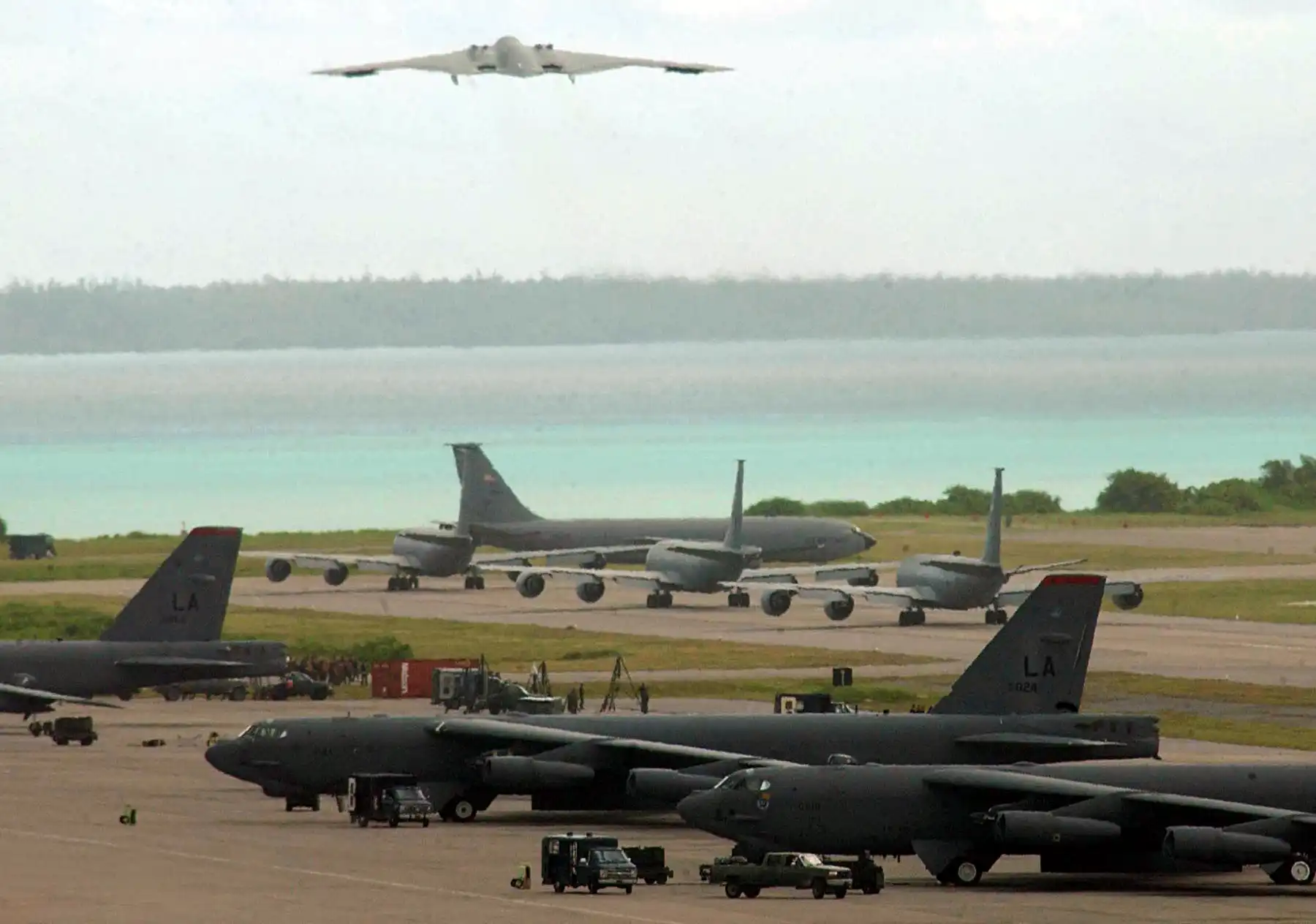
The US base at Diego Garcia. Picture: Air Force/Senior Airman Nathan G Bevier
For example, in March 2007, Prime Minister Tony Blair told the UK’s Intelligence and Security Committee he was “satisfied that there is no evidence that US rendition flights have used UK airspace”.
She went on: “The US authorities have repeatedly given us assurances that no detainees, prisoners of war or any other persons in this category are being held on Diego Garcia, or have at any time passed in transit through Diego Garcia or its territorial waters or airspace.”
But none of this was true. The Americans had used Diego Garcia for rendition flights.
Diego Garcia had become something altogether different to the purpose we were told it was for in the 1960s and 70s.
Rita and other Chagossions, meanwhile, were still barred from going anywhere near their homeland.
Repeated court cases since 1973 have ruled the UK acted unlawfully in how it emptied the islands.
Compensation has been slow, low and sporadic.
But none of it has mattered, as the US still has its base, and the UK still ‘owned’ the Chagos Islands, first through slavery and later through an attempt to preserve a small remnant of a crumbling empire.
But what of Rita and her family?
Well, in 1982, Rita – along with many other Chagossian refugees – held demonstrations and hunger strikes in protest at their treatment.
They were beaten, imprisoned, but their efforts led to £4 million in compensation being agreed by the UK government – and previous funds actually being handed to Chagossians.
Then, in 1983, together with activists Charlesia Lexis, Lissette Talate and her own son, Olivier Bancoult, Rita founded the Chagos Refugees Group (CRG), which continued to lobby for Chagossian recognition.
Their efforts would, eventually, make a difference…
In 2000, following a case brought in part by the CRG, the UK High Court ruled the British expulsion of Chagossians was unlawful, meaning they had a ‘right to return’ to their homeland.
However, a little-known British tool – called ‘Orders in Council’ – was used in 2004 to overturn this verdict. The UK Government used the order – signed by the Queen – to bar Chagossians from returning.
The CRG continued to fight for recognition of the Chagossians right to return and in 2015, the UN Permanent Court of Arbitration also ruled the UK acted illegally in creating a Marine Protected Area (MPA) covering the Chagos Islands – a way of preventing anyone returning (the environmentally-catastrophic US air base was exempted from the MPA, of course).
Diplomatic cables from 2009, between the UK and US administrations, revealed they believed the MPA “would “effectively end the islanders’ resettlement claims”. The documents added how the then-New Labour government believed, “according to the HMG’s [Her Majesty’s government’s] current thinking on the reserve, there would be ‘no human footprints’ or ‘Man Fridays'” on the British Indian Ocean Territory uninhabited islands”.
The US was delighted, it seems, with a state department official saying the plan might be the “most effective long-term way to prevent any of the Chagos Islands’ former inhabitants or their descendants from resettling in the BIOT (British Indian Ocean Territory)”.
But the decision was not universally approved. That same year, Conservative MP Henry Smith – who counted many Chagossians among his Crawley constituents – spoke in the Commons about their plight.
He said: “In this 800th year of Magna Carta, I hope that the Government’s feasibility study on the right of return to the Chagos Islands can finally be implemented so we can right a wrong of almost half a century.
The ruling meant, as a matter of fact, the UK should never have had control of the Chagos Islands, let alone been able to allow a major US air base to be constructed there – and effectively ethnically cleanse the Chagossians.
This was not a party-political issue.
For more than five decades, the British maintained control of islands they should never have been in charge of, through nefarious means – including the disingenuous creation of an environmental protection area to keep the Chagossians out.
However, the verdict saw the Court demand the UK “unconditionally withdraw its colonial administration” within six months.
Nothing happened. But behind the scenes, things did start to move – as slowly as government does.
“A binding judgment against the UK seemed inevitable, and it was just a matter of time before our only choices would have been abandoning the base altogether or breaking international law,” he said.
He told MPs how Conservative Foreign Secretary James Cleverly had started negotiations in 2022. (In a huge turn of hypocrisy, Mr Cleverley – when running for the leadership of the Tory party – branded Sir Keir Starmer ‘weak, weak, weak’ for pursuing the deal he started negotiating, but that’s by-the-by).
The ‘deal’ was finalised when Labour took over, Mr Lammy said, and would see sovereignty of the islands return to Mauritius – and the US base would remain.
“If Members oppose the deal, which of the alternatives do they prefer? Doing this deal on our terms was the sole way to maintain the full and effective operation of the base into the future,” Mr Lammy said.
He said the “threat was real, and inaction was not a strategy”, with the base operations remaining under “full UK control” and saying its “long-term future is therefore more secure under this agreement than without it”.
Again, much lower down the agenda as had been the case for decades, came the Chagossians themselves.
The agreement, Mr Lammy said, “recognises and rights the wrongs of the past”.
“The whole House would agree that the manner in which Chagossians were forcibly removed in the 1960s was deeply wrong and regrettable,” he went on.
“Mauritius is now free to implement a resettlement programme to islands other than Diego Garcia.
“The United Kingdom and Mauritius have also committed to supporting Chagossians’ welfare, establishing a new trust fund capitalised by the UK, and providing additional Government support to Chagossians in the UK.
“The UK will maintain the pathway for Chagossians to obtain British citizenship.”
It seems the least we can do.
The agreement was welcomed by then-US President Joe Biden, who said: “I applaud the historic agreement and conclusion of the negotiations between the Republic of Mauritius and the United Kingdom on the status of the Chagos Archipelago.”
While Secretary of State, Antony Blinken, said the US had supported the negotiations.
“The United States has strongly supported negotiations between the two countries over the past two years and is pleased to see the successful outcome of this diplomatic effort,” he said.
But perhaps most importantly, on a human level, the Foreign Secretary revealed the agreement would “establish a new programme of visits to the archipelago for Chagossians”.
While they may never be allowed to fully return to their homeland, more Chagossians may finally be able to see it – and visit the overgrown graves of their ancestors.
Britain and the US have, finally, done the right thing – and still, their beloved air base remains.
The Chagossians were treated horrendously by both countries, who lied about their intentions and their treatment of those people.
Now, they have some hope their experiences are being recognised.
Sadly, as the steam ship rep told her in 1968, Rita was never able to return to the land of her birth and that of her ancestors. She passed away in 2016, aged 91.
But on one clear, February day in 2022, her son Olivier was among a small group of five Chagosssians able to return to Peros Banhos – the island of his, and his mother’s, birth.
The group was the first to set foot on the islands without requiring permission from the British, and without a military escort.
They kissed the white sands of an island their ancestors should never have been taken to – and one they should never have been forced to leave.
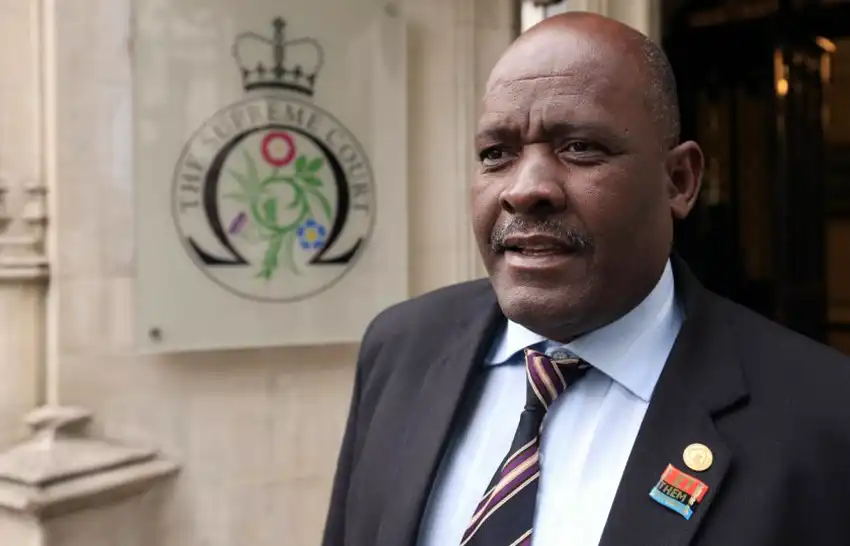
Olivier was among a handful of Chagossians to return to the islands in 2022. Picture: Chagossian Refugee Group
However, in a hark back to those Foreign Office memos in the 60s and 70s, there are some British people who appear to wish to maintain the charade of an ’empire’ – despite our actions over Chagos over decades being ruled as unlawful.
Not everyone sees the new agreement as delivering some small element of long-overdue justice for the Chagossians, and would presumably instead rather see the British continue in an unlawful endeavour, and cruel treatment of Chagossian people.
For example, during PMQs on February 5, Conservative Party leader, Kemi Badenoch, called the Chagos Islands “our territory” and called the agreement an “immoral surrender”.
The Chagos Islands are not – and have never lawfully been – ‘our territory’. There can be no surrender of something that has never, truly, been in our possession. It was wrong. It was unjust.
Former Tory leadership contender, Robert Jenrick (remember him?), went a step further, calling the deal “traitorous” in an interview on, surprise surprise, GB News.
All the UK has done is acknowledge a wrong and do something – though many would argue nowhere near enough – to put right the atrocities faced by the Chagossian people.
The deal is not yet finalised. The British hope to see it signed in the coming weeks, although the re-election of Donald Trump in the US brings some uncertainty to the deal.
But all that said, in my opinion, rather than attempting to pretend Britannia ‘rules the waves’, as Jenrick and Badenoch are doing, or arrogantly assuming we have some sort of claim to the Chagos Islands, we need to – belatedly – act in a proper way and do right by the Chagos Islands and her people.
The British empiricists longing for the return of a brutal empire – rooted in enslavement, cruelty, lies and illegal actions – should take note; The US base will still be on Diego Garcia. The Chagossians will not.
For shame.
PAUL JONES
Editor in Chief
NOTES:
Please note, this is not intended as a political opinion – UK and US administrations of all colours participated in this situation, which having read the documents referenced (and many more), I can only conclude was a horrific ethnic cleansing and abuse of the Chagossian people. But I urge everyone to do their own reading and draw their own conclusions.
As usual, I have tried to include links to all source information for this piece where they are mentioned – but some are below, along with some suggested extra reading!
A brilliant starting point on learning about the story of the Chagos Islands is – as referenced – David Vine’s book, Island of Shame: The Secret History of the U.S. Military Base on Diego Garcia. You can order it HERE
Shenaz Patel’s Silence of the Chagos is also invaluable when considering the story of the islands
The UK Government history of the Chagos Islands is HERE
A useful source to track down US Government memos can be found at the Office of the Historian, which includes a searchable archive of speeches, memorandums and more. It’s where I found details for most of the UK/US discussions regarding Diego Garcia from the 1960s/70s
And Amnesty International’ss reaction to the revelations is HERE
A 2012 European Court of Human Rights ruling on the Chagos Islands can be found HERE
A 2020 Court of Appeal ruling over the Chagos Islands HERE provides some useful background details
For more recent developments, you can read Foreign Secretary David Lammy’s full Chagos statement to the Commons HERE.
The 2019 UN General Assembly reaction to the International Court of Justice ruling over Chagos is HERE, which is an easier read than the ruling itself (in French), which you can see HERE.
A Human Rights Watch report on the Chagos Islands can be found HERE
More details on the Chagos Refugees Group – set up by Rita Bacoult and others – can be found HERE – and as an aside, in 2023 her son Olivier was nominated for the Nobel Peace Prize, alongside fellow campaigner Élysé Liseby. You can read a story on it HERE (in French)
A piece about Nobel laureates including Archbishop Desmond Tutu calling on Barak Obama to help the Chagossians can be found HERE





You fail to mention the Chagossians that live here, who do not want this to happen.
Mauritius treated them no better when many were forced there.
Just because it was administered from Mauritius by Britain, did not (and does not now) make it Mauritian territory. It was our territory granted by treaty. Mauritius wanted their independence so they got it.
If anything this should’ve been settled by referendum of those Chagossians who live here. Who do they want their islands to be governed by?
The question being;
Do they want to be part of Mauritius or a British Protectorate like the Falklands?
We’ll probably have to agree to disagree, but if you feel like responding please don’t hesitate.