


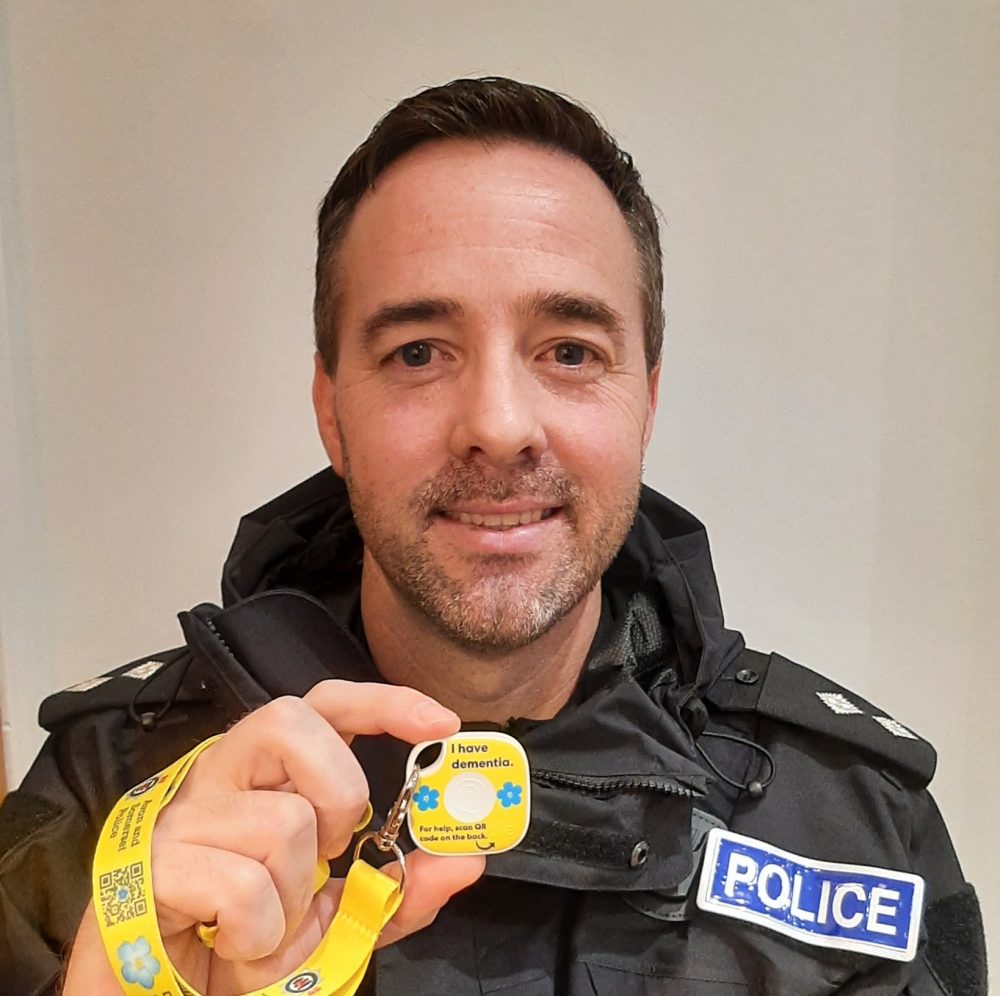
A NEW device launched by police in Somerset will allow carers and family members to locate vulnerable people if they go missing.
The Bluetooth Tile device can be discreetly attached to a person with dementia and uses the global network of 76 million smartphones on the family tracking app, Life360’s, to create a ‘network effect’ that helps pinpoint the wearer’s location in the event they go missing.
The Tile also uses a QR code. When scanned, the next of kin or carer can be contacted directly via phone or text.
Contact details are securely added during the device registration process in the Tile app, enabling fast connection if the wearer requires help.
Apart from the initial setup, the device requires no maintenance, and the battery lasts for up to three years without any charge.
Avon and Somerset Police launched the Tile as part of its Dementia Safeguarding Scheme, which has provided protection for more than 1,600 people living with dementia.
The Dementia Safeguarding Scheme was founded by Inspector Stuart King in 2015, following a rise in missing person incidents involving people living with dementia across the county.
The scheme utilises the Herbert Protocol, which allows carers and families to upload vital information about their loved ones via the Avon and Somerset Police website.
This information can be accessed instantly by police if a missing person search is required, which can significantly reduce the time spent locating them and help to prevent potential harm.
Inspector Stuart King said: “The introduction of Bluetooth-enabled devices from Life360 and Tile is a significant step forward in safeguarding those living with dementia.
“These discreet and user-friendly devices not only offer reassurance to families but can be a critical tool in emergency situations, enabling quick response and timely assistance.
“We are grateful to all the partners who support this scheme and the generous donations that continue to make it possible.”
The Dementia Safeguarding Scheme has issued thousands of Near-Field Communication (NFC) assistance wristbands and tags, funded by donations from organisations such as Bristol Water, Wessex Water and charity Bristol Dementia Action Alliance.
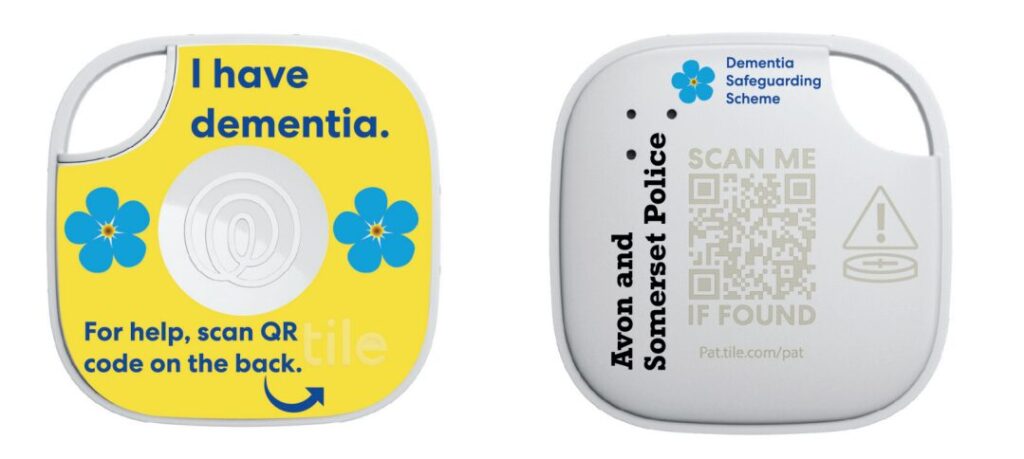
The Tile battery can last up to three years Picture: Avon and Somerset Police
These NFC devices store vital information about the wearer that can be retrieved by emergency responders or members of the public using a smartphone.
GPS devices are also now provided to people identified as being at high risk of future missing incidents.
All of the devices offered under the scheme are available free of charge to those living with dementia across Avon and Somerset.
In recognition of its innovative approach and impactful results, the Dementia Safeguarding Scheme has received numerous national and international awards in recent years.
These include awards from the Alzheimer’s Society and the RFID technology industry.
The scheme has also been independently academically assessed by professor of dementia research, Michael Hornberger, who found that the scheme had reduced missing incidents by over 80% for registered individuals.
Inspector King has assisted many other police forces, as well as charities and councils across the UK to adopt the Dementia Safeguarding Scheme, ensuring a nationally consistent design and approach.
People who are already registered for the Dementia Safeguarding Scheme will be contacted with information about how to claim a Tile device.







Leave a Reply