Now Weekly
SHARE ON FACEBOOK

Pow says Somerset Levels problem is fixed

Taunton MP Rebecca Pow has given a new written answer on the state of the Somerset Levels. This is a tough question to deal with when Britain is hosting a global climate change conference. But the most surprising thing about her answer was whose question she was answering.

Many local MPs might legitimately show concern about the state of the Somerset Levels. Some have already asked questions. But this question came from a less likely source. Ben Everitt is the Conservative MP for Milton Keynes North, not an area known for its proximity to Somerset.

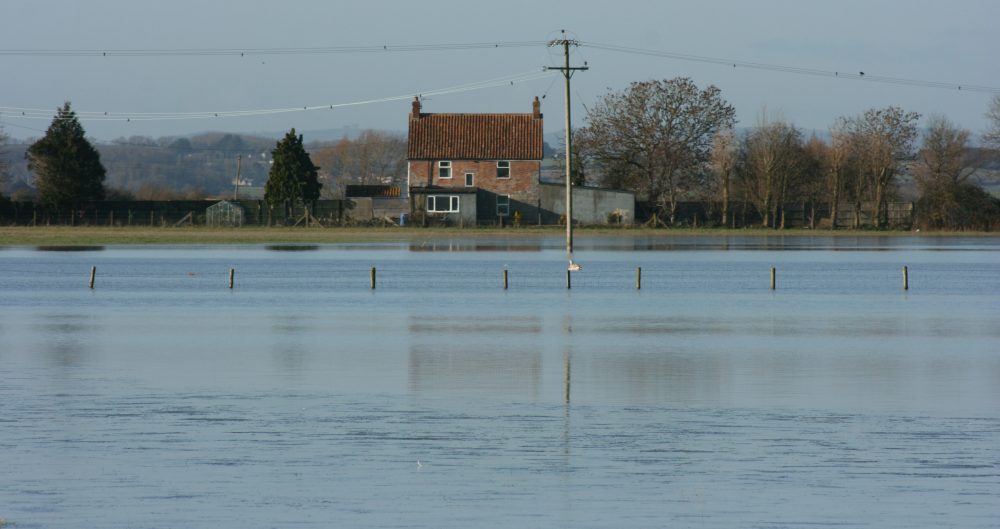
But in essence he wanted to know what the Minister was doing to fix the problem. Regular readers will recall that the problem is phosphorus. Natural England has declared that water in the Somerset Levels contains three times the permitted level of phosphorous. And for that reason a halt was called to major planning developments.

Meanwhile the district councils this effects have been scratching their heads. Somerset West and Taunton coming up with the best idea so far. That was to allocate £2m to buy “fallow” land to offer as reed beds that remove phosphorous from water systems. This can be used as compensation for development sites that add phosphorous. It is a good idea, but only the thin end of the wedge,

However according to the Minister, the problem is now more or less fixed. This is the full text of Rebecca Pow’s response to Ben Everitt. Readers can judge for themselves if this really fixes the problem or not.

The departments principally responsible for government policy on water pollution and development are Defra and DLUHC respectively, which are both aware of the challenges facing housebuilding and environmental protection in the Somerset Levels and Moors. To address water quality issues arising from nutrient pollution, a cross-departmental Nutrient Taskforce has been created, which brings together Defra, Natural England, Environment Agency and DLUHC colleagues. Its remit is to discuss the causes of phosphate and wider nutrient pollution and ways we can support businesses to develop and protect the environment nationally.

Locally, the taskforce has assisted Natural England in developing several tools which enable local authorities to understand possible mitigations that can be put in place. In the Somerset Levels and Moors, this has materialised in the development of a phosphorus budget calculator which has helped to move forward planning applications. Furthermore, Somerset West & Taunton Council have approved a further £2M programme for interim mitigation projects as advised by Natural England. The council will now seek NE sign-off in the next few weeks, after which it can begin to employ mitigation schemes to unlock delayed development in the area. Alongside this Natural England continues to support the piloting of a first-of-its-kind nutrient trading scheme in Somerset and expects to formally accredit the scheme in November. They report back regularly to the taskforce on progress.

More broadly, the taskforce has helped to inform and guide Defra’s wider approach to address nutrient pollution in our waterways. For example, how we utilise the newly expanded Catchment Sensitive Farming advice programme, which we have doubled funding for, alongside funding for 50 new Environment Agency inspectors to work with the farming sector to tackle nutrient pollution. Defra is committed to improving the water environment and will continue to work with Natural England and the Environment Agency on the wider issue of underlying sources of pollution, considering upgrades to wastewater treatment works and ways of reducing pollution from agriculture.”


One Ping

  1. Pingback: Somerset MP: "Scale of problem underestimated" - LevellerLive

4 Comments

  1. neil2255 Reply

    So if we agree to talk about the problem, that in effect has solved the problem!
    Am I missing something here because that’s akin to saying the A303 and A 358 problem has been solved because we have talked about it…. not actually physically done anything but let’s not split hairs here shall we!

  2. Andrew Clegg Reply

    I’m puzzled why this solution has taken so long, that if want to reduce phosphate concentrations in the Levels we must stop putting it into our waterways. We know there are two sources, sewage and agricultural run-off. We know that good farm management stops the run-off and we know that installing phosphate extraction stages in our Sewage Works effectively stops the sewage source.

    What we dont know is the fine detail of where the phosphate is coming from and because we dont know that we dont know where to put the proposed reed beds. The likelihood is that such beds may be very effective at removing phosphate but we dont have a clear idea of whether this clean water will end up in the Levels or, as is much more likely, in the Bristol Channel.

    If anyone would like to help find out some of these answers, please email me to join a small team of citizen scientists to try and build up a picture of phosphate flow in our complex network of waterways, and to find out what are the most effective conditions for removing it and for stopping it getting there in the first place. Andrew Clegg, ac@asclegg.co.uk

  3. Sean Dromgoole Reply

    This is in the good parts scattershot, but for the most part, empty waffle. The number of animals in Somerset hasn’t changed enormously, it’s because of the number of people. People poo. There has been no substantial effort by the water companies to increase provision for this or move away from the Victorian system of using rain water as a propellant within the system (so that when it rains to much the system is overloaded and floods into rivers). What was required was systematic investment in treatment as demand expanded. What has happened is cronyistic, light-touch regulation has lead to the water companies being able to get away with spending nothing where they should have been investing. The response should be to compel them to invest now in expanding capacity. There are no “we’ve had a meeting” solutions to this. We need grit chambers, clarifiers, aeration basins and grease traps. And we need hundreds of ’em…

  4. Philip Stone Reply

    Reply to Rebecca Pow’s letter on phosphates in the Levels
    Dear Leveller Editor,
    As a resident of North Curry which is situated on a narrow ridge between two of Somerset’s largest SSSI and RAMSAR sites (West Sedgemoor and Curry/Hay moor) which are currently badly affected by phosphate pollution, I feel I am qualified to comment on Ms Pow’s recent item in the Leveller.
    It does seem very odd that it takes the MP for Milton Keynes to drag a response out of the Environment Minister when there is so much concern locally about the protection of our special wildlife areas and about the halting of the planning system which is causing economic damage to the District and delaying the provision of much needed social housing.
    Ms Pow rightly praises SW&T for taking the initiative by allocating funding to purchase land and manage it in a way which offsets the additional nutrient pollution caused by new housing and other some development but this is only scratching at the surface of the wider problem. Councils have been put in an extremely difficult position by central Government Agencies when it is their inaction which has caused most of the problem. SW&T have it seems found an innovative way to satisfy the Government bodies but for Ms Pow to suggest that this has solved the real problem is ludicrous.
    This action will fail to address the main problems in the District which are the need to stop phosphate from being emitted from the two main sewage works at Taunton and Wellington and getting control of agricultural pollution from intensive dairy farming. Both of these problems require decisive Government action. At the sewage works the Water companies must be ordered to install phosphate stripping plant instead of paying out their profits to share holders.
    In the North Curry area it is blatantly obvious that the pollution of the so called protected areas of the levels on either side of the intensively farmed ridge is largely a result of slurry spreading on a vast scale. On a regular basis throughout the year we see convoys of contractors tractors with slurry tanks coming through our villages for days or weeks at a time carrying vast amounts of waste to fields where it washes down into the SSSI’s as soon as it rains heavily. Defra regulations about only spreading a limited amount of slurry are often ignored and the slurry is rarely ploughed in within 24 hours as supposed to be required. Further slurry spreading can sometimes continues in the same fields for months on end during the Winter period.
    I welcome Ms Pow’s plan to appoint 50 new EA inspectors to liaise with farmers but will that be enough to stop this madness ? I hope they will have enough resources to deal with what’s happening in this area and all the other areas where we hear of a similar pattern. There will be many local residents who will be watching closely to see if there is an improvement locally.

Leave a Reply

Your email address will not be published. Required fields are marked *